

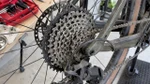
Gravel Cassette Size: How to Pick the Right Range
Posted by Matt Russ on 26th Oct 2026
Gravel Cassette Size: How to Pick the Right Range

The right gravel cassette size is the one that gives you an easy enough low gear for your steepest climb, a tall enough high gear for your fastest road or descent sections, and fits your shifters, derailleur and freehub. For most riders on a 1x setup that means somewhere between 10-45T and 10-52T. On a 2x setup, 11-34T or 11-36T is common. The rest of this guide shows how to decide, and what to check so the cassette you order actually works on your bike.
TL;DR
- Cassette size is written as smallest cog to largest cog in teeth, such as 11-34T or 10-51T. The big cog sets your easiest gear, the small cog your hardest.
- 1x gravel drivetrains need a wide cassette (roughly 10-44T to 10-52T). 2x drivetrains can use a tighter one (roughly 11-30T to 11-36T) because the front rings share the work.
- Knobby 40-45c tires, loose surfaces and luggage all argue for lower gearing than a road bike needs.
- Before buying, match speed count (11, 12 or 13), the derailleur’s largest-cog limit, the freehub body (HG, XDR, Micro Spline) and the chain type.
- An 11-25T cassette is a road-race choice. On gravel it only suits strong riders on flat or rolling routes.
Table of Contents
- What the numbers on a cassette mean
- Common gravel cassette ranges and who they suit
- 1x or 2x: it changes the cassette you need
- How terrain, tires and load change the answer
- Check compatibility before you buy
- Our perspective: size for the worst hill, not the average ride
- Shop the parts that go with your cassette
- How to choose in five steps
- FAQ
- Sources
What the numbers on a cassette mean
A cassette is the stack of sprockets on your rear wheel. Its size is written as two numbers: the tooth count of the smallest cog and the tooth count of the largest. An 11-34T cassette goes from an 11-tooth cog to a 34-tooth cog. A bike cassette buying guide uses the same shorthand and describes 11-34T as a wide range.
Two ideas matter more than the label:
- Range. The largest cog divided by the smallest tells you how wide the gearing is. 11-34T is about 309%. 11-42T is about 382%. 10-45T is 450%. 10-51T is 510%. A wider range gives you an easier climbing gear and a harder top gear from one cassette.
- Step size. Gear steps are the jumps between neighboring cogs. Shimano explains that smaller steps let you fine-tune cadence, while larger steps help you handle big changes in terrain with fewer shifts. A wide cassette with 12 cogs has to stretch, so some of its steps will be bigger than on a tight road cassette.
The easiest gear on your bike is the smallest chainring paired with the largest cog. If you are not sure what feels easy, divide the chainring teeth by the cog teeth. A 40T ring on a 50T cog is 0.8. A 40T ring on a 25T cog is 1.6. The lower the number, the lighter the gear.
Common gravel cassette ranges and who they suit
Here is how the typical ranges line up with riding. The tooth counts are real product sizes from the major drivetrain makers; the “best for” column is our own reading of how riders use them.
| Cassette | Range | Typical setup | Best for |
|---|---|---|---|
| 11-25T / 11-28T | 227% / 255% | 2x, road-style rings | Fast, flat or rolling gravel, strong riders, race pace |
| 11-32T / 11-34T | 291% / 309% | 2x, such as 48/31 or 46/30 | Mixed routes where you want small steps between gears |
| 11-36T / 11-40T | 327% / 364% | 2x or 1x with a small ring | All-round gravel riding, some steep sections |
| 10-45T | 450% | 1x, 40-44T ring | Gravel racing and fast riding with punchy climbs |
| 10-50T / 10-51T / 10-52T | 500-520% | 1x, 38-42T ring | Long, steep or rocky climbs, bikepacking, heavy loads |
Manufacturers describe these the same way. Shimano’s GRX 12-speed launch pairs a 10-51T cassette with a climbing-focused 1x setup and a 10-45T cassette with a racing-focused one. SRAM’s gravel gearing page recommends 1x drivetrains with cassettes up to 10-52T for very long, steep or rocky climbs, or for bikes carrying heavy equipment. It also describes its XPLR range as a sweet spot for a do-anything gravel bike, with tight jumps at the lower end and a 440-460% range.
1x or 2x: it changes the cassette you need
Your cassette size depends on how many chainrings you have up front.
1x (one chainring). You rely on the cassette for all your range, so it has to be wide. The upside is simple shifting, less to clean, and a clutch derailleur that keeps the chain quiet on rough ground. The downside is bigger jumps between gears. Shimano’s own 1x gravel guidance includes 38T chainrings for maximizing low climbing gears alongside 10-51T cassettes for steep climbs.
2x (two chainrings). The front derailleur shifts you between a big and small ring, so the cassette can be tighter. Shimano says a 2x drivetrain gives the smallest gear steps and suits riders who care about precise cadence control. Its 2x12 GRX setup uses 48/31 chainrings and, because of its HG freehub design, is compatible with most existing 700c wheels.

If you are choosing a 1x setup, the chainring and cassette are a pair. A bigger ring raises both your lowest and highest gear, so a 48T ring on a 10-44T cassette behaves very differently from a 38T ring on the same cassette. If you are building or changing a 1x gravel drive, our gravel 1x oval chainring in 48T and the wider cranks and cranksets range are the other half of the equation.
A quick worked example
Take a 1x bike with a 40T ring and compare two cassettes:
- 10-44T: easiest gear 40/44 = 0.91, hardest gear 40/10 = 4.0.
- 10-52T: easiest gear 40/52 = 0.77, hardest gear 40/10 = 4.0.
The hardest gear is identical, so the bigger cassette costs you nothing at the top. It gives you a lighter gear (about 15% easier) for the steepest pitches. The price is slightly larger steps between the cogs in the middle of the cassette. If you ride mostly rolling terrain and hold steady cadence, the 10-44T may feel smoother. If you often grind at the bottom of the cassette, the 10-52T is the better answer.
How terrain, tires and load change the answer
Gravel is not one kind of riding, so there is no single best size. Think in terms of your hardest day, not your average one.
Terrain and climbs
For proper hills, an older guide says you need a serious low gear of 28, 30 or even 32 teeth on a road-style double. Modern 1x gravel setups reach the same low gear with a 38-42T ring and a 46-52T cog. On sustained climbs of eight to ten percent or more, the lower gearing keeps you turning the pedals instead of standing and grinding.

Tires
Knobby tires change the math. SRAM notes that the rolling resistance and effective gearing with 40c or 45c knobby gravel tires make lower gears sensible compared with a 28c slick tire on the same theoretical route. If you are moving from road tires to gravel tires, expect to want a bigger cog. Our gravel and cross tires range is the place to look if you are changing both at once.
Load and distance
Bikepacking and touring push you toward the low end. An Adventure Cycling writer describes using a 46/30T crank with an 11-speed cassette and a 40T big cog for a loaded week-long tour with steep mountain passes. Today’s 12-speed options offer even lower gears, so a loaded rider on a 1x system will often be happiest at 10-50T or bigger. Heavy bags, tired legs on day four and soft surfaces all make a light gear worth carrying.
Is an 11-25T cassette good for climbing?
Not on most gravel bikes. An 11-25T cassette has a tiny gap between gears, which is great on a road bike at race pace, but its easiest gear is hard. With a 2x road-style 50/34 setup, the lightest gear is 34/25 = 1.36. Pair a 30T inner ring with 34T on a gravel crank and the number drops to roughly 0.88 to 1.0 depending on the cog. For a rider with a 1x 40T ring, 40/25 = 1.6, which is a very tall gear for a loose, steep climb. An 11-25T cassette can make sense if your gravel routes are flat, smooth and fast, and you are fit enough to push big gears. If you ever see a pitch that makes you stand up on a road bike, go to at least a 32T or 34T largest cog on a 2x bike, or a 44T or larger on a 1x.
Check compatibility before you buy
The best size on paper is no use if it does not fit your bike. Run through these checks in order.
1. Number of speeds
A replacement cassette must have the same number of sprockets as the one it replaces. According to Cyclist’s buying guide, otherwise it will not work with your shifters and rear derailleur, and it might not fit the rear wheel. An 11-speed shifter needs an 11-speed cassette, and the same holds for 12-speed.
2. Derailleur limits
Every rear derailleur has a maximum largest cog. Check that your new cassette’s big cog is within it. Total capacity matters too. Cyclingnews gives the formula: (largest chainring minus smallest chainring) plus (largest cog minus smallest cog). For a 48/31 crankset with an 11-34T cassette, that is 17 + 23 = 40. For a 46/30 crankset with an 11-40T cassette it is 16 + 29 = 45. Compare the result with your derailleur’s stated capacity. On a 1x bike the chainring term is zero, so only the cassette matters.
3. Freehub body
The freehub on your rear wheel decides which cassettes you can mount. Cyclist’s guide tells riders to confirm the hub is compatible with Micro Spline, XDR or HG before upgrading. A few specifics:
- Shimano GRX 1x12 uses a Micro Spline freehub for its 10-tooth smallest cog, while 2x12 uses HG or HG L2 bodies.
- SRAM Apex Eagle cassettes use a splined driver for 11-50T or an XD driver for 10-50T and 10-52T. Apex XPLR uses a splined body for 11-44T or XDR for 10-tooth cassettes.
Two of our own guides cover the details that trip people up: Shimano Micro Spline compatibility checks and XDR fit checks with the 1.85 mm spacer rule. Read the one that matches your wheel before you order.
4. Chain
Do not mix chain families. SRAM states that its road and gravel 12-speed components, including XPLR derailleurs and cassettes, work only with road/gravel Flattop 12-speed chains. An mountain-bike chain on a gravel cassette is a common cause of poor shifting.
5. Wheel and tire swap plans
If you run two wheelsets, one for 700c and one for 650b, both need a freehub that takes the same cassette. Otherwise you will be swapping cassettes, or buying two. Plan this before you pick a range, since your chosen size has to live on both.
Our perspective: size for the worst hill, not the average ride
We talk to a lot of riders who choose a cassette by what the fastest person in the group runs. That is usually a mistake. The cassette that wins races is not the one that gets you home at the end of a 100-mile day with 7,000 feet of climbing.
Our view is simple. Start from your steepest regular climb and your loaded or tired state, pick the lowest gear you want there, and then see how much top end you can keep. Modern 12-speed 1x cassettes make that trade much cheaper than it used to be. A 10-51T gives you a very low gear and still a 10T cog for a fast road section.
We also think riders underestimate the effect of tires. Moving from a 35c to a 45c knobby changes how every gear feels. If you change tires, revisit your gearing in the same session, not months later.
Finally, we think compatibility checks are not optional. The most expensive mistake in this category is an otherwise great cassette that your freehub does not accept. Check the body first, the chain second and the range last. Everything on our shelves is picked for engineering quality and rider-focused features, and we lean on user reviews and real-world performance feedback when we choose what to stock.
— Coach Matt
Shop the parts that go with your cassette
Once you know your range, the supporting parts are easy to line up. We stock SRAM components and wheels, road wheels, off-road wheelsets, and the wider bike components category. If you are unsure whether a part will fit your drivetrain, use the compatibility guides above, then browse the shelves with your speed count, freehub and derailleur limit written down.
How to choose in five steps
- Write down your drivetrain. Note the number of speeds, whether it is 1x or 2x, your chainring sizes and your derailleur’s maximum cog.
- Identify your freehub. HG, XDR or Micro Spline decides which cassettes are even possible.
- Pick your lowest gear. Choose the easiest gear you want on your steepest climb, and work backward to a cog size.
- Check the capacity. Use the formula above for 2x, or confirm the maximum cog for 1x.
- Match the chain. Use the chain made for your speed count and drivetrain family.
FAQ
How do I figure out my cassette size?
Look at the cog stack on the rear wheel and count the teeth on the smallest and largest cogs, or read the numbers etched on the largest cogs. The size is written smallest to largest, such as 11-34T. Also count the number of cogs so you know the speed count.
What is a good cassette for a gravel bike?
It depends on your setup. On a 2x bike, an 11-34T or 11-36T keeps gear steps small. On a 1x bike, 10-45T suits fast riding and 10-51T or 10-52T suits steep or loaded riding. Always confirm that your freehub and derailleur support it.
Can I fit a bigger cassette on my existing gravel bike?
Often, but check three things: the cassette must have the same number of speeds, its largest cog must be within your rear derailleur’s limit, and your freehub must accept it. For 2x bikes, check total capacity as well. If the cog is too big for your derailleur, you may need a different derailleur or a hanger extender designed for it.
Is an 11-25T cassette good for climbing?
Not for steep or loose climbs. Its gears are close together and its easiest gear is relatively hard, so it favors flat, fast routes and strong riders. For hilly gravel, choose a largest cog of 32T or more on a 2x bike, or 44T or more on a 1x.
Sources
- What bike cassette is best for me? Road + gravel options, Cyclist
- How does a rear derailleur work? Cyclingnews
- Introducing SHIMANO GRX Mechanical 12-Speed Components
- A Guide to SHIMANO 1x and 2x Gearing Setups for Gravel
- Gravel Gearing, SRAM
- Gravel Tires and Gearing, SRAM
- Apex Gearing, SRAM
- Can I use an Eagle chain with the XPLR derailleur and cassette? SRAM Support
- Geared Up: Gears for Gravel Bikes, Adventure Cycling
- All You Need to Know About Cassettes, I Love Bicycling