

35–40mm Gravel Tires for Mostly Paved Riders: Close to Road Tire Speed
Posted by Matt Russ on 1st Sep 2026
35–40mm Gravel Tires for Mostly Paved Riders: Close to Road Tire Speed
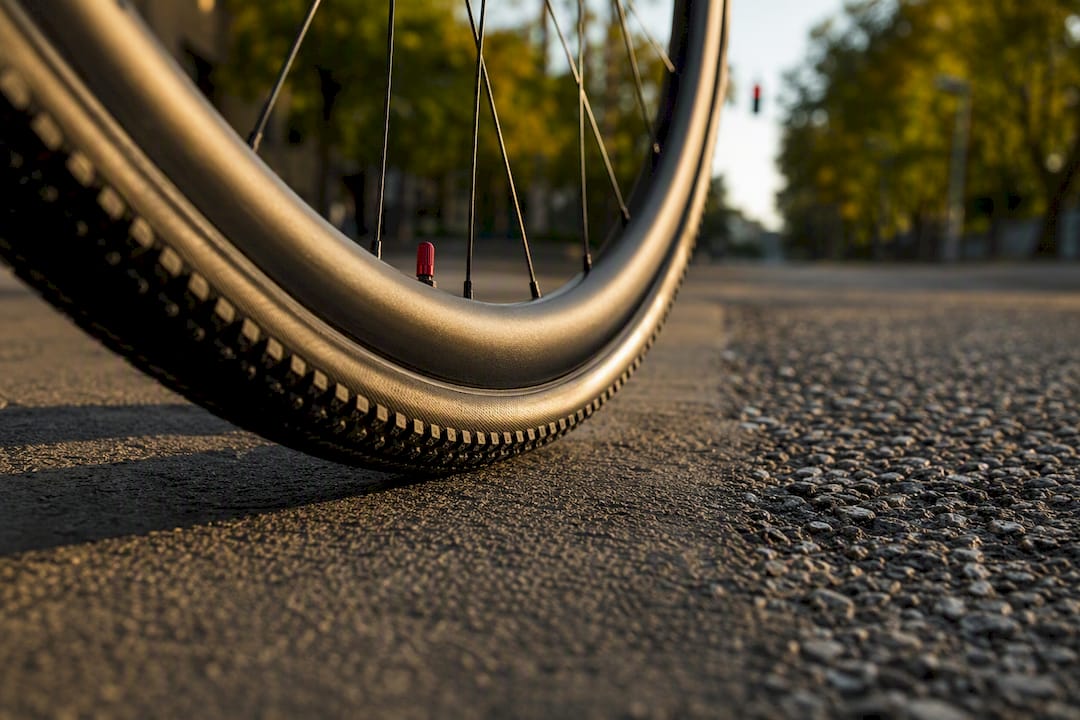
If you’re mostly riding pavement, a semi-slick gravel tire in the 35 to 40mm range set up tubeless will get you close to road-tire speed with real comfort gains. A knobby gravel tire won’t. The trade-off comes down to tread pattern and pressure, not the “gravel” label itself, and getting those two details right matters more than which tire box you shop from.
TL;DR:
- Semi-slick gravel tires in the 35 to 40mm range set up tubeless can match road tire speeds when inflated between 40 and 50 psi.
- A wider, lower-pressure setup around 40 to 45mm improves comfort and grip without significantly sacrificing pavement efficiency.
- Proper tubeless installation and pressure adjustment are more critical for pavement performance than tire width or tread pattern alone.
- Narrower tires with smooth centers are ideal for pavement-heavy riding, while aggressive knobbies reduce speed and comfort on asphalt.
- Always verify actual tire width, rim compatibility, and frame clearance before mounting wider gravel tires to avoid handling issues.
Table of Contents
- How Do Gravel Tires Perform on Pavement?
- Why Do Gravel Tires Feel So Much Smoother?
- Which Tread and Width Work Best for Pavement-Heavy Riding?
- Will Wider Gravel Tires Actually Fit Your Bike?
- Is Tubeless Worth It for Pavement Riding?
- Gravel or Road Tires: Which Should You Actually Run?
- What Would Sport Factory Actually Stock and Ride?
- The Real Trade-Off Nobody Puts on the Tire Box
- Get the Right Tires for Your Pavement-Heavy Setup
- Sources
How Do Gravel Tires Perform on Pavement?
Rolling resistance on asphalt comes down to three things: tread pattern, casing stiffness, and rubber compound. Deep, widely spaced knobs flex more under load and squirm on hard surfaces, which burns energy you’d otherwise put into forward motion. A smooth or semi-slick center strip contacts the road in a flatter, more consistent patch, closer to what a road tire does.
Testing from BikeRadar found that semi-slick gravel tires can deliver tarmac rolling speed and feel close to dedicated road tires when inflated to the right pressure, typically in the 40 to 50 psi range for many gravel models. That’s a meaningfully narrower gap than most riders expect walking into a bike shop.
Compound matters too. Manufacturers now build dual or triple-compound tires with a faster center and grippier shoulder knobs specifically to reduce the pavement penalty without sacrificing loose-surface grip. That engineering effort is why a 2026 semi-slick doesn’t ride like the aggressive gravel tires of five years ago.
- Knobby tread on pavement increases audible hum and vibration transmitted through the frame.
- Semi-slick center tread cuts rolling resistance and noise dramatically compared to full-knob patterns.
- Casing stiffness affects how much a tire deforms at speed, which changes both comfort and efficiency.
- Group rides expose the gap fastest: knobby tires tend to lag on long paved stretches between gravel sections.
Pro Tip: If you ride with a road group even occasionally, test your gravel tire on a flat, quiet stretch of asphalt at your usual cruising speed. The noise difference between a knobby and a semi-slick is often more noticeable than the speed difference.
Modern high-performance gravel tires, built with specialized compounds and casings, narrow that speed penalty further, and many riders find the comfort gain is worth the small remaining gap for anything short of a competitive road ride.
Why Do Gravel Tires Feel So Much Smoother?
Width and air volume are the real drivers of comfort, not the tire’s off-road label. A wider tire holds more air at a given pressure, and that larger air column absorbs small road imperfections, seams, and chip-seal texture that a narrow, high-pressure road tire transmits straight into your hands and seat.
Lower pressure adds to that effect. Softer tires let the casing flex around bumps instead of bouncing off them, which reduces vibration fatigue on longer rides. The trade-off is a small increase in rolling resistance if pressure drops too far, so the goal is finding the lowest pressure that still keeps the tire feeling lively rather than sluggish.
For riders who want one tire that does it all, a mid-width gravel tire around 40 to 45mm is often the practical sweet spot, balancing comfort, grip, and pavement speed better than either extreme.
- Heavier riders generally need pressures toward the top of the recommended range to avoid excess squirm.
- Lighter riders can often run 5 to 8 psi less and gain comfort without a real handling penalty.
- Wider internal rim width lets you run lower pressure safely because the tire sits more supported.
Pro Tip: Start at the midpoint of your tire’s recommended pressure range, ride a familiar loop, then adjust up or down by 3 to 5 psi based on how the tire feels through corners and rough pavement.
Which Tread and Width Work Best for Pavement-Heavy Riding?
The biggest mistake riders make is assuming aggressive knobbies work fine on pavement because they’re labeled “gravel.” A semi-slick center tread minimizes vibration, noise, and rolling resistance on smooth asphalt far better than a full-knob pattern, while still leaving shoulder knobs for the occasional loose corner or wet gravel path.
Here’s how to narrow down your options if pavement dominates your riding:
- Pick tread first. Look for a smooth or near-slick center strip with modest side knobs, not an aggressive all-terrain pattern.
- Target 35 to 45mm width. This range keeps rolling resistance reasonable while still adding real comfort over a road tire. A 45C tire is a commonly cited baseline for riders who want one do-it-all setup.
- Set pressure in the 40 to 50 psi window as a starting point, then fine-tune based on rider weight and rim internal width.
- Check compound claims. Tires advertising a “fast” or “race” semi-slick compound genuinely roll better on pavement than a generic all-purpose gravel tire.
- Match your goal. If you’re chasing group-ride pace, lean toward the narrower, smoother end. If comfort on rough roads matters more, lean wider.
Lighter riders and those prioritizing all-day comfort can sit toward the lower end of that pressure window; heavier riders or anyone carrying gear should stay closer to 50 psi to avoid sluggish handling and rim strikes.
Will Wider Gravel Tires Actually Fit Your Bike?
Claimed tire width and actual mounted width are two different numbers. Rim internal width changes how a tire measures once it’s seated, and it’s common for a “40mm” tire to measure several millimeters wider on a 25mm internal rim than on a narrower one, according to BikeRadar’s rim width guide.
Before buying a wider gravel tire for a road or all-road frame, run through this checklist:
- Mount the tire and measure actual width with calipers, not the label on the sidewall.
- Measure chainstay and fork clearance at the tightest point, then leave at least 4mm of margin per side.
- Confirm your rim’s internal width, since a wider rim inflates the mounted tire size beyond spec.
- Expect handling changes if you jump more than roughly 10mm in width; steering can feel noticeably slower on a much wider tire.
Is Tubeless Worth It for Pavement Riding?
Yes, and it’s the setup detail that matters most once you’ve picked width and tread. Tubeless setups allow lower pressures without a corresponding rise in pinch-flat risk, because there’s no inner tube to pinch against the rim on a hard hit. Sealant also plugs small punctures from road debris on the fly, which matters more on pavement than most riders assume.
- Confirm your rims are tubeless-compatible before buying tape, valves, or sealant.
- Use a fresh strip of tubeless tape and check the seal around the valve hole carefully.
- Add 60 to 90ml of sealant per tire, depending on tire volume.
- Seat the bead with a dedicated tubeless inflator or air compressor rather than a hand pump when possible.
Pro Tip: If you’re not ready to go tubeless yet, run a tube temporarily but keep pressure slightly higher than your target tubeless number to avoid pinch flats on sharp-edged potholes.
A tube is fine as a short-term or backup solution, but expect to run 5 to 8 psi higher than you would tubeless, which erodes some of the comfort advantage you bought the wider tire for in the first place.
Gravel or Road Tires: Which Should You Actually Run?
The right choice depends less on your bike and more on how you actually ride it. Run through these factors before deciding:
- Estimate your pavement percentage. If you’re above 90% paved miles with occasional gravel, a narrower semi-slick gravel tire usually beats a full road tire for versatility without much speed cost.
- Consider your group rides. If you regularly ride with road cyclists on skinny tires, the pace gap on wide knobby tires will frustrate you faster than any comfort gain offsets.
- Factor in events. Training for a road race or fast group century points toward road tires or the narrowest, fastest semi-slick you can find.
- Check your frame’s real limits. Clearance rules out some choices before preference even enters the picture.
- Try a hybrid approach. A narrower gravel slick (35 to 38mm) splits the difference well, or keep a second wheelset with road tires for pavement-only days and swap for gravel outings.
Experts generally agree the smart move for amateur riders is matching tire choice to how you actually ride, not how you might ride someday. Pros swap tires by course and conditions; most of us are better served picking one practical setup and sticking with it.
What Would Sport Factory Actually Stock and Ride?
For road-heavy riders, we’d point toward a semi-slick, tubeless-ready gravel tire around 38 to 40mm; that width and tread combination holds pavement speed while still handling the occasional gravel detour without drama. Before your first ride: check frame clearance, mount tubeless with fresh sealant, set pressure at the midpoint of the recommended range, then test on a familiar loop and adjust from there.
The Real Trade-Off Nobody Puts on the Tire Box
Most gravel tire advice treats tread and width as the whole story, but pressure and tubeless setup do more heavy lifting than either one. A knobby tire at the right pressure often beats a semi-slick run too hard or too soft. That’s the part conventional buying guides skip.
The conventional wisdom also oversells the speed penalty. Riders picture gravel tires as a slow, heavy compromise, but a well-chosen semi-slick around 38 to 40mm, run tubeless, closes most of that gap while adding real comfort on rough asphalt, chip seal, and potholes that a narrow road tire punishes you for every mile.
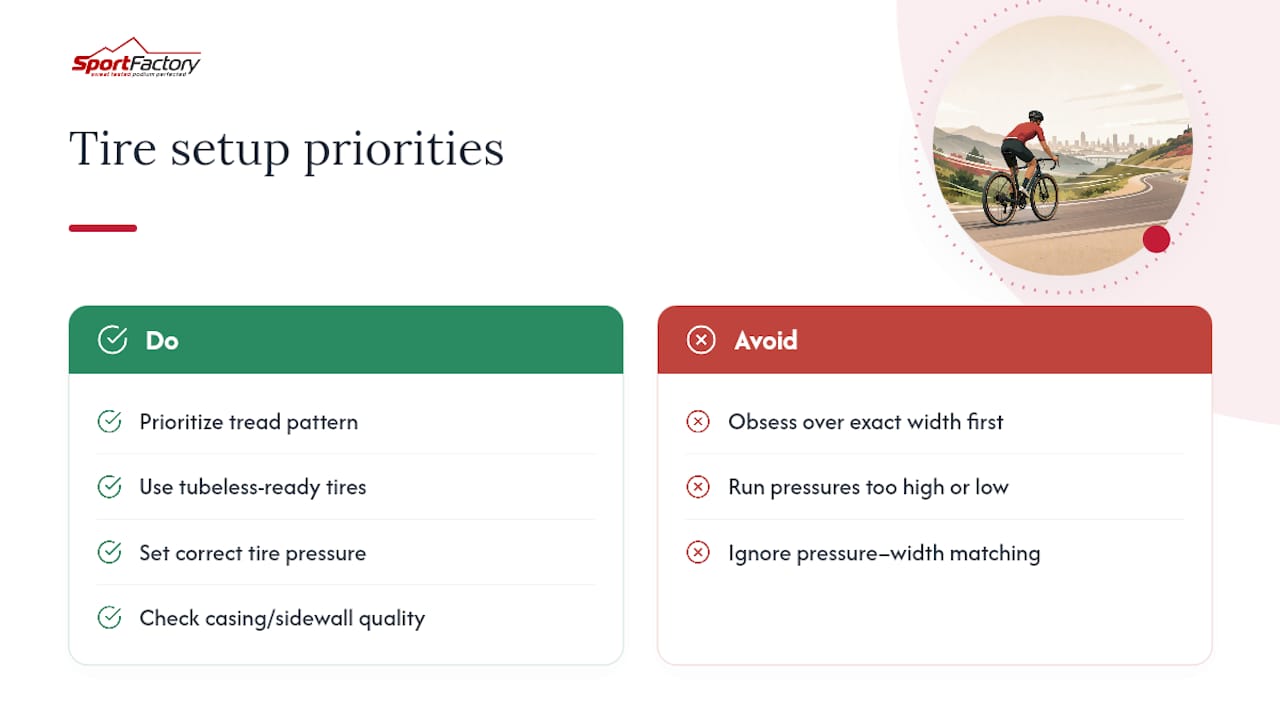
If you take one thing from this guide, prioritize tread pattern and tubeless setup before you obsess over exact width. A smooth-center, tubeless-ready tire in the 35 to 45mm range, set up correctly, will outperform a wider or narrower tire that’s mismatched to your pressure and riding style. Get those fundamentals right first, then fine-tune width to taste. Casing quality matters here too, and it’s worth understanding how sidewall construction affects ride feel and puncture resistance before you commit to a specific model.
— Matt
Get the Right Tires for Your Pavement-Heavy Setup
Sportfactoryproshop stocks tubeless-ready gravel tires built for exactly the road-heavy riding this guide covers, along with the sealant, valves, and tools you need to set them up right the first time.
Rather than guessing between a dozen tread patterns online, you can shop tires curated for real-world pavement performance, not just gravel-race marketing. Sportfactoryproshop selects gear from brands proven in independent testing, so you’re choosing between models that actually deliver on comfort and rolling speed instead of sorting through marketing claims yourself. Whether you’re after a 38mm semi-slick for your all-road build or a full tubeless conversion kit, the goal is a setup that rides fast on pavement and still handles the occasional gravel stretch without hesitation. Browse the current tire lineup at Sportfactoryproshop and get your next ride dialed in before your next long pavement day.
Sources
- Best gravel tyres — Buyer’s guide and tests
- Best gravel tires for amateur riders — Bicycling
- Tubes vs tubeless for CX and gravel