


Avoid a $200 Return: Check Shimano MicroSpline Compatibility
Posted by Matt Russ on 6th Sep 2026
Avoid a $200 Return: Check Shimano MicroSpline To Verify Compatibility
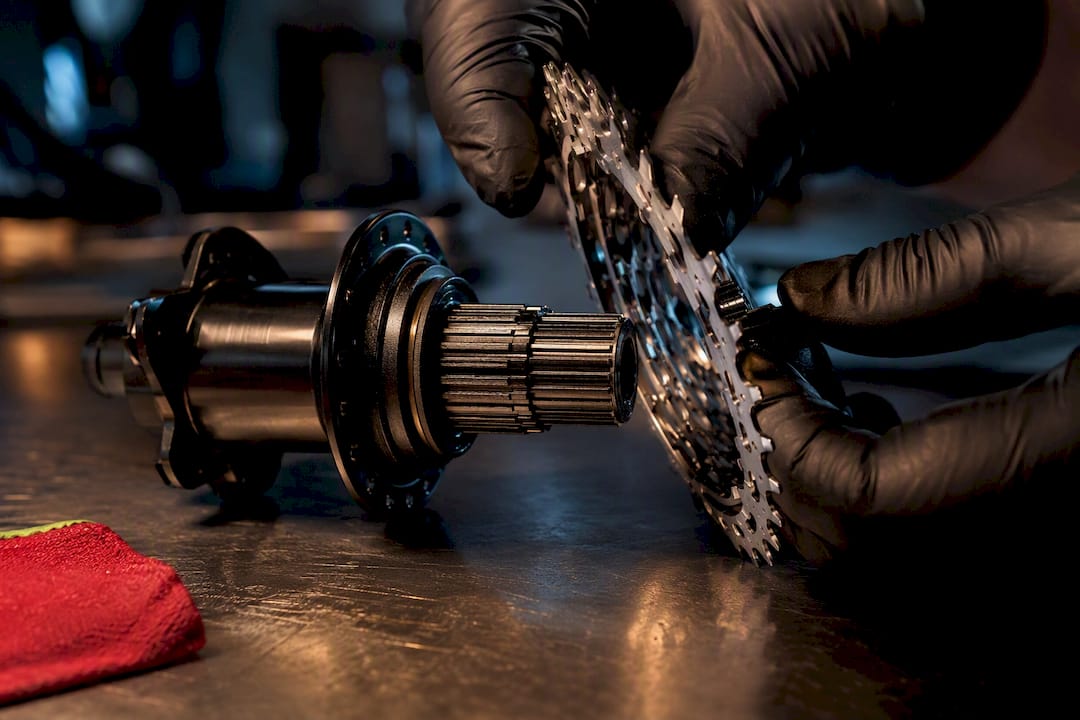
MicroSpline is Shimano’s freehub spline standard built specifically to support a 10-tooth smallest cog, and it’s mandatory for any Shimano cassette that uses that 10T sprocket. Standard HG freehubs won’t accept it. If your cassette or your target upgrade has a smallest cog larger than 10T, such as 11T, you can skip MicroSpline entirely; if it’s a 10T setup like the ones found on XTR M9100, Deore XT M8100, SLX M7100, or Deore M6100, your hub needs to match. The rest of this guide walks through how to check that and what to do if it doesn’t.
TL;DR:
- MicroSpline freehubs are specifically built to support 10-tooth smallest cogs on Shimano 12-speed cassettes, requiring compatible hubs for proper installation.
- The standard is incompatible with HG and SRAM XD/XDR freehubs, so mixing standards often damages parts or results in installation failure.
- Riders with Shimano groupsets including XTR M9100, Deore XT M8100, SLX M7100, or Deore M6100 must verify hub compatibility before upgrading to MicroSpline.
- Confirming hub compatibility involves inspecting spline patterns, checking part numbers, and measuring cassette smallest cogs, often with expert help if unsure.
- MicroSpline’s design distributes torque across more splines, supporting lighter freehubs and wider-range cassettes but may have uneven availability and requires regular maintenance for longevity.
Table of Contents
- What Is MicroSpline and Why Did Shimano Build It?
- How Does MicroSpline Compare to HG and XD/XDR?
- Which Shimano Groupsets Require MicroSpline?
- How Do You Check Hub Compatibility and Upgrade to MicroSpline?
- What Are the Trade-offs of MicroSpline Freehubs?
- How Sport Factory Pro Shop Supports MicroSpline Users
- Why Does the 10-Tooth Smallest Cog Matter for Your Gearing?
- Does MicroSpline Work With Non-Shimano Components?
- How Durable Is MicroSpline Compared to Other Freehub Standards?
- Does MicroSpline Affect Shifting Noise or Smoothness?
- Where Can You Find MicroSpline Spare Parts and Upgrade Kits?
- When Should You Actually Choose MicroSpline?
- Where to Buy MicroSpline-Compatible Parts
- Sources
What Is MicroSpline and Why Did Shimano Build It?
MicroSpline uses 23 effective spline teeth arranged in a shorter, more compact profile than the freehub bodies most riders grew up with. That geometry exists for one reason: fitting a 10-tooth smallest cog onto the freehub without the cog interfering with the hub shell or bearings. Shimano’s own MicroSpline documentation confirms the design was built to accommodate 10T sprockets across wide-range 10 to 51 tooth cassette setups.
A traditional HG (HyperGlide) freehub physically can’t do this. Its splines are fewer and wider, and the body itself sits too far inboard to accommodate a cog that small without the teeth clashing with the hub. MicroSpline solves that by spreading the drive load across more, narrower splines, which also lets Shimano use lighter aluminum freehub bodies without the notching problems that plagued early wide-range cassette designs on alloy freehubs.
Shimano introduced MicroSpline alongside the 12-speed XTR M9100 groupset, and it has since become the default standard across most modern mountain bike drivetrains and some 1x12 gravel setups that run GRX components.
How Does MicroSpline Compare to HG and XD/XDR?
The three major freehub standards on the market today solve overlapping problems in incompatible ways, and mixing them up is the single most common mistake riders make when buying a new cassette.
- MicroSpline: 23 effective spline teeth, shorter body profile, built for Shimano 12-speed cassettes with a 10T smallest cog.
- HG (HyperGlide): Fewer, wider splines on a longer body, covers most Shimano 11-speed MTB and 11/12-speed road cassettes topping out at 11T.
- XD/XDR: SRAM’s own spline standard, mechanically distinct from both Shimano systems, used for SRAM cassettes that also drop to a 10T cog.
None of these three interchange. A MicroSpline cassette will not seat on an HG freehub, and an XD or XDR cassette won’t fit a MicroSpline body either, despite both supporting a 10T smallest sprocket. The spline counts, diameters, and body lengths are all different enough that no amount of force will make a mismatched cassette seat correctly, and trying usually just damages the freehub.
There’s one gray area worth knowing about. Some HG-based road cassettes, including certain HG-800 and HG-700 models, need a 1.85mm spacer to fit correctly depending on the hub and cassette generation, according to Shimano’s own compatibility notes. That’s a spacer issue within the HG family, not a bridge between HG and MicroSpline.
The practical rule: check your cassette’s smallest cog first. If it’s 10T and it’s a Shimano cassette, you need MicroSpline. If it’s 11T, you’re almost certainly still in HG territory. If it’s a SRAM cassette, neither Shimano standard applies. That one number solves most compatibility questions before you even look at part numbers.
Which Shimano Groupsets Require MicroSpline?
Four groupsets anchor the current MicroSpline lineup, and all four share the same 10T smallest cog requirement that makes the standard non-negotiable.
- XTR M9100: Shimano’s top-tier off-road groupset and the series that launched MicroSpline in the first place.
- Deore XT M8100: The enthusiast-level workhorse, mechanically similar to XTR but priced for wider adoption.
- SLX M7100: A mid-range groupset that shares most of XT’s performance at a lower cost.
- Deore M6100: The entry point into Shimano’s 12-speed MicroSpline ecosystem, often specced on complete bikes.
Riders running Shimano GRX 1x12 gravel groupsets paired with a 10 to 51T cassette also need MicroSpline hubs, since GRX borrows its cassette range directly from the mountain bike lineup.
Not every 12-speed Shimano cassette follows this rule, though. Some road-oriented 12-speed cassettes still use HG-family freehubs with an 11T smallest cog, so a “12-speed” label alone doesn’t confirm you need MicroSpline. Before buying anything, pull up the exact model number of the cassette you’re considering and confirm its smallest cog and intended freehub standard on Shimano’s spec sheet. A five-minute check beats returning a $200 cassette that won’t seat.
How Do You Check Hub Compatibility and Upgrade to MicroSpline?
Confirming what you have and what you need takes a few concrete checks before you spend a dollar on new parts.
- Inspect the spline pattern. MicroSpline’s splines are noticeably narrower and more numerous than HG’s; a quick side-by-side photo comparison against Shimano’s spec pages usually settles any doubt.
- Check part numbers and hub markings. Most hub manufacturers stamp or list the freehub body part number, which you can cross-reference against the manufacturer’s compatibility chart.
- Measure your target cassette’s smallest cog. A 10T Shimano cassette means MicroSpline, full stop.
- Decide your conversion path. Some hubs support a straight freehub body swap using manufacturer-supplied parts (Shimano’s own FH-M8110 rear freehub is a common OEM reference point). Others need a vendor-specific kit, like the Stan’s E-sync MicroSpline conversion kit, built for particular hub models.
- Rebuild or replace if no conversion exists. Older or budget hubs without a licensed MicroSpline option may require a new wheel rather than a retrofit.
Pro Tip: After any freehub swap, recheck pawl engagement and reseat the end cap before riding. A conversion kit that changes endcap geometry can throw off seal pressure, and a loose or over-torqued cap is one of the most common causes of clicking or freehub slip after a DIY install.
If you’re not confident diagnosing pawl or seal fit yourself, a wheel builder can confirm it in a few minutes and save you a ride cut short by a slipping freehub.
What Are the Trade-offs of MicroSpline Freehubs?
The upside is straightforward: MicroSpline makes a true 10T smallest cog possible, which opens up wider-range cassettes without sacrificing top-end gear speed. Its 23-spline layout distributes drivetrain torque more evenly than HG, and Shimano specifically credits that distribution with letting them use lighter aluminum freehub bodies without the premature notching that plagued earlier wide-range designs.
The trade-offs are worth knowing before you buy. MicroSpline requires licensing from Shimano, so availability across third-party hub brands has been uneven, and some smaller hubmakers still don’t offer it. Aluminum freehub bodies, while lighter, can show wear over time if you skip inspection, particularly under high torque loads from bigger riders or e-MTB motors.
A simple maintenance routine covers most of this: check the splines periodically for notching or grooves, confirm the cassette seats with zero play, clean and regrease the freehub body during regular hub service, and replace the body once notching starts affecting shift quality rather than waiting for it to fail outright.
How Sport Factory Pro Shop Supports MicroSpline Users
The shop focuses on high-performance components for competitive cyclists, including curating cassettes, freehub bodies, and conversion parts that match current 12-speed drivetrain standards. Because MicroSpline compatibility depends so heavily on the exact hub model, having someone check part numbers against manufacturer charts before you order saves a return shipment and a wasted week.
If you’re not sure whether your current wheelset supports a freehub swap or needs a full rebuild, a knowledgeable team can assist with part numbers and suggest the right conversion kit or replacement hub for your specific setup, rather than a one-size-fits-all recommendation.
Why Does the 10-Tooth Smallest Cog Matter for Your Gearing?
Dropping the smallest cog from 11T to 10T sounds minor, but the gear ratio math makes it significant. A 10T cog paired with the same chainring gives you roughly 10% more top-end speed than an equivalent 11T setup, without changing your chainring size or adding a bigger, heavier cog on the other end of the cassette.
That matters most for riders running smaller 1x chainrings for climbing gears, since a wide-range cassette anchored by a 10T cog lets you keep a low bailout gear for steep pitches while still holding a usable cadence on descents or fire-road sprints. Before MicroSpline, achieving that same range on HG often meant either sacrificing top-end speed or running a larger, heavier chainring to compensate.
For racers, this shows up most on rolling terrain where you’re pedaling through descents rather than coasting them. The extra top gear keeps cadence in a productive range instead of spinning out, which translates to real time saved over a lap or a long descent. For casual trail riders, the benefit is subtler but still real: fewer moments where you’re stuck mashing a gear that’s too big or spinning one that’s too small.
The trade-off is that you’re now locked into MicroSpline (or XD/XDR, for SRAM-based systems) to access that gear at all. There’s no HG shortcut to a true 10T smallest cog.
Does MicroSpline Work With Non-Shimano Components?
MicroSpline itself is a Shimano-designed and Shimano-licensed standard, but it isn’t exclusively used on Shimano-branded hubs. Several third-party hub manufacturers, including brands well known in the gravel and mountain bike space, produce MicroSpline-compatible freehub bodies under license, which is why you’ll see the spec listed on wheelsets that have nothing to do with Shimano’s own component lineup.
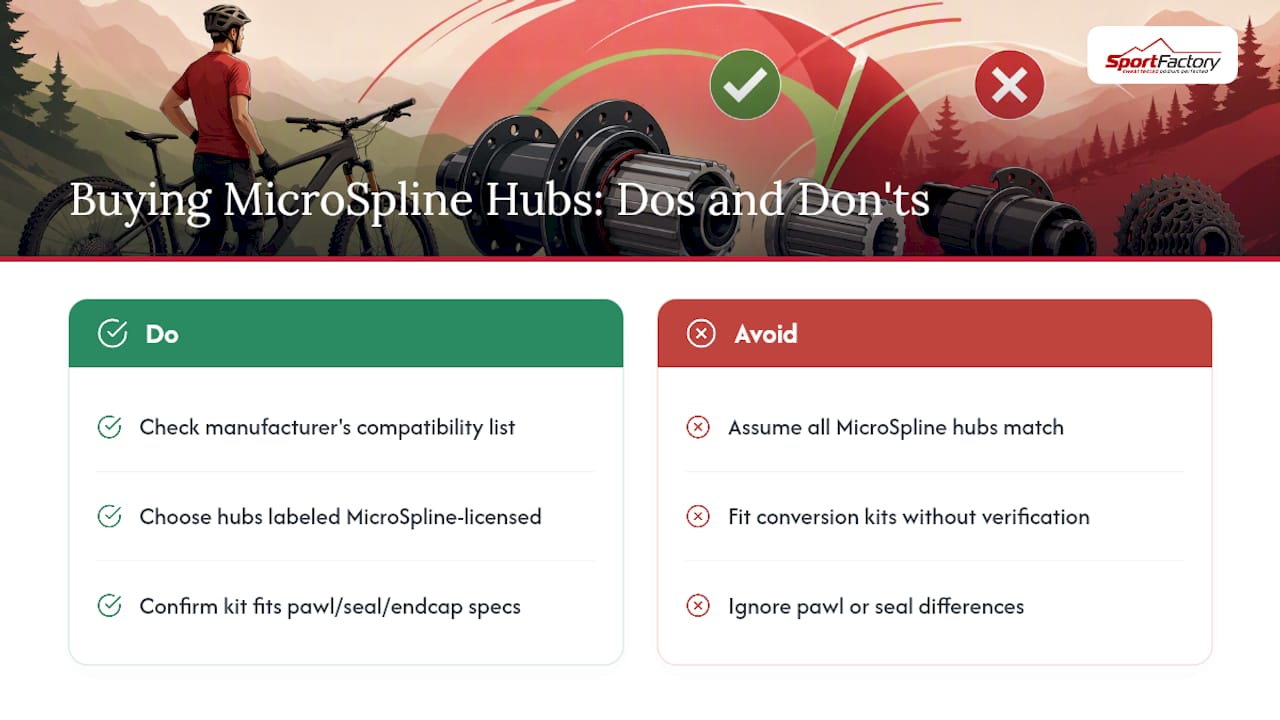
That licensing requirement is exactly why adoption has been uneven. Not every hubmaker implemented MicroSpline right away, and some smaller brands faced delays or frustration getting compatible freehub bodies to market in the years after the standard launched. The practical upshot: if you’re buying a wheelset or a standalone hub and you plan to run Shimano’s 12-speed 10T cassettes, check the manufacturer’s own compatibility list rather than assuming MicroSpline support because the hub is recent.
Mixing brands introduces another wrinkle worth flagging: even when a third-party hub carries a licensed MicroSpline freehub body, pawl engagement, seal design, and endcap geometry can vary from Shimano’s own hubs. That’s usually invisible day to day, but it matters if you’re sourcing a conversion kit built around a specific pawl or seal spec. A kit designed for one hub’s internals won’t necessarily transfer cleanly to another brand’s shell, even if both call themselves MicroSpline compatible.
How Durable Is MicroSpline Compared to Other Freehub Standards?
Long-term durability data specific to MicroSpline is still catching up to the standard’s relatively recent introduction, but the engineering rationale behind it points to a real advantage over early wide-range freehub designs. Shimano built MicroSpline’s 23-spline layout specifically to spread drivetrain torque across more contact points than older standards, which is the same load-distribution principle that governs wear resistance in high-load cycling components generally: more contact area under the same load usually means less concentrated stress at any single point.
In practice, that shows up as reduced notching on aluminum freehub bodies compared to the alloy freehubs paired with earlier 10 and 11-speed wide-range cassettes, which sometimes chewed grooves into the splines within a season or two of hard riding. Steel freehub bodies, whether HG or MicroSpline, still tend to outlast aluminum ones under sustained high torque, which is why some riders running heavy loads or e-MTB motors opt for steel MicroSpline bodies where available rather than the lighter alloy versions.
The honest caveat here: durability benchmarks vary by rider weight, terrain, and how often the drivetrain gets cleaned and inspected, so treat any lifespan estimate as a range rather than a guarantee. Regular visual checks for notching, done during normal chain and cassette maintenance, remain the most reliable way to catch wear before it affects shifting.
Does MicroSpline Affect Shifting Noise or Smoothness?
MicroSpline itself is a mechanical interface, not a shifting mechanism, so it doesn’t directly change how loud or quiet your drivetrain sounds. What it does influence is how securely the cassette seats and how evenly chain load transfers into the freehub, both of which affect shift quality indirectly.
Shimano pairs its MicroSpline-equipped 12-speed cassettes with Hyperglide+ shift ramps, engineered specifically for precise, low-noise shifts under load, particularly useful for racers shifting mid-sprint or mid-climb rather than waiting for a lull in pedaling. That pairing, not MicroSpline alone, is what most riders notice as smoother, quieter shifting compared to older 10 and 11-speed HG drivetrains.
Where MicroSpline itself can introduce noise is when the freehub body is worn, notched, or improperly seated. A cassette that isn’t fully engaged on the splines can create a faint clicking or grinding sound under load, which usually points to either a worn freehub body or a cassette lockring that needs to be retorqued. If your MicroSpline drivetrain gets noisier over time rather than staying consistent, that’s a maintenance signal worth checking before it becomes a bigger problem.
Where Can You Find MicroSpline Spare Parts and Upgrade Kits?
Sourcing MicroSpline-specific parts has gotten considerably easier since the standard’s early years, but availability still varies more than it does for legacy HG components. OEM freehub bodies, like Shimano’s FH-M8110 rear freehub, remain the most straightforward option when your hub brand offers a direct replacement, since they’re built to Shimano’s own tolerances and don’t require guessing about pawl or seal compatibility.
For hubs without a factory MicroSpline option, conversion kits fill the gap. Products like the Stan’s E-sync kit retrofit specific hub models to accept MicroSpline cassettes without a full wheel rebuild, though fitment is hub-specific rather than universal. Before ordering any kit, confirm your exact hub model and generation, since even small design revisions within the same hub line can affect which conversion kit actually fits.
If no direct swap or kit exists for your hub, a full wheel rebuild around a MicroSpline-compatible hub is usually the more reliable long-term fix rather than forcing an incompatible part. A shop that stocks curated, verified-fit components can usually confirm within a quick conversation whether your hub has a real conversion path or whether a rebuild makes more sense.
When Should You Actually Choose MicroSpline?
MicroSpline earns its place for performance-focused 1x12 riders, racers chasing top-end gear speed, and anyone building around a 10 to 51T cassette where that extra top gear changes how a climb or descent rides. If your current setup tops out at 11T and you’re happy with the range, there’s no mechanical reason to force an upgrade.
My buyer tip: match cassette family and hub compatibility before you look at price or brand. Verified conversion kits and clear return policies matter more here than anywhere else in a drivetrain build, since a mismatched freehub is one of the few parts that’s genuinely non-refundable once installed.
— Matt
Where to Buy MicroSpline-Compatible Parts
Getting MicroSpline right the first time beats guessing and paying for a second shipment. The shop offers a curated selection of cassettes, freehub bodies, and conversion kits vetted for fit, so you can avoid cross-referencing part numbers across multiple manufacturer sites.
The catalog covers the categories that actually matter for a MicroSpline build, including Shimano-compatible cassettes, OEM and third-party freehub bodies, and hub-specific conversion kits for riders converting an existing wheelset rather than buying new. If you’re unsure whether your hub supports a direct swap or needs a full rebuild, expert advice can help confirm fitment before ordering to avoid receiving incompatible parts.
Head to the Sportfactoryproshop storefront to browse current MicroSpline-compatible parts or reach out with your hub’s model number for a fitment check before you buy.
Sources
For deeper technical specs, Shimano’s own 12-speed freehub compatibility guide and MicroSpline technology page cover spline counts and cassette ranges directly. BikeRadar’s explainer breaks down the geometry reasoning, and Stan’s conversion kit page shows a real-world retrofit example.
- MICRO SPLINE | SHIMANO BIKE-EU