

Save Energy on Rough Trails: Hardtail vs Full Suspension Mountain Bikes
Posted by Matt Russ on 23rd Sep 2026
Save Energy on Rough Trails: Hardtail vs Full Suspension Mountain Bikes
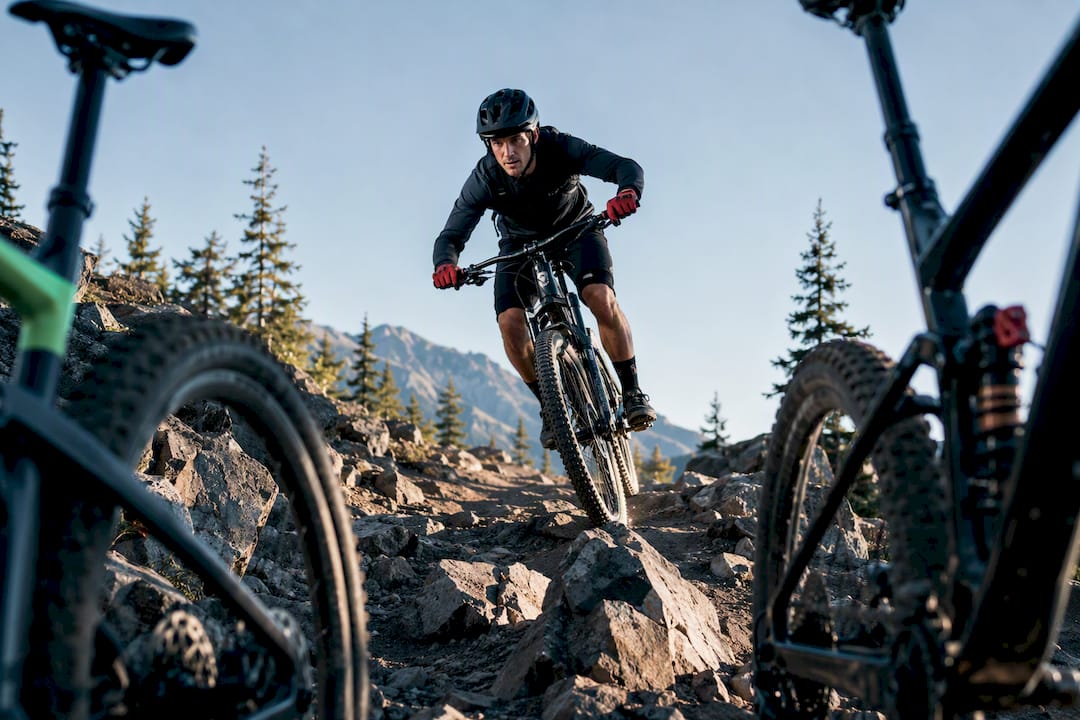
Full suspension wins on rocky, root-strewn trails and long technical descents, where a rear shock keeps your tires tracking and your body fresh. A hardtail wins on smoother singletrack, climb-heavy loops, and for riders who value efficiency, simplicity, and a lower price tag. The real tradeoff is comfort and traction against weight and ease of upkeep, and the sections below walk through the evidence, the costs, and a test-ride checklist to help you settle it for yourself.
TL;DR:
- Hardtails excel on climbing and smooth singletrack, offering better pedaling efficiency and skill development for riders who prioritize speed and simplicity.
- Full suspension bikes provide significantly lower physiological exertion and better traction on rough, rocky, or root-covered trails, making them ideal for technical terrain.
- Cost and maintenance favor hardtails, which have fewer parts, lower upfront prices, and simpler upkeep, while full suspension bikes incur ongoing expenses for shock servicing and pivot bearings.
- Riders who frequently tackle technical descents benefit more from full suspension’s comfort and grip, whereas occasional or climb-focused riders should opt for a hardtail to save weight and money.
- Upgrading tires and suspension components improves ride quality for both platforms more than frame upgrades, emphasizing the importance of quality parts over budget models.
Table of Contents
- What Is a Hardtail Mountain Bike and Who Should Ride One?
- What Is a Full Suspension Mountain Bike and Who Should Ride One?
- How Do Hardtails and Full Suspension Bikes Really Compare?
- Which Mountain Bike Should You Buy for Your Terrain and Budget?
- What Does Ownership Actually Cost Over Time?
- How Do You Test-Ride a Hardtail and Full Suspension Back to Back?
- What Riders Get Wrong About Choosing a Platform
- Upgrade Either Platform With the Right Parts
- Primary Sources and Further Reading
- Sources
- FAQ
What Is a Hardtail Mountain Bike and Who Should Ride One?
A hardtail runs a suspension fork up front and a rigid frame in back, with no rear shock absorbing hits. That simple layout is why hardtails typically weigh less than a full-suspension bike with comparable components, and why every watt you put into the pedals moves you forward instead of bouncing a rear shock.
That efficiency shows up most on climbs and rolling, well-groomed singletrack, where a hardtail feels snappy and direct. Skill development is the other underrated benefit. Without a rear shock smoothing over sloppy line choices, you learn body positioning and momentum management faster. BikeMag’s coaching perspective notes this is exactly why many coaches put beginners and racers on hardtails during training blocks.
The tradeoffs are real, though. Rough terrain gets transmitted straight into your hands and spine, and traction suffers when the rear wheel skips over roots instead of following them.
Setup basics that matter most on a hardtail:
- Run a moderate amount of fork travel appropriate for your terrain, with cross-country riders using less and trail riders using more.
- Drop tire pressure a few PSI below what you’d run on full suspension, since the tire itself becomes part of your rear suspension.
- Consider a tire insert if you’re running lower pressures aggressively, which lets you gain cushion without the pinch-flat risk.
What Is a Full Suspension Mountain Bike and Who Should Ride One?
A full-suspension bike pairs that same front fork with a rear shock and linkage system, letting the back wheel move independently of the frame to absorb impacts. That rear shock is the whole point: it keeps your tire in contact with the ground on chattery, rocky, or root-covered terrain where a hardtail’s rear wheel would be skipping and losing grip.
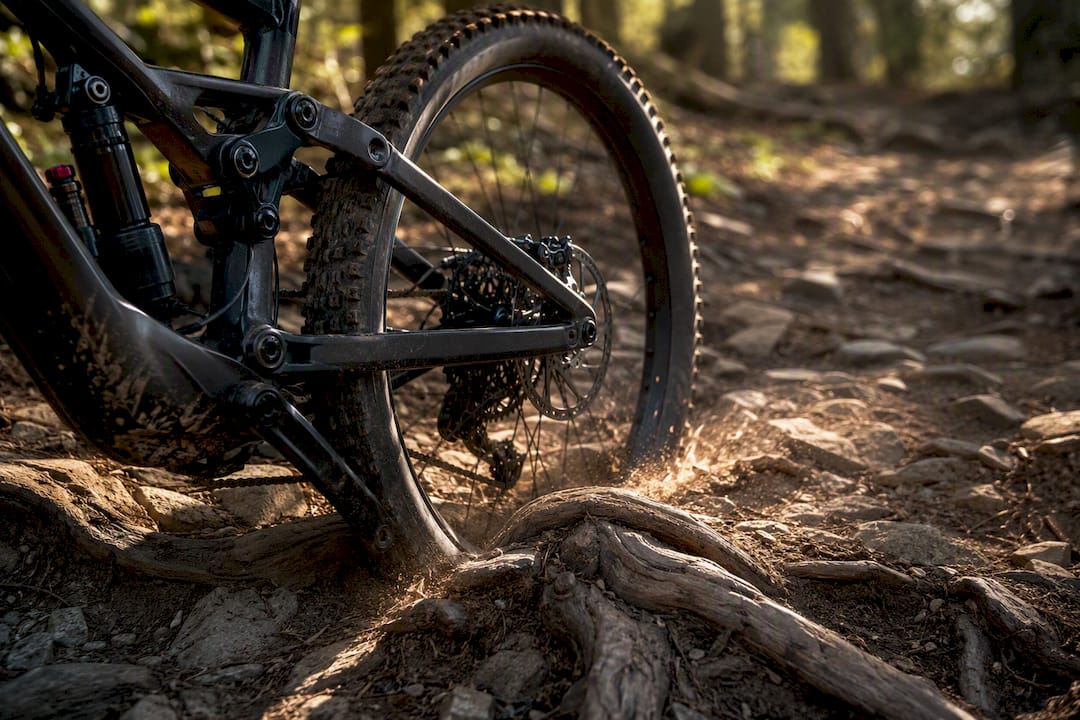
The physiological case for full suspension isn’t just marketing. A laboratory study on suspension systems found that riders on full-suspension bikes recorded lower heart rate, lower oxygen consumption, and lower perceived exertion than hardtail riders on severely bumpy tracks, along with higher comfort scores. In plain terms, your body works less hard to survive rough trail on a bike with a working rear shock.
That capability comes with costs: more weight, more moving parts, and a higher price for an equivalently specced frame.
Setup priorities for full suspension:
- Set sag first, aiming for roughly 25 to 30% of total travel compressed at rest with your riding gear on.
- Tune rebound so the shock returns quickly enough to track terrain but doesn’t buck you off small hits.
- Use the lockout on smooth climbs or pavement, but leave the shock open on anything with texture, since modern designs pedal more efficiently than older platforms even with the suspension active.
How Do Hardtails and Full Suspension Bikes Really Compare?
The efficiency-versus-traction tradeoff isn’t abstract. It shows up in specific numbers once you put both bikes on the same rough trail.
Full suspension riders on severely bumpy tracks post measurably lower heart rate and perceived exertion than hardtail riders covering the same terrain, according to the physiological suspension study cited above. That gap closes or disappears on smooth trails, where the extra weight of a full-suspension frame becomes the bigger factor.
Here’s how the two platforms diverge on the things that actually affect your wallet and your legs:
- Efficiency: hardtails pedal more directly on smooth terrain; full suspension pulls ahead once the trail gets rough enough that traction loss outweighs the weight penalty.
- Fatigue: full suspension reduces physiological cost on technical terrain, which matters most on long rides or multi-day trips.
- Cost and maintenance: hardtails have fewer service items and a lower upfront price for the same component spec.
- Rider frequency: someone hitting heavy technical trail weekly benefits more from full suspension than someone riding smoother trails occasionally.
If your riding is mostly climb-focused cross-country loops, the fatigue advantage of full suspension rarely offsets its added weight and cost.
Which Mountain Bike Should You Buy for Your Terrain and Budget?
Match the bike to where you actually ride, not to the bike you wish you rode. If your typical outing is mostly climbing and smooth, flowy singletrack, buy the hardtail. You’ll move faster on the ups, spend less on upkeep, and build better trail skills in the process.
If most of your rides involve rocky, rooty descents or long technical days, buy full suspension. The comfort and traction gains aren’t marginal on that terrain, and BicycleNest’s buying analysis backs the same conclusion: full suspension earns its cost specifically for riders who face rough trail regularly, while a hardtail delivers better value otherwise.
Budget rules that hold up regardless of platform:
- Spend on fork quality and tires before anything else. Those two touchpoints affect ride feel more than a frame upgrade.
- Upgrade wheels and drivetrain only after your fork and tires are dialed in.
- Pair a 130 to 150mm travel fork with 29-inch wheels for trail hardtails, or 27.5-inch wheels if you want more agility on tight, technical singletrack.
- Full-suspension trail bikes typically pair 130 to 160mm of rear travel with 29-inch wheels; enduro builds push higher.
Pro Tip: If you’re torn between a mid-spec full suspension and a well-built hardtail at the same price, buy the hardtail and put the savings into better tires and a suspension fork upgrade. Component quality beats a bargain rear shock almost every time.
What Does Ownership Actually Cost Over Time?
A full-suspension bike with components matching a hardtail typically carries a real price premium, driven by the rear shock, linkage hardware, and added frame engineering. That premium follows you into ownership, not just the sticker price.
Rear shocks need periodic service, and pivot bearings wear and need replacement over time. BicycleNest’s maintenance guidance points to annual shock service and periodic bearing checks as a realistic budget line for regular riders, on top of the drivetrain and brake wear both platforms share.
Where your money actually goes on either bike:
- Tires and tubeless sealant are the highest-frequency cost on both platforms.
- Fork service (lower leg service, seal replacement) applies to hardtails and full suspension alike.
- Shock service and pivot bearings are full-suspension-specific recurring costs.
- When shopping used, check pivot play and shock seals on full suspension; check headset and fork bushings on a hardtail.
How Do You Test-Ride a Hardtail and Full Suspension Back to Back?
A single demo lap tells you little. Structure the ride so both platforms get tested under the exact same conditions.
- Get fitted first. Set saddle height and cockpit reach before you set sag, so poor fit doesn’t disguise itself as a suspension problem.
- Set sag and basic rebound using the shop’s recommended pressure for your weight before you roll out.
- Ride a climb segment on each bike back to back and note how much the rear end moves under pedaling load.
- Hit a technical descent and pay attention to how much chatter reaches your hands versus how much the rear wheel tracks the ground.
- Finish on a flow trail to judge composure through berms and rollers, where weight and geometry matter as much as suspension.
- If a bike feels harsh or vague, try adjusting pressure or rebound once before concluding the platform itself is wrong for you.
What Riders Get Wrong About Choosing a Platform
Hardtails force you to read terrain and manage your body weight, which builds skills full suspension can mask. Full suspension expands what terrain you can ride comfortably and confidently, especially as trails get rougher. Neither fact cancels the other out. Plenty of experienced riders keep one of each and choose based on the day’s trail, not on which bike is technically “better.” The right pick is often the one that makes you want to ride more, not the one that wins an efficiency spreadsheet.
— Matt
Upgrade Either Platform With the Right Parts
Whichever bike you land on, the fastest way to close the gap between hardtail and full suspension is smart component choices. A tubeless tire setup with the right casing and pressure improves comfort and traction on a hardtail almost as much as adding rear travel, and fresh fork service parts keep either bike’s front end tracking the way it should.
Sportfactoryproshop curates gear built for riders who take their setup seriously, not generic parts bins. Browse tires and tubeless kits to dial in traction and rolling comfort, or check handlebars, pedals, and cockpit components if grips, a dropper post, or pedal upgrade is next on your list. For service items like pumps, cleaning tools, and lights that keep either platform running reliably between rides, the full bike category is worth a look. If you’re planning a demo day or a longer ride to test your options, review this summer bike safety guidance before you head out. Start with the tire and cockpit upgrades most likely to change how your current bike feels this week.
Primary Sources and Further Reading
- Effect of Suspension Systems on Physiological and Psychological Responses
- BikeMag: Hardtail vs. Full Suspension Comparison Guide
- REI: Full-Suspension vs. Hardtail Mountain Bikes
Sources
- Effect of suspension systems on the physiological and psychological responses during sub-maximal cycling on simulated smooth and bumpy tracks
- Hardtail vs. Full Suspension: Ultimate MTB Comparison Guide - BikeMag
- Is a full-suspension mountain bike worth it for cyclists? – BicycleNest
- Hardtail or full-suspension bikes - what to choose and when? - Bike Magazine
- Full-suspension vs. hardtail mountain bikes - REI
FAQ
Why do people ride hardtails?
Riders choose hardtails for lower weight, better pedaling efficiency on climbs and smooth trails, lower purchase and maintenance cost, and faster skill development since there’s no rear shock to mask poor line choice.
What are the cons of a hardtail mountain bike?
Hardtails transmit trail impact directly into your hands and spine, and traction drops on rough or rocky terrain because the rear wheel can’t absorb hits independently. They’re a weaker choice for riders who regularly face technical descents.
What are the disadvantages of a full-suspension bike?
Full suspension adds weight, costs more upfront for comparable components, and requires periodic rear shock service and pivot bearing maintenance that hardtails don’t need.
Can a hardtail go downhill?
Yes, hardtails handle moderate descents and flow trails fine, though rough or rocky descents favor full suspension for traction and comfort. A study on suspension systems found riders experience measurably higher exertion on hardtails over severely bumpy terrain.
Where can I find upgrades to improve either bike’s ride quality?
Sportfactoryproshop stocks tires and tubeless kits and cockpit components suited to both hardtail and full-suspension setups; current prices are on the website.