

The Race Recap: How to Analyze Your Performance and Learn From Racing Mistakes
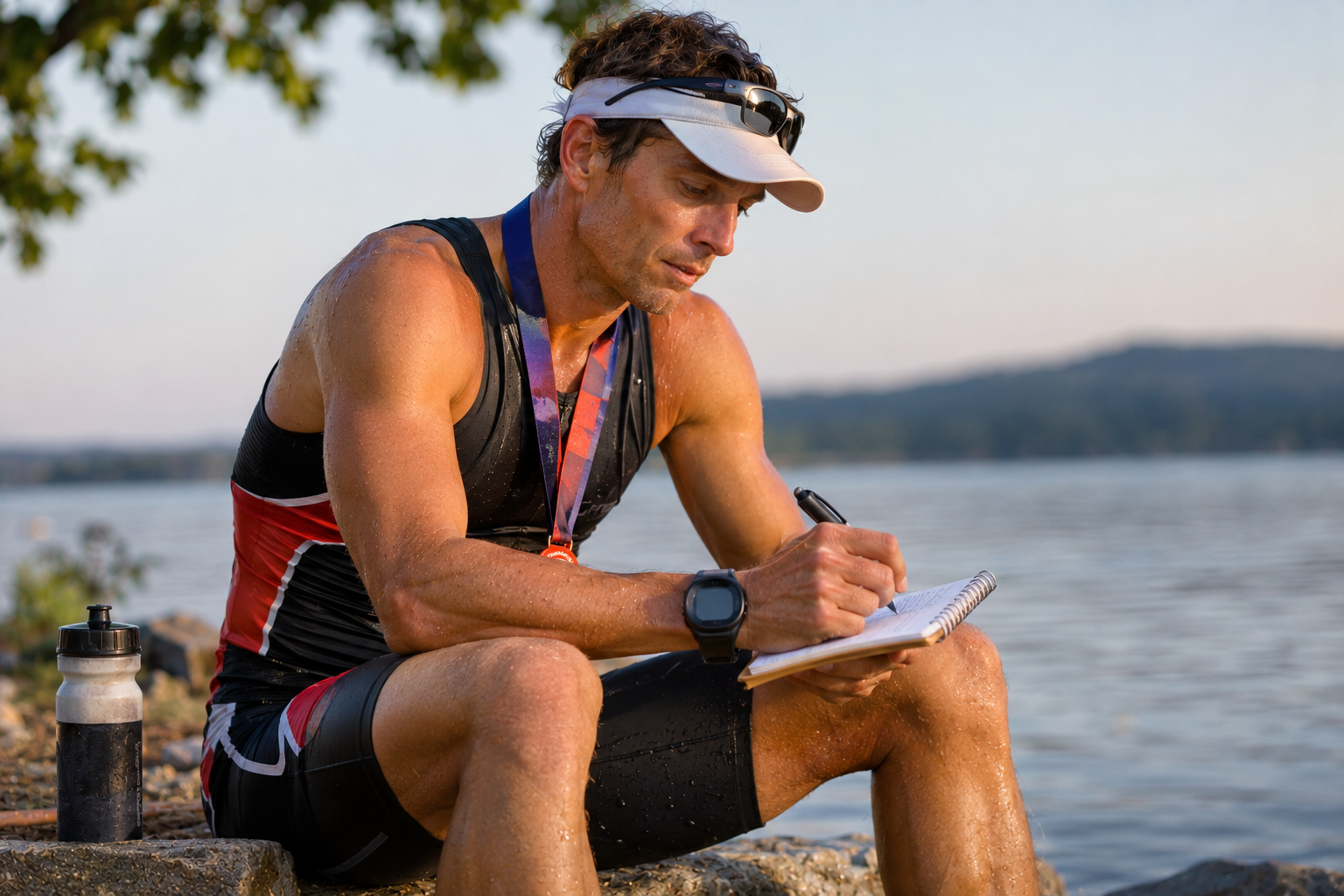
By Coach Matt Russ
Originally written for Triathlete magazine
Endurance athletes spend countless hours monitoring their training, analyzing workouts, and preparing for competition. Yet many devote surprisingly little time to evaluating what actually happened on race day. This is unfortunate because a race can provide some of the most valuable information available for improving future performance.
Race results reveal far more than finishing times and overall placement. They can help identify weaknesses in pacing, nutrition, hydration, race strategy, mental preparation, and specific physiological abilities. Unfortunately, I've seen athletes walk away from disappointing performances without understanding what went wrong, only to return to the same training methods and make the same mistakes in their next event.
You've probably heard the saying that those who fail to learn from the past are doomed to repeat it. This applies directly to endurance racing. A thorough post-race analysis can turn even a disappointing performance into an opportunity for improvement.
Don't Be Afraid to Examine Your Mistakes
One of the characteristics of successful athletes is their willingness to evaluate their performances objectively. Mistakes are inevitable, but repeating them unnecessarily can limit progress. The key is identifying what happened, understanding why it happened, and making appropriate adjustments before the next competition.
When athletes are disappointed with their results, they often assume they weren't fit enough or didn't train hard enough. However, race performance depends on much more than fitness. Poor pacing, inadequate fueling, excessive heat, equipment problems, unfavorable course conditions, or ineffective race execution can all influence the outcome.
Determining the cause of an underwhelming performance is a little like solving a mystery. You need to collect the available clues, examine how they relate to one another, and identify the most likely explanations. A single piece of information rarely tells the entire story.
This is why I encourage athletes to approach their race recaps with curiosity rather than frustration. The objective isn't to assign blame. It's to gather information that can make the next race better.
Collect Meaningful Race Data
You can't thoroughly analyze information you never collected. Fortunately, modern training devices make gathering race data easier than ever. GPS watches, cycling computers, power meters, and heart rate monitors can record pace, speed, power, cadence, elevation, and other useful metrics.
For cyclists and triathletes, power data can be particularly valuable because it provides a direct measurement of mechanical output, independent of wind or terrain. Heart rate offers additional insight into physiological strain, while pace and speed help reveal how effectively effort translated into forward progress.
These measurements become even more useful when displayed graphically. Reviewing changes in power, heart rate, and pace throughout an event can reveal patterns that aren't obvious from average values alone. For example, an athlete may have maintained a respectable average cycling power while producing repeated surges that contributed to excessive fatigue during the run.
However, more data doesn't automatically mean better analysis. Every measurement needs to be interpreted within the context of the event, and no single metric can explain every performance problem.
Most importantly, don't allow technology to distract you from racing. Learn to operate your equipment before competition, configure the screens you'll need, and avoid experimenting with unfamiliar devices on race day. Your attention should remain on executing your race strategy rather than scrolling through data fields.
Create a Post-Race Recap
I have my athletes complete a race recap shortly after each event, while the details are still fresh. This simple process gives me a clearer picture of what occurred during the race and provides valuable information for comparison throughout the season.
A written recap becomes even more useful when combined with a conversation between the athlete and coach. Data can reveal what happened, but the athlete's observations often help explain why.
The following questions provide a useful framework for evaluating your next race.
1. Was this your first time competing in this event?
If you've raced the same course before, previous performances provide a useful reference point. However, comparisons should account for differences in weather, course layout, competition, and race conditions.
2. What were the course and weather conditions?
Record temperature, humidity, wind, precipitation, water conditions, elevation, and terrain. A slower cycling split into a strong headwind or a slower run on a hot day may not indicate reduced fitness.
3. Did you achieve a personal record or improve your performance?
Compare your results with previous races and realistic pre-race expectations. Remember that improvement isn't always reflected in finishing time, particularly when conditions vary substantially.
4. What were your total race time and individual splits?
For triathletes and duathletes, examine each discipline and transition. Determine where you performed well, where time was lost, and whether the results matched your training and race strategy.
5. How consistent were your running splits?
Review your pace throughout the run. Did you maintain a steady effort, start too aggressively, or experience a significant decline late in the event? Consider terrain, temperature, and accumulated fatigue before drawing conclusions.
6. What happened during the cycling leg?
Examine power output, speed, cadence, and pacing variability. Did you follow your planned effort, or did you repeatedly exceed your target power? For multisport athletes, consider how the cycling effort may have affected the subsequent run.
7. What does your heart rate data reveal?
Review heart rate trends alongside pace, power, temperature, and perceived exertion. An unusually high or low heart rate may reflect several factors, including heat, fatigue, pacing, or sensor error, rather than one specific problem.
8. Did you follow your fueling and hydration plan?
Record what you ate and drank before and during the race, including approximate carbohydrate and fluid intake. Note any gastrointestinal problems, missed feeding opportunities, or changes from your planned strategy.
9. What did your body weight and hydration observations indicate?
When practical, pre- and post-event body weight can help estimate net fluid balance, especially when combined with fluid intake and other observations. However, body weight changes alone cannot diagnose dehydration or determine whether an athlete drank an appropriate amount. Fuel use, fluid losses, and other factors influence the measurement.
10. How do you feel about your performance?
This may be the most revealing question of all. Were you confident, focused, and mentally prepared? Did anxiety, negative self-talk, unrealistic expectations, or emotional pacing affect your decisions? Your perception of the race can reveal issues that performance data cannot.
Look for Patterns, Not Just Individual Numbers
Once you've gathered the information, begin looking for relationships between the different measurements. A significant decline in running pace accompanied by rising heart rate might reflect heat strain, inadequate fueling, dehydration, excessive early pacing, or a combination of factors.
It would be a mistake to assume that one particular pattern proves a single cause. For example, post-race weight loss doesn't automatically confirm that dehydration caused a late-race slowdown. You need to consider the athlete's fluid intake, environmental conditions, effort, symptoms, and other available evidence.
This is where experience and careful interpretation become valuable. A coach can compare the athlete's subjective observations with the objective data and determine which explanations are most plausible.
I also recommend comparing multiple races rather than relying exclusively on one performance. Repeated pacing problems, nutritional difficulties, or late-race declines are often more informative than an isolated disappointing result.
Turn Your Race Recap Into a Training Plan
Collecting information is only useful if you do something with it. Once you've identified potential performance limitations, determine how to address them in your training.
If your transitions were slow, incorporate transition practice into your weekly schedule. If you struggled with open-water swimming, add open-water sessions or race simulations to improve confidence and familiarity. If you repeatedly exceeded your cycling power targets and struggled on the run, practice controlled bike pacing followed by race-specific running.
Nutrition and hydration problems should also be addressed during training rather than left until the next competition. Practice your planned carbohydrate intake, evaluate fluid needs under different conditions, and identify products and strategies you tolerate comfortably.
The same principle applies to physical limitations. If you consistently lose speed late in an event despite appropriate pacing and fueling, you may need to examine your endurance development, muscular durability, or race-specific preparation.
Avoid changing everything at once. Identify the most important limitations, prioritize the adjustments most likely to improve performance, and evaluate their effectiveness during subsequent training sessions and races.
Keep Your Race Results in Perspective
One of the most important parts of race analysis is distinguishing a disappointing result from an actual decline in performance.
I once worked with an athlete who was frustrated because her finishing time showed little improvement over the previous year's race. After reviewing the conditions, I discovered that the course had been exceptionally windy. When I compared the results of other competitors who had raced both years, it became clear that the wind had affected nearly everyone.
Her finishing time initially appeared disappointing, but when the conditions were considered, her performance represented meaningful improvement. It took reviewing the broader race results to convince her that she had actually raced quite well.
This illustrates why finishing time alone can be misleading. Race conditions, course changes, and competitive circumstances must all be considered before deciding whether an athlete improved.
Race-specific training sessions and practice events can help establish realistic performance expectations, but even careful preparation cannot account for every variable on race day.
Evaluate Your Mental Performance, Too
Physical preparation is only part of successful racing. Mental skills influence pacing decisions, confidence, concentration, and how athletes respond when events don't unfold as expected.
I once consulted with a runner who finished fourth in a half marathon and achieved a personal record. Despite exceeding his previous performance, he was extremely disappointed because he had expected to win. Rather than recognizing his improvement, he viewed the result as a failure and was ready to abandon his competitive goals.
His problem wasn't a lack of fitness. It was an unrealistic expectation that prevented him from appreciating an otherwise excellent performance.
We worked on developing more appropriate goals and evaluating success according to factors he could control, including preparation, execution, and personal improvement.
Pre-race anxiety, emotional over-pacing, negative self-talk, and difficulty responding to setbacks can all interfere with performance. These mental skills deserve attention just as physical training does.
A race recap can help identify these patterns because athletes often recognize their mistakes more clearly after the emotional intensity of competition has passed.
The Bottom Line: Every Race Is an Opportunity to Improve
A race shouldn't end when you cross the finish line. The information you gather afterward can be just as valuable as the training that prepared you for the event.
Take the time to document your results, examine your pacing and fueling, consider the conditions, and evaluate your mental performance. Look for recurring patterns, identify the factors you can control, and develop a practical plan to address your limitations.
If you're having difficulty interpreting the information, an experienced endurance coach can provide an outside perspective and help distinguish meaningful problems from normal race-to-race variability.
Most importantly, don't be afraid to acknowledge your mistakes. A disappointing race doesn't necessarily mean your preparation was unsuccessful, and a personal record doesn't mean everything went perfectly.
The athletes who continue improving aren't necessarily the ones who make the fewest mistakes. They're the ones who learn the most from them.
Coach Matt Russ enjoyed a professional coaching career spanning over two decades of working with professional endurance athletes. His athletes have achieved numerous regional, national, international and championship titles under his direction. Matt achieved the highest level of licensing by both USA Triathlon and USA Cycling, and was a licensed USA Track and Field Coach as well as a SICI Certified Bike Fitter. His accomplishments include being named "Team USA" Coach for the Beijing World Championship. Head Coach and founder of The Sport Factory, a USA Triathlon Certified Performance Center, he has authored many articles on a wide variety of endurance related topics.
Related Articles