

Triathlon Pacing Strategy: Swim, Bike & Run Tips
By Coach Matt Russ
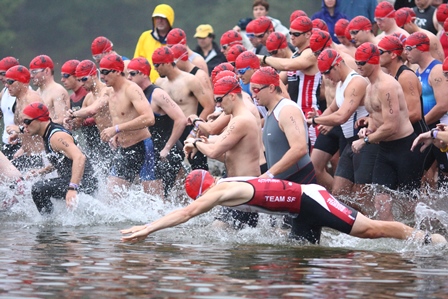
One of the most common questions athletes ask before a triathlon or duathlon is, “What is the right pace for my race distance?” The answer depends on your fitness, experience, course conditions, and ability to manage effort across all three disciplines.
Developing an effective triathlon pacing strategy is not simply about swimming, cycling, or running as fast as possible. It is about finding the right intensity for each leg so you can achieve your fastest overall race time without compromising the next discipline.
For athletes competing in amateur, draft-illegal triathlons, the most effective approach is often to think of each leg as a time trial. Rather than reacting to competitors, focus on your own performance and execute a pacing plan designed around your abilities.
1. Race the Clock, Not the Competition
In draft-illegal triathlon and duathlon events, athletes generally benefit from maintaining a controlled, consistent effort rather than responding to every competitor who passes them.
Unlike draft-legal racing, where positioning, surges, attacks, and closing gaps can dictate tactics, draft-illegal racing places greater emphasis on individual pacing and sustained performance.
Many events use wave starts or time-trial starts, making it difficult to know exactly where you stand relative to your competitors. Chasing someone ahead of you can pull you away from your planned effort and cause you to expend energy you will need later.
Instead, visualize your race as a personal time trial. Concentrate on getting from the start to the finish as efficiently as possible.
Your objective is not to set a personal record for each individual distance. It is to produce your best combined performance across the swim, bike, and run.
2. Find Your Racing Redline
Your redline is the level of effort you can sustain most effectively for a particular race distance and set of conditions. Finding it requires an understanding of your fitness and how the demands of one discipline affect the next.
An overly aggressive swim can compromise your bike. An excessively hard bike can leave you struggling through the run. The fastest individual split does not always produce the fastest overall finish.
The goal is to identify the appropriate intensity for each leg and stay as close to it as conditions allow.
Depending on your experience and available equipment, you can monitor your effort using:
-
Heart rate monitors
-
Cycling power meters
-
GPS-based speed and pace devices
-
Running pace and split times
-
Perceived exertion
-
A combination of these methods
No single method is ideal for every athlete. The best choice is one you understand, can use consistently, and can interpret under race conditions.
3. Use Real-Time Metrics Instead of Chasing Splits
A good pacing strategy is proactive rather than reactive. You want to manage your current effort instead of constantly adjusting it in response to what happened during the previous mile.
For example, running mile splits can be useful on a relatively flat, familiar course. However, on a rolling course, the previous mile's pace may not tell you how hard you should run the next one. Terrain, elevation changes, and even inaccurate mile markers can distort the picture.
Trying to maintain the same pace uphill as you do on flat ground can turn a steady effort into a series of costly surges.
A better approach is to let pace and speed fluctuate naturally with the terrain while keeping your overall effort relatively consistent.
Heart rate, cycling power, perceived exertion, and GPS pace can help you monitor that effort in real time. On the bike, however, speed alone can be misleading because wind, road gradient, rolling terrain, and riding position all affect how fast you travel.
For example, maintaining the same speed into a headwind may require considerably more effort than maintaining it with a tailwind. Chasing a speed target in these conditions can cause you to overpace without realizing it.
The objective is to maintain the appropriate effort, not to force the same speed or pace under every condition.
4. Understand Heart Rate and Power Zones
Heart rate monitors and power meters can provide valuable objective feedback, but they are most effective when you understand what the numbers mean.
To use these tools properly, you need reliable performance benchmarks. Depending on your training background and equipment, these may include functional threshold power (FTP), lactate threshold, or other physiological testing and training-derived performance measures.
A qualified coach or exercise physiologist can help establish appropriate training and racing zones. Field tests and structured workouts can also provide useful estimates when performed correctly.
Remember that a single test represents your performance under specific conditions on a particular day. Heat, fatigue, stress, hydration, and other factors can affect the results. Training files and race data help establish a more complete picture of your capabilities.
These metrics are tools, not guarantees. Heart rate can lag behind changes in effort and rise in hot or humid conditions. Power meters and GPS devices can malfunction, lose signal, or run out of battery.
Learn to use your equipment, but also develop the ability to judge effort without it. You should be able to execute a sensible pacing strategy even when your technology fails.
5. Pace the Swim for the Entire Race
Swimming presents a unique pacing challenge because pool performance does not always translate directly to open water.
In a race, your swimming pace can be affected by sighting, currents, waves, wetsuit use, water temperature, and the proximity of other athletes. These variables make it difficult to rely on pool pace alone.
Perceived exertion is particularly useful for managing swim intensity. You should also practice open-water swimming before race day to become familiar with sighting, navigation, and the physical demands of swimming in a group.
Whenever possible, practice on the actual race course. Several open-water sessions, including swim-to-bike brick workouts, can help you understand how the conditions affect your expected swim time and your ability to begin the bike comfortably.
The goal is to complete the swim efficiently without using so much energy that your bike and run suffer.
6. Avoid the Most Common Bike Pacing Mistake
For many triathletes, the bike is where pacing mistakes begin.
You may feel strong early in the ride. The excitement of race day, the sensation of speed, and the temptation to catch another athlete can make an aggressive effort seem perfectly reasonable.
Unfortunately, the consequences often appear later, when you reach the run.
Before deciding how hard to ride, consider three factors:
-
Race distance: A sprint triathlon demands a different pacing strategy from an Ironman-distance event.
-
Your fitness and expected course time: Athletes with different experience levels cannot necessarily sustain the same relative intensity.
-
Your established performance metrics: Use your heart rate, power, perceived exertion, and other relevant benchmarks to guide your effort.
Shorter events may allow a higher intensity relative to your threshold, while longer races generally require more restraint. Your appropriate intensity also depends on your training history and ability to run well after cycling.
Do not assume you can sustain a race-level effort simply because you can produce it briefly in a workout. You need to practice the specific intensity required for your event.
Use race simulations and brick workouts
One of the best ways to develop a reliable bike pacing strategy is to combine training data, previous race files, and race-specific brick workouts.
A brick workout involves completing two disciplines consecutively, most commonly cycling followed by running. Race simulations allow you to practice your intended bike intensity and evaluate how it affects your run.
Pay attention to smooth power delivery, a controlled effort, and a comfortable, sustainable cadence. Cadence is not necessarily a direct pacing target, but it can help you maintain efficient pedaling when used in conjunction with your established riding preferences and power or heart-rate data.
Experiment with your thresholds during training, not on race day. Each race should provide another opportunity to evaluate your pacing, identify mistakes, and refine your strategy.
7. Make the Transition From Bike to Run
The transition from cycling to running requires your body to change movement patterns while continuing to support a high level of aerobic work.
Your muscles have been working in a cycling-specific pattern. Once you begin running, the demands change, and it can take time to settle into your running rhythm.
Do not expect the first 400 meters to be your fastest. Allow yourself a controlled transition period rather than immediately forcing your goal running pace.
Your ideal pace off the bike should be established through previous races, training sessions, and brick workouts. These sessions can help you understand how your heart rate, perceived exertion, and running pace respond to different levels of cycling intensity.
The more race-specific experience you accumulate, the better you can predict what is sustainable.
Let your effort respond to the terrain
Just as on the bike, trying to hold a fixed running pace uphill can waste energy. Allow your pace to slow naturally on climbs and increase when conditions permit, while keeping your overall effort under control.
Save truly maximal efforts for the appropriate stages of the race, particularly the final push toward the finish when your remaining energy and race circumstances justify it.
Pay attention to your breathing and perceived exertion. If your breathing becomes difficult to control and you must slow down to recover, you may be pushing beyond an intensity you can sustain. Backing off briefly can help you regain control before the effort becomes more costly.
The aim is not to run every mile at exactly the same speed. It is to maintain a sustainable effort that produces the best overall result.
8. Use Every Race to Improve Your Pacing
Race data is among the most useful information an endurance athlete can collect. Review your heart rate, power, pace, perceived exertion, course conditions, and how you felt during each discipline.
Ask yourself:
-
Did I swim too aggressively, or did I exit the water feeling controlled?
-
Did I maintain a sustainable cycling effort, or chase competitors and speed targets?
-
How did my bike pacing affect my first few miles of running?
-
Did my effort remain appropriate for the course and weather?
-
Where could I have saved energy without sacrificing meaningful time?
Use the answers to adjust your next training block and race plan.
You may discover that a slightly more conservative swim or bike produces a faster run and a better overall finish. Alternatively, your data may show that you can sustain a higher effort without compromising the final discipline.
The important point is to make adjustments based on evidence rather than assumptions.
9. Execute Your Plan on Race Day
Even an excellent pacing strategy is useless if you abandon it at the first sign of competition.
Race-day excitement can make you feel stronger and faster than usual. That extra motivation is valuable, but it can also encourage you to push beyond your planned intensity early in the event.
Know your performance capabilities before race day, establish realistic targets, and remain willing to adjust for heat, wind, terrain, and other conditions.
Pacing is not an exact science. Your fitness, the course, the weather, and your physical response will all influence the result. A good plan provides a framework for making decisions rather than a rigid set of numbers that must be followed regardless of circumstances.
The bottom line: The best triathlon pacing strategy is the one that allows you to sustain the right effort across the swim, bike, and run. Focus on your own race, use performance data intelligently, practice your target intensities in training, and learn from every event. You may be surprised by how much time you can save simply by pacing more efficiently.
Hello and thank you for contacting us. This item was picked up by the postal service but I do see that it has not been scanned in and is not tracking. We will contact USPS to run a trace on the item. This could simply mean the label barcode is unreadable and that the item is still in transit, or that it is lost.
See Also...

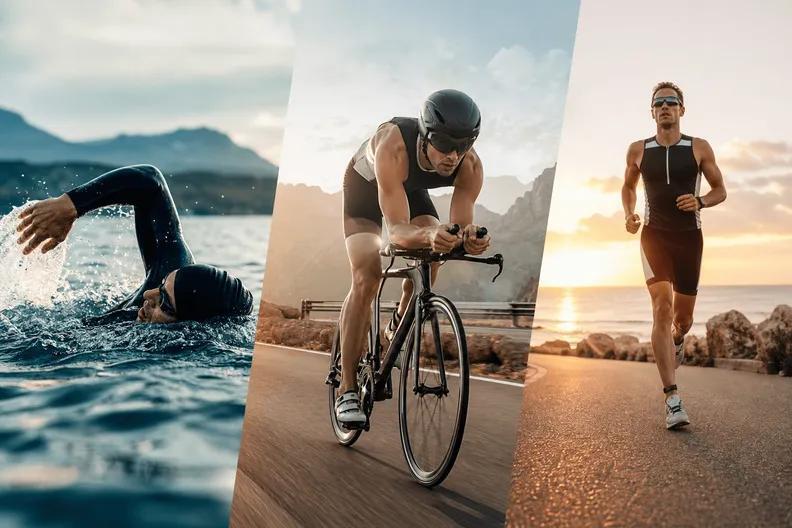
Matt Russ enjoyed a professional coaching career spanning over two decades of working with professional endurance athletes. His athletes have achieved numerous regional, national, international and championship titles under his direction. Matt achieved the highest level of licensing by both USA Triathlon and USA Cycling, and was a licensed USA Track and Field Coach. His accomplishments include being named "Team USA" Coach for the 2011 Beijing World Championship. Head Coach and founder of The Sport Factory, a USA Triathlon Certified Performance Center, he has authored many articles on a wide variety of endurance related topics.