

Cyclists, Test Your Hitch Rack Weight Limit With a Bathroom Scale
Posted by Matt Russ on 3rd Sep 2026
Cyclists, Test Your Hitch Rack Weight Limit With a Bathroom Scale
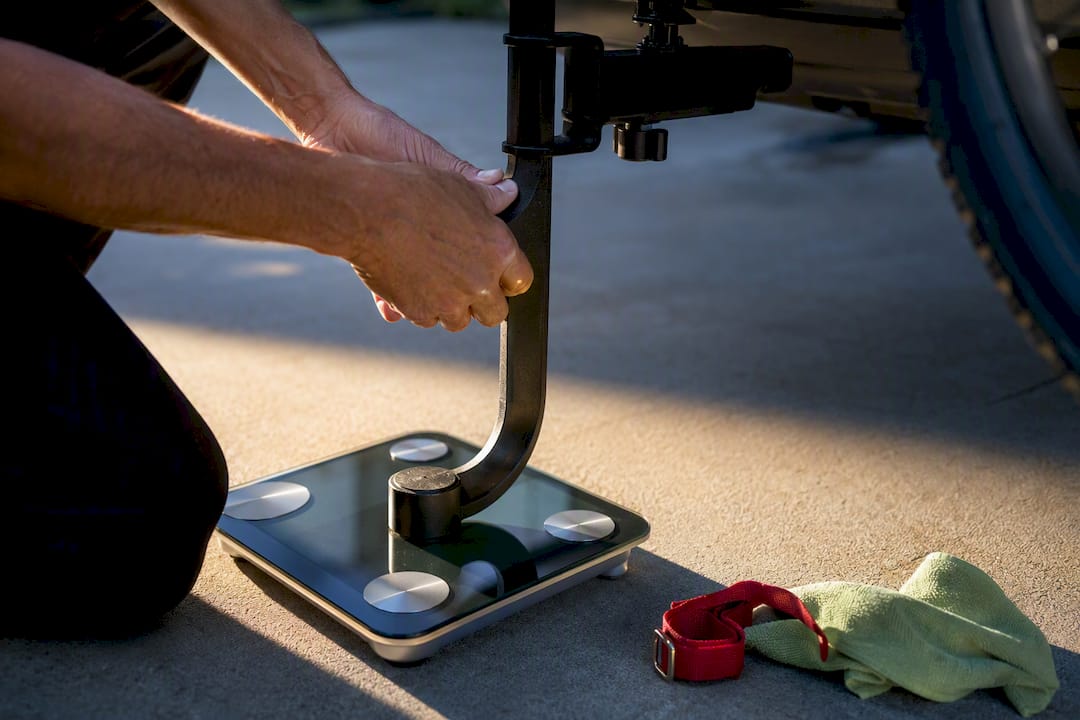
The vehicle’s tongue-weight limit is the number that controls how much weight a hitch rack can safely carry, not the hitch’s maximum rating printed on the sticker. Most compact crossovers cap out around 150 to 200 pounds of tongue weight, and a loaded four-bike platform rack or a pair of e-bikes can blow past that before you’ve left the driveway. Check your owner’s manual, then put the loaded rack on a scale before you trust it on the highway.
TL;DR:
- The vehicle’s tongue-weight limit, typically 150 to 200 pounds on crossovers, is the real cap and must be checked before loading bikes or gear.
- Loaded bike weight, including rack and leverage effects, can easily surpass the vehicle’s limit, especially with e-bikes or multiple heavier bikes.
- Using a bathroom scale to measure loaded tongue weight provides the most reliable estimate and should be done with full, realistic cargo.
- Exceeding the tongue-weight limit causes immediate handling issues, including reduced steering response, increased sway, and longer braking distances.
- To stay safe, distribute heavy bikes near the vehicle, consider lighter racks or trailers, and verify weights regularly rather than relying solely on rack specifications.
Table of Contents
- What Do Tongue Weight and Hitch Capacity Actually Mean?
- How Rack Weight and Bike Placement Add Up to Tongue Weight
- How Do You Calculate and Measure Loaded Tongue Weight?
- What Do Bikes and E-Bikes Actually Weigh on a Rack?
- What Happens When You Exceed Your Tongue-Weight Limit?
- How Can You Stay Within Your Tongue-Weight Limit?
- What Sport Factory Pro Shop Sees Behind the Counter
- Does Exceeding the Weight Limit Void Your Warranty or Break the Law?
- How Do Hitch Classes Change What You Can Carry?
- Why Does What’s Inside Your Vehicle Matter Too?
- Editorial Take: Stop Trusting the Rack’s Sticker
- Carry the Right Load With Gear Built for It
- Sources
What Do Tongue Weight and Hitch Capacity Actually Mean?
Tongue weight is the downward force your loaded rack puts on the hitch ball, measured in pounds. Hitch receiver rating is the maximum weight the physical hitch hardware is built to handle, and it’s usually much higher than what your vehicle can absorb.
Here’s the part that trips people up: you never get to use the higher of the two numbers. You’re bound by whichever limit is lower, and on most passenger vehicles, that’s the vehicle’s tongue-weight rating, not the hitch itself.
Find your numbers here:
- Owner’s manual: look in the towing or “trailer hitch” section for a tongue-weight figure, usually listed in pounds.
- Hitch label: riveted or stamped on the receiver itself, showing the hitch class and its own weight rating.
- Door jamb sticker: occasionally references payload, which interacts with tongue weight if your cargo area is loaded too.
Typical ranges run from 100 to 200 pounds on compact crossovers and sedans, up to 300 to 800 pounds on trucks and full-size SUVs with Class III hitches.
How Rack Weight and Bike Placement Add Up to Tongue Weight
The rack itself isn’t weightless. Platform racks typically run 35 to 60 pounds empty, while hanging-style racks land lighter, often 20 to 35 pounds. That number gets added to every bike you load before you’ve even started calculating.
Distance matters as much as weight. A bike hanging two feet behind the hitch ball doesn’t load the hitch the same as one sitting six inches away. The farther out the load sits, the more leverage it exerts on the receiver, which is why a rack extension or a second-tier bike adapter can turn a manageable load into an overloaded one without adding much actual weight.
Statistic Callout: Forum reports and real-world testing show a fully loaded four-bike platform rack can exceed a crossover’s 150 to 200 pound tongue-weight limit even when the individual bikes seem reasonably light, because rack weight and lever arm stack on top of the bikes themselves.
Run the numbers on a common scenario:
- A 45-pound platform rack plus four road bikes at 25 to 30 pounds each puts you near 155 to 165 pounds, before any lever-arm adjustment.
- Two e-bikes at 55 to 65 pounds each on that same rack pushes you toward 155 to 175 pounds with only two bikes loaded.
- Adding a cargo box, bike locks, or a fender strapped across the tray adds weight nobody accounts for until the rack sags.
Watch for hitch extensions, ball mount risers, and anti-sway adapters. Each one moves the load farther from the receiver and inflates the effective tongue weight beyond what a bathroom scale under the bikes alone would suggest.
How Do You Calculate and Measure Loaded Tongue Weight?
That adjustment accounts for the lever-arm effect discussed above, though it’s still an estimate, not a substitute for an actual reading.
The reliable method is simpler than most people expect:
- Load the rack fully, exactly as you’d drive with it.
- Place a bathroom scale on a block of wood roughly the height of your hitch ball.
- Lower the tongue or use a jack to rest the load onto the scale at hitch-ball height.
- Record the reading, then repeat once to confirm consistency.
- Compare that number against your owner’s manual limit, not the hitch rating.
Build in a safety margin. Staying 10 to 20% under your vehicle’s stated limit gives you a buffer for potholes, hard braking, and the extra sway that comes with highway speed.
Pro Tip: If a bathroom scale reading looks borderline or you’re not confident in your setup, ask a bike shop or trailer hitch installer to verify it with a proper tongue-weight scale. A reading within a few pounds of your limit is not the same as a safe margin, treat it as a warning sign, not a pass.
What Do Bikes and E-Bikes Actually Weigh on a Rack?
Bike weight varies more than most riders assume, and e-bikes are the category that catches people off guard.
- Road bikes: typically 15 to 22 pounds.
- Gravel bikes: typically 20 to 26 pounds.
- Mountain bikes: typically 28 to 35 pounds, more with dual suspension.
- Hybrid/commuter bikes: typically 25 to 32 pounds.
- E-bikes: typically 45 to 70 pounds, depending on battery and motor placement.
Stack those against a real loadout. Four road bikes on a 45-pound rack lands around 105 to 133 pounds, comfortably inside most crossover limits. Four mountain bikes on the same rack pushes toward 157 to 185 pounds, already brushing the ceiling. Two e-bikes plus two lighter bikes can hit 160 to 190 pounds before the lever-arm adjustment even applies.
Statistic Callout: Two e-bikes loaded on a typical compact crossover will often exceed that vehicle’s 150 to 200 pound tongue-weight limit on their own, before the rack’s own weight is even factored in. Measure before you assume you’re fine.
If e-bikes are a regular part of your setup, look for racks explicitly rated for them, such as models specifying up to 100 pounds per tray. That rack rating still doesn’t override your vehicle’s own limit, so check both before you buy.
What Happens When You Exceed Your Tongue-Weight Limit?
Overloaded tongue weight changes how your vehicle drives in ways you’ll feel immediately. Front-axle lift reduces steering response and grip, braking distances stretch out, and trailer-style sway becomes far more likely at highway speed, especially in crosswinds or during quick lane changes.
Run these checks before every trip:
- Confirm taillights, brake lights, and the license plate are visible, not blocked by bikes.
- Recheck that hitch pin, safety pin, and rack straps are tight after the first few miles.
- Verify hitch bolts are torqued to the manufacturer’s spec if you just installed the receiver.
- Check tire pressure, since a heavier rear load shifts weight distribution.
Once loaded, drive a few miles under 40 mph before hitting highway speed, and skip sudden lane changes. If your measured tongue weight comes in over the limit, your options are to offload a bike, redistribute cargo, switch to a trailer, or move up to a vehicle with a higher-rated hitch.
How Can You Stay Within Your Tongue-Weight Limit?
You don’t have to leave bikes at home to stay legal and safe. A few configuration changes go a long way.
- Split the load between a roof rack and a hitch rack if your roof can handle one bike, taking pressure off the rear.
- Load the heaviest bikes on the inner trays, closest to the receiver, to minimize lever-arm effect.
- Consider a small bike trailer instead of a platform rack. A trailer’s own axle carries most of the weight, contributing roughly 10 to 15% of the cargo weight to tongue weight instead of nearly all of it.
- Swap a heavy platform rack for a lighter tray-style model if your bike count and weight allow it.
- If heavy loads are routine, factor tongue-weight capacity into your next vehicle purchase or look into a hitch and suspension upgrade rated for higher loads.
Pro Tip: When splitting bikes between roof and hitch, put the heaviest or most awkward bike, usually the e-bike, on the hitch rack rather than the roof. Lifting 60 pounds overhead adds strain and risk that a hitch rack avoids entirely.
What Sport Factory Pro Shop Sees Behind the Counter
Sport Factory Pro Shop focuses on high-performance cycling gear built for competitive riders and serious enthusiasts, and tongue-weight questions come up constantly, especially from triathletes hauling multiple race bikes to events.
The most common mistake Matt sees is riders who never weigh their own setup. They eyeball it, assume the rack’s advertised capacity is the only number that matters, and never check the vehicle’s actual limit.
Quick checks worth doing before every trip:
- Weigh each bike individually if you don’t already know its weight.
- Measure the loaded rack, not just the bikes, using the bathroom-scale method.
- Ask about lighter tray options if your current rack’s empty weight is eating into your margin.
[Matt’s professional background or qualifications related to cycling and gear expertise]. For hands-on help picking a lighter rack or verifying your setup, reach out through the shop directly.
Does Exceeding the Weight Limit Void Your Warranty or Break the Law?
Exceeding your vehicle’s tongue-weight limit isn’t a criminal offense in most states, but it does carry real consequences that go beyond a warning light on the dash.
Most automaker warranties explicitly exclude damage caused by exceeding rated towing or tongue-weight limits. That means a bent hitch receiver, damaged rear suspension components, or transmission issues linked to overloading can get denied at the dealership, even if the vehicle is otherwise well within its service window. Insurance adjusters look at the same documentation after a collision, and a police report noting an overloaded hitch can shift liability in an accident, particularly if the load contributed to a loss of control.
Rack manufacturers build their own liability language around this too. A rack rated for 100 pounds per tray, like some e-bike-capable Kuat models, still comes with fine print stating the vehicle’s own limit takes priority. If you load beyond your vehicle’s rating and something fails, that fine print becomes the manufacturer’s first line of defense, not yours.
None of this requires a lawyer to sort out. It requires reading two documents you probably already have: your owner’s manual and the paperwork that came with your rack. Keep both, and keep the receipt showing your rack’s rated capacity, in case a dealership or insurer ever asks why a repair claim was denied.
How Do Hitch Classes Change What You Can Carry?
Hitch class determines the physical hardware’s rating, and it varies more than most riders realize when they’re shopping for a rack.
Class I hitches, common on sedans and small crossovers, typically max out around 100 to 200 pounds of tongue weight, using a 1.25 inch receiver. Class II hitches share that receiver size but often allow slightly higher hitch-rated capacity, though the vehicle’s own limit frequently sits below the hitch’s ceiling anyway. Class III hitches step up to a 2 inch receiver and commonly support 300 to 800 pounds at the hitch itself, which is why trucks and full-size SUVs can often run heavier four-bike and six-bike racks without issue. Class IV and V hitches, found on heavy-duty trucks, push those numbers higher still.
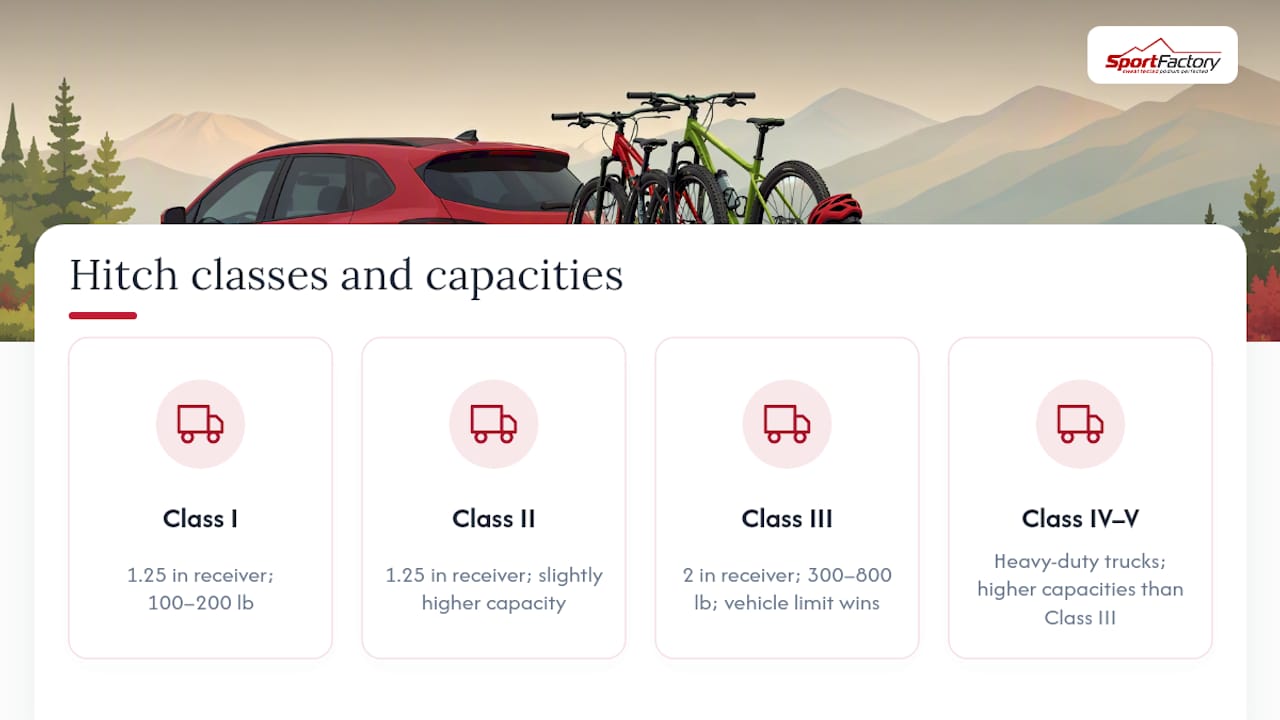
Here’s where the confusion sets in: a Class III hitch rated for 500 pounds does not mean your vehicle can safely carry 500 pounds on the tongue. If that hitch is bolted to a midsize SUV with a manual-stated 350 pound tongue-weight limit, the vehicle’s number wins every time.
Rack compatibility also depends on receiver size fitting correctly, not just weight rating. A rack built for a 2 inch receiver won’t fit a Class I 1.25 inch opening without an adapter, and adapters introduce their own weight and clearance concerns. Fit guides from rack manufacturers list minimum ground clearance and pinhole-to-ground measurements for this exact reason, since a rack sitting too low can scrape on speed bumps or steep driveways regardless of how much weight it’s rated to hold.
Why Does What’s Inside Your Vehicle Matter Too?
Tongue weight doesn’t exist in isolation from everything else you’ve loaded into the car. Passengers, luggage, and cargo inside the vehicle all count against the same overall weight budget your manufacturer engineered around.
Most vehicles list a gross vehicle weight rating and a separate payload capacity, and tongue weight draws from that same payload pool. Four passengers, a trunk full of luggage, and a cooler in the back seat can use up 400 or 500 pounds of payload before a single bike goes on the rack. If your payload capacity is nearly maxed out by people and gear, the realistic tongue weight you can safely add shrinks, even though your owner’s manual’s stated tongue-weight number hasn’t changed.
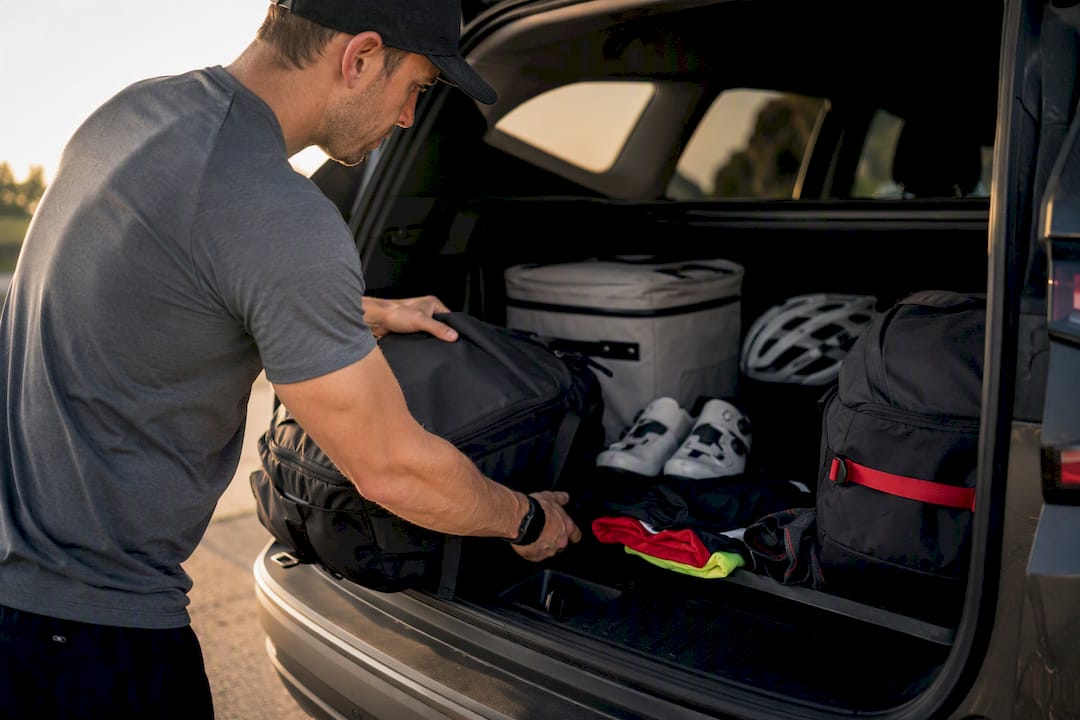
This matters most for family road trips to a race or group ride, where the car is already loaded with camping gear, coolers, and extra riders before the bikes go on. Weigh your loaded rack under those exact trip conditions if you can, not on an empty test drive around the block. The tongue-weight number in your manual assumes a reasonably loaded vehicle, not one already sitting near its payload ceiling.
If you’re consistently near capacity with passengers and cargo, that’s another reason to lean toward a trailer or a lighter rack setup rather than assuming your hitch has room to spare.
Editorial Take: Stop Trusting the Rack’s Sticker
Most advice on this topic treats the rack’s advertised capacity as the number that matters, and that framing is backward. The rack’s rating tells you what the hardware can survive. It says nothing about what your specific vehicle can handle, and that gap is where riders get into trouble.
The e-bike trend has made this worse, not better. A rack built a decade ago for lightweight road bikes is now routinely asked to carry 60-pound e-bikes, and the lever-arm math hasn’t changed even though the bikes have gotten heavier. Two e-bikes on a compact crossover is often enough on its own to flirt with the vehicle’s limit, and most owners never find out until something feels wrong at highway speed.
What actually works isn’t a smarter formula. It’s a bathroom scale, five minutes, and the honesty to check before you drive instead of after you notice the car handling strangely. Owner’s manuals and rack spec sheets both bury the number that matters. Dig it out once, write it down, and measure your actual loadout against it every time your setup changes.
— Matt
Carry the Right Load With Gear Built for It
Sport Factory Pro Shop gives you a way to lighten the load itself, not just work around your vehicle’s limits. If you’ve run the numbers and your current platform rack’s empty weight is eating into your tongue-weight margin, swapping to a lighter tray-style setup or a rack better suited to your bike count changes the math without changing your vehicle.
Some shops curate gear designed for competitive cyclists and triathletes who seek equipment that balances performance and weight for setups with tight tongue-weight capacity. This focus on engineering and rider-specific fit can also apply to aerobar systems, tires, and components riders use for race day. If your loaded rack is pushing your vehicle’s limit, browse lighter rack and cargo options at Sport Factory Pro Shop and get a setup that fits both your bikes and your vehicle’s actual capacity.
Sources
- Roadmapmag
- Hitch Fit Guide – Saris
- Piston® ION™ – Kuat Racks
- Hitch Fitting Tips (Yakima fit guide PDF)