

Cyclists: Fly with CO2 Cartridges Without Confiscation on U.S. Flights
Posted by Matt Russ on 29th Aug 2026
Cyclists: Fly with CO2 Cartridges Without Confiscation on U.S. Flights
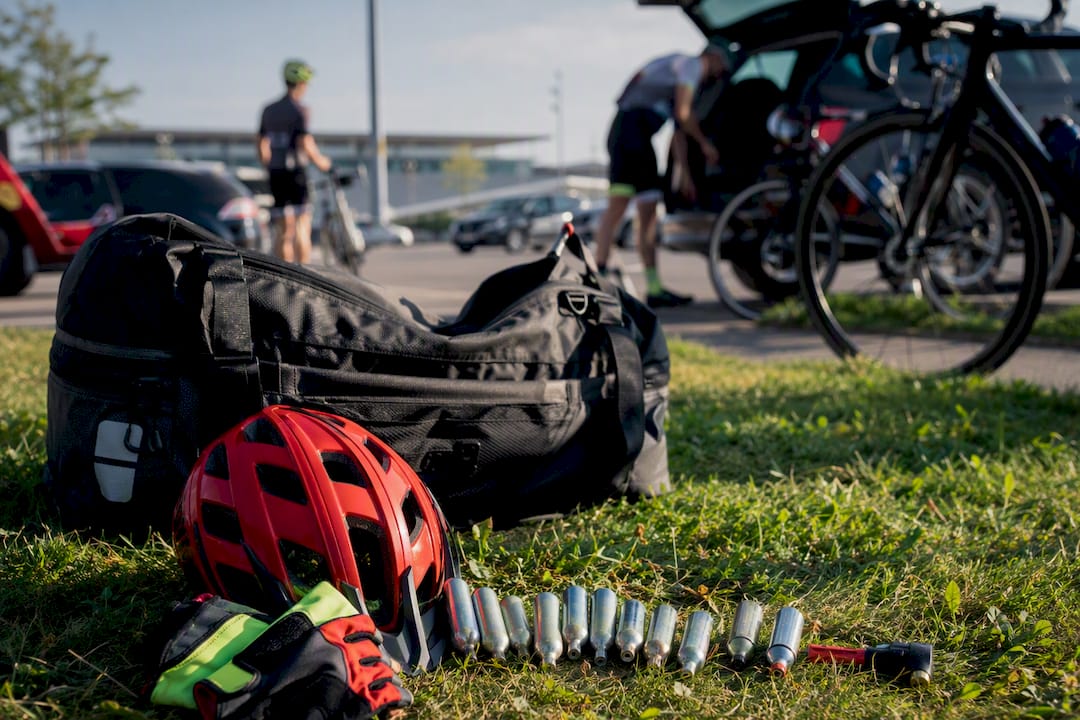
Loose CO2 cartridges are not allowed in carry-on or checked baggage on U.S. commercial flights. The TSA and FAA treat them as compressed gas, with one narrow exception for cartridges fitted into an inflatable life vest. Even then, the TSA officer at your checkpoint has the final call, and your airline may add its own restrictions on top of federal rules.
TL;DR:
- Pressurized CO2 cartridges are prohibited in both carry-on and checked luggage, unless they are clearly empty and visually verifiable.
- You can carry up to two cartridges installed in a life vest and two spares, provided the device is secured and cartridges are packed separately with manuals.
- Most other CO2 canisters, such as soda stream, bike tire, or paintball cartridges, face full confiscation and are not covered by the life vest exception.
- Buying cartridges locally at your destination is often simpler and faster than trying to carry them through airport security.
- Airline policies and airport enforcement vary, so contacting your airline beforehand reduces the risk of confiscation.
Table of Contents
- Flying with CO2 Cartridges: What TSA and FAA Actually Require
- The Life Vest Exception: How Many CO2 Cartridges Can You Bring?
- SodaStream Canisters and Bike CO2: Why They Get Confiscated
- Your Preflight Checklist for Traveling with an Inflatable PFD
- Skip the Risk: Buying CO2 Cartridges at Your Destination
- Labeling and Marking Rules for CO2 Cartridges in Baggage
- Do Airports or States Add Their Own CO2 Cartridge Restrictions?
- Sport Factory Pro Shop’s Take on Packing Smart for Race Travel
- Skip the Cartridge Gamble: Travel Tools from Sport Factory Pro Shop
- Sources
Flying with CO2 Cartridges: What TSA and FAA Actually Require
The baseline rule is simple, and it catches a lot of cyclists off guard: loose CO2 cartridges are banned from both carry-on and checked bags, full stop. TSA lists them as prohibited unless the cylinder is empty and visibly so. An empty cartridge with no pressure left inside can typically travel, but anything still charged gets pulled at screening.
CO2 falls under what the hazmat world calls a Division 2.2 nonflammable gas. That classification matters because it is why compressed cartridges get treated more cautiously than, say, a can of hairspray. The FAA’s PackSafe program spells out the exceptions for small compressed gas cylinders, and the actual legal text lives in 49 CFR § 175.10, the federal regulation governing hazardous materials exceptions for passengers.
Here’s the quick breakdown:
- Carry-on: Not allowed if the cartridge is pressurized.
- Checked baggage: Not allowed if the cartridge is pressurized.
- Empty cartridges: May be permitted if clearly empty and visually verifiable.
- Life-vest exception: A narrow carve-out covered in the next section.
Pro Tip: “Water capacity” shows up a lot in the regulatory language for these cylinders. A cartridge rated around 50 milliliters of water capacity holds roughly 28 grams of CO2, which is the standard size used in most inflatable PFDs and bike tire inflators alike.
The Life Vest Exception: How Many CO2 Cartridges Can You Bring?
If you travel with an inflatable personal flotation device, TSA carves out real breathing room. You can bring the device with up to two CO2 cartridges installed, plus up to two spare cartridges per person, according to TSA’s specific life-vest guidance. That matches the federal exception written into 49 CFR § 175.10, which permits self-inflating safety devices fitted with a limited number of small gas cartridges.
The catch is in the packing. TSA wants the device secured so it physically cannot activate mid-flight, and spare cartridges packed separately from anything that could trigger them.
- Keep the inflation mechanism’s safety pin or clip in place.
- Store spare cartridges in their original packaging or a padded case.
- Pack the manufacturer’s instructions alongside the device.
- Confirm your airline allows the device before you get to the gate.
Airline approval is not always automatic. Some carriers want advance notice, especially on smaller regional jets, so check before you assume federal rules are the only hurdle.
SodaStream Canisters and Bike CO2: Why They Get Confiscated
This is where most confusion happens, and it costs people gear at the checkpoint. The life-vest exception applies only to devices designed for water safety. It does not extend to SodaStream canisters, standalone bike tire cartridges, paintball CO2, or any other loose cylinder you might be tossing in a jersey pocket or gear bag. TSA’s guidance on CO2 cartridges treats these the same as any other compressed gas: prohibited, period.
At the checkpoint, expect one of three outcomes if a cartridge shows up in your bag:
- The officer flags it during the X-ray scan and pulls your bag for a manual check.
- You are asked to surrender the item on the spot, with no reimbursement.
- In rare cases, you get sent to a supervisor for a secondary review if you dispute the call.
TSA officers hold final discretion at the checkpoint, and that discretion does not always bend toward leniency even when you think your item qualifies. If something gets flagged, stay cooperative, ask calmly for the specific rule being cited, and request a supervisor if you believe your item genuinely fits an exception. Arguing with the line officer rarely helps; documenting the interaction afterward sometimes does.
Your Preflight Checklist for Traveling with an Inflatable PFD
Getting through security without a hitch comes down to preparation, not luck. Here’s the sequence that actually works:
- Call your airline 48 to 72 hours before departure. Confirm they allow the device and ask if they require advance notice.
- Pack the device so it cannot self-activate. Secure the trigger mechanism and keep spares in original packaging.
- Bring the manufacturer’s manual and printed TSA/FAA guidance. A screenshot on your phone works, but paper survives a dead battery.
- Declare the item at check-in if your airline asks for it. Some carriers log inflatable safety gear in advance.
- Decide carry-on versus checked based on airline instructions, not personal preference. Some carriers only allow it in the cabin; others don’t care.
- Have a backup plan. If the item gets refused, know where you’ll buy a replacement device or cartridges at your destination.
Pro Tip: Take a photo of your packed device before you leave home. If anything gets questioned or lost in transit, that photo becomes useful documentation for a claim or a quick explanation to a screening officer.
Skip the Risk: Buying CO2 Cartridges at Your Destination
The simplest way to avoid all of this is to not carry loose cartridges in the first place. Most cycling destinations, from race weekends to weekend group rides, have cartridges available within a few miles of wherever you’re staying.
- Local bike shops almost always stock standard 16g and 20g threaded cartridges.
- Race vendors and expo tents at organized events typically sell them by the sleeve.
- Big-box sporting goods stores carry them in the cycling aisle in most metro areas.
- Manual or electric inflators eliminate the need for cartridges entirely and travel without restriction.
Sourcing locally is usually faster and cheaper than the mental math of TSA compliance, and it removes any chance of losing gear at the checkpoint before a race.
Labeling and Marking Rules for CO2 Cartridges in Baggage
Even in cases where a cartridge might technically qualify for an exception, labeling matters more than most travelers realize. An empty cartridge needs to be visibly and unambiguously empty. That usually means the seal is punctured or the threaded top shows clear signs the gas has been discharged. A cartridge with an intact seal, even a used-looking one, can still read as pressurized to a screener, and TSA has no obligation to test it on the spot.
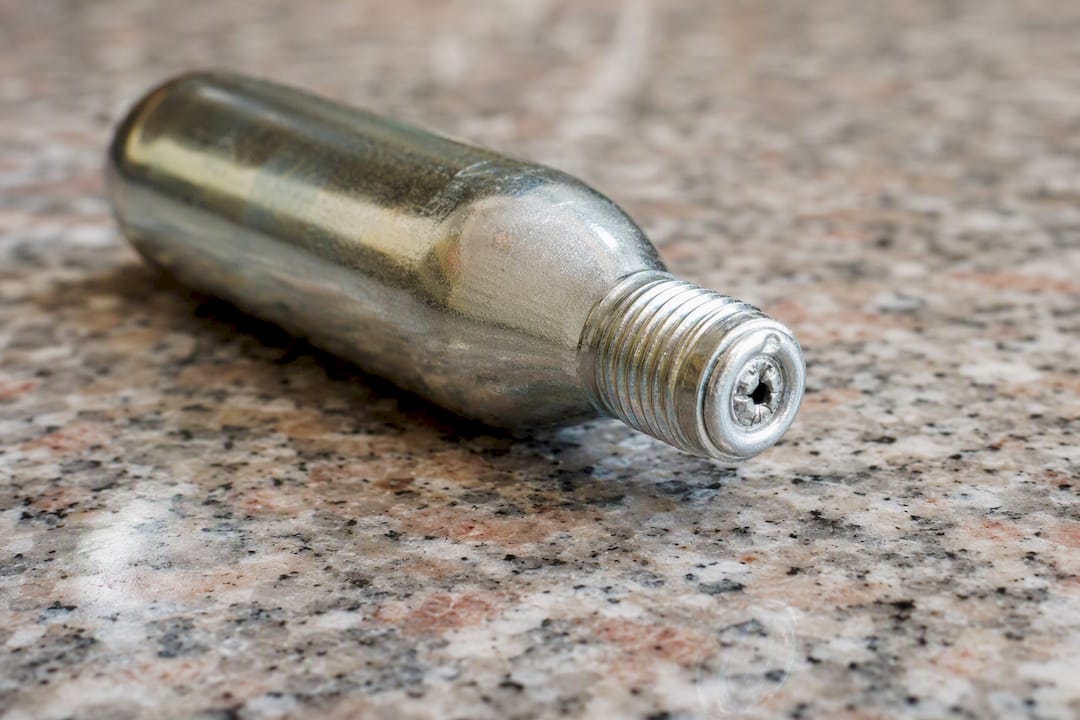
Cartridges packed as part of an approved life-vest exception should stay in the manufacturer’s original packaging whenever possible, since that packaging typically includes the printed capacity and pressure rating that helps a TSA officer confirm what they’re looking at quickly. Loose cartridges with no packaging, no visible capacity markings, and no clear indication of pressure state are the ones most likely to trigger a secondary bag check, simply because there’s nothing for the officer to verify against.
If you’re shipping cartridges separately from your luggage rather than carrying them, different hazmat shipping rules apply entirely, and those fall under carrier-specific hazardous materials policies rather than TSA passenger screening. Most consumer shipping services either restrict or flatly refuse compressed gas cartridges without special hazmat account arrangements, which is one more reason buying locally at your destination tends to be the more practical route.
Do Airports or States Add Their Own CO2 Cartridge Restrictions?
TSA and FAA rules set the floor, not necessarily the ceiling. Individual airlines routinely apply stricter policies than the federal minimum, and that variation is one of the most overlooked parts of traveling with any compressed gas item. A regional carrier operating smaller aircraft may prohibit inflatable PFDs entirely, even though federal rules would otherwise allow the life-vest exception.
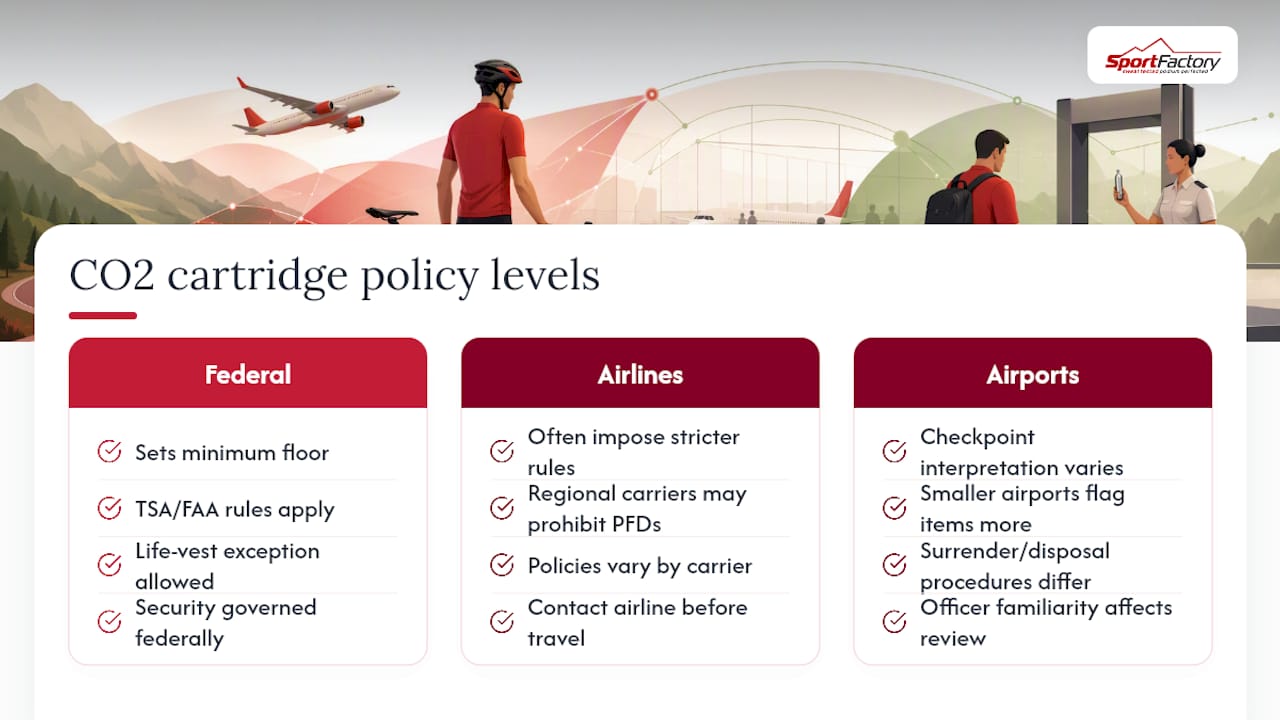
Airport-specific enforcement can vary too, less through published local law and more through how individual checkpoints interpret ambiguous items. A TSA officer at a major hub who screens hundreds of scuba divers and sailors a week may recognize an inflatable PFD instantly. An officer at a smaller regional airport with less frequent exposure to that gear might flag it for a longer secondary review simply out of unfamiliarity, even when the item fully complies with federal guidance.
State law rarely intervenes directly in TSA screening decisions, since airport security is governed at the federal level. Where state or local rules do sometimes surface is in what happens after an item is confiscated, since some airports have specific surrender or disposal procedures that differ from one facility to the next. The practical takeaway stays the same regardless of location: contacting your airline in advance is more reliable than assuming federal minimums are the only variable at play.
Sport Factory Pro Shop’s Take on Packing Smart for Race Travel
We work with competitive cyclists and triathletes who fly to races constantly, and the pattern is consistent: the ones who travel light on compressed gas and heavy on backup tools have far fewer race-morning headaches. Matt, who leads gear recommendations at Sport Factory Pro Shop, has spent years watching riders lose cartridges at security the morning of a big event, then scramble for a bike shop an hour before a start line.
Our advice stays conservative on purpose. If there’s any doubt about whether a cartridge configuration meets the life-vest exception, don’t gamble your race morning on a TSA officer’s interpretation. Bring a manual pump as backup, source cartridges at your destination, and reach out to us directly if you want gear recommendations tailored to your specific trip.
— Matt
Skip the Cartridge Gamble: Travel Tools from Sport Factory Pro Shop
Sport Factory Pro Shop stocks the gear that makes the whole CO2 debate irrelevant on race day. A compact manual pump or a rechargeable electric inflator gets your tires to pressure without a single compressed cylinder anywhere near your luggage, and neither one raises an eyebrow at security.
Our travel repair kits are built around exactly this problem: riders who fly to races and don’t want to think twice about what’s legal to pack. You’ll find compact frame pumps that fit in a jersey pocket, CO2-free electric inflators for pit-stop speed, and complete kits that cover flats, tubeless sealant top-offs, and quick fixes without a single cartridge in the bag. If you’re heading to a race and want a setup that clears security without a second look, browse the current lineup at Sport Factory Pro Shop and order before you pack.