

KEO Cleat Colors: Choosing 0°, 4.5°, and 9° Float
Posted by Matt Russ on 11th Oct 2026
KEO Cleat Colors: Choosing 0°, 4.5°, and 9° Float

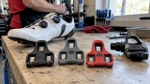
Black LOOK KEO cleats lock your foot at 0° float, gray gives you 4.5° of rotational play, and red allows a full 9° before release, according to Cycling Weekly’s coverage of LOOK’s cleat lineup. Both the standard KEO CLEAT and the walking-friendly KEO GRIP come in all three colors, so your float choice and your comfort needs don’t have to compete.
TL;DR:
- Start with gray at 4.5° if you are unsure; choose red at 9° for more knee freedom, and reserve black at 0° for consistent mechanics.
- Choose KEO GRIP for regular walking because its rubber inserts protect the cleat, while the lighter standard KEO CLEAT wears faster off the bike.
- Although LOOK KEO cleats use a common three bolt mounting pattern, pair them only with LOOK KEO pedals because other systems can release unpredictably.
- If cleats click, shift, or wear unevenly, check whether the sole matches LOOK’s R150 curve; 1, 2, or 5 millimeter spacers can correct flat soles.
Table of Contents
- Color to float: what float means for your knees and pedal stroke
- KEO CLEAT vs KEO GRIP: which style fits your shoes and your ride
- Compatibility and mounting: what you need to know before you buy
- Fit accessories and sole curvature: fixing play, noise, and uneven wear
- How to choose the right cleat color for your riding and your body
- Material and durability differences between the cleat colors
- How cleat float affects your biomechanics and injury risk
- Tips for maintaining and replacing cleats based on color and use
- Compatibility of cleat colors across the KEO pedal range
- Fitting insights from the Sport Factory Pro Shop team
- Find the right pedals and cleats at Sport Factory Pro Shop
- FAQ
- Sources
Color to float: what float means for your knees and pedal stroke
Angular float is the amount your heel can rotate side to side before the cleat releases from the pedal. It matters because your knee doesn’t move in a perfectly straight line when you pedal, and some rotational freedom lets your leg find its natural path instead of forcing a fixed track with every stroke.
LOOK assigns a specific float value to each cleat color, and the numbers are exact: black cleats offer 0°, gray cleats offer 4.5°, and red cleats offer 9° of float, with a pair weighing about 68 grams including hardware, according to Cycling Weekly.
Black cleats deliver the least rotational stress relief but the most direct power transfer, which is why they tend to show up under riders who already have stable, well-trained pedal mechanics and want zero wasted motion.
Here’s how that plays out on the road:
- Black (0°): best for time trials, track racing, or riders with a dialed-in, consistent pedal stroke.
- Gray (4.5°): a middle ground that most road and gravel riders find comfortable for daily miles.
- Red (9°): the most forgiving option, often chosen by riders recovering from knee issues or new to clipless pedals.
KEO CLEAT vs KEO GRIP: which style fits your shoes and your ride
The standard KEO CLEAT is lightweight and compact, built for riders who spend most of their time pedaling rather than walking. KEO GRIP adds widened front and rear inserts along with what LOOK calls Silent Float zones, both designed to quiet the walk and reduce wear when you’re off the bike, according to the KEO GRIP product page.
Both cleat styles share the same three float options, so switching between KEO CLEAT and KEO GRIP never means giving up your preferred float. The real decision comes down to how much walking your rides involve.
- Choose KEO CLEAT if you’re racing or training and rarely step off the bike before you’re back in the car or at home.
- Choose KEO GRIP if you commute, run errands mid-ride, or do randonneuring and touring where cafe stops and gas station walks are part of the day.
Compatibility and mounting: what you need to know before you buy
LOOK KEO cleats use a 3-bolt mounting pattern, the same physical hole spacing found on many road shoes. That shared pattern does not guarantee the cleats will work safely with another brand’s pedals, because engagement geometry (the shape that controls how the cleat locks in and releases) varies between manufacturers. Mixing systems can produce unpredictable release behavior, a concern raised in Tour Magazin’s reporting on cleat and pedal safety. Stick with LOOK KEO pedals for LOOK KEO cleats.
Before you install new cleats, run through this checklist:
- Confirm you have the correct screw length for your shoe’s sole thickness.
- Use the memory positioner to mark your current cleat position before removing the old one.
- Check lateral adjustment range, typically around 4 millimeters, to fine-tune foot alignment.
- Set longitudinal position based on where the ball of your foot sits over the pedal spindle.
Full step-by-step guidance is available in LOOK’s installation support article.
Fit accessories and sole curvature: fixing play, noise, and uneven wear
A cleat that feels loose or clicks with every pedal stroke usually isn’t defective. More often, the outsole curvature doesn’t match the cleat’s intended radius. LOOK recommends a sole curvature of R150, and when a shoe’s outsole is flatter than that, the mismatch shows up as play, noise, or uneven cleat wear, according to LOOK’s accessory support article.
A few accessories solve most of these problems:
- Compensation spacers (1, 2, or 5 millimeters): restore proper curvature under flatter soles.
- KEO SPACERS: designed specifically for shoes with flat outsoles that don’t match the R150 curve.
- Q-factor rings: widen the distance between pedal and crank, useful for riders who want extra clearance or a wider stance.
Pro Tip: Before you blame a noisy cleat on wear, check your shoe’s sole curvature against the recommended R150 radius. A spacer often fixes what feels like a worn-out cleat.
How to choose the right cleat color for your riding and your body
Picking a float value doesn’t have to be complicated. Walk through these steps in order:
- Identify your riding discipline. Time trials and track racing favor stability; endurance and gravel riding favor a bit of give.
- Consider your knee history. Riders with past knee strain or discomfort generally do better starting with more float, not less.
- Factor in your shoe stiffness. Stiffer soles transmit more rotational force to your knee, which makes float more noticeable.
- Start with gray (4.5°) if you’re unsure. It’s the default most riders settle on because it balances support with freedom of movement.
If gray feels too loose, red (9°) offers more forgiveness for riders who want their knee to find its own path. If you’re chasing every watt in a fixed aero position, black (0°) removes rotational play entirely. When trialing a new float value, set your pedal release tension lower at first, since BikeRadar’s reporting on pedal engagement notes that release force shifts with shoe size and cleat position, so a setting that felt right before may need adjusting.
Material and durability differences between the cleat colors
The three float colors share the same core construction, so durability differences come down to cleat style rather than float value. Standard KEO CLEAT models use a harder composite designed to minimize friction loss during pedaling, which makes them lighter but also means the contact surface wears a bit faster under regular walking.
KEO GRIP cleats add rubber-like inserts at the front and rear specifically to absorb the impact of walking, which protects the underlying plastic structure longer in day-to-day use. That tradeoff means a commuter running KEO GRIP in gray or red will often get more walking mileage out of a set than a racer running the same float in a standard KEO CLEAT who occasionally walks across a parking lot in cleats.
Color itself doesn’t change the plastic compound. A black, gray, or red cleat of the same style (CLEAT or GRIP) wears at a similar rate under identical use. What changes wear speed is how often you walk in them, the surfaces you walk on, and whether grit or gravel gets ground into the contact points during a stop. Riders who do a lot of coffee shop stops or gravel-adjacent walking tend to see faster wear regardless of float color, which is one more reason the CLEAT versus GRIP decision often matters more than the color choice itself.

How cleat float affects your biomechanics and injury risk
Float exists because your knee doesn’t travel in a straight vertical line through the pedal stroke. Hip width, leg length, and natural walking gait all introduce small rotational tendencies, and a cleat with zero float forces your foot into a fixed position regardless of what your knee wants to do.
When your foot can’t rotate to accommodate that natural tendency, the twisting force has to go somewhere, and it often ends up at the knee joint. Riders who log serious mileage with 0° float and a pedal stroke that doesn’t naturally track straight sometimes develop discomfort on the inside or outside of the knee over time. This is why gray and red cleats, with 4.5° and 9° of float respectively, exist: they let your foot settle into its natural rotational path instead of fighting the pedal with every revolution.

That said, more float isn’t automatically safer for everyone. A rider with a stable, consistent pedal stroke and no history of knee issues may find that excess float actually reduces power transfer and introduces a vague, disconnected feeling at the pedal. The goal is matching float to your own mechanics, not defaulting to the most forgiving option available. Starting with gray and adjusting up or down based on how your knees feel after a few rides remains a practical approach for most riders.
Tips for maintaining and replacing cleats based on color and use
Cleat wear shows up differently depending on which color and style you’re running, but the warning signs are consistent: harder engagement, unexpected release, or visible rounding of the cleat’s contact edges. Once a cleat starts releasing unpredictably, that’s a safety issue, not just a performance one.
A few habits extend cleat life regardless of color:
- Avoid walking long distances in standard KEO CLEAT models; swap to KEO GRIP if you’re regularly off the bike.
- Rinse grit and road debris off cleats after wet or gravel rides before it grinds into the contact surfaces.
- Check the cleat’s plastic edges periodically for rounding, which reduces how securely the pedal locks in.
Riders training through four seasons or racing frequently tend to replace cleats more often than once a year, while casual riders often stretch a set much longer. For a closer look at how to judge wear and timing, our guide on when to replace bicycle cleats walks through a practical checklist.
Compatibility of cleat colors across the KEO pedal range
Every LOOK KEO pedal in the current lineup accepts all three cleat colors, since float is a cleat characteristic, not a pedal-specific feature. That means a rider can switch from black to gray to red without buying a new pedal, which makes experimenting with float a low-cost way to test comfort changes.
The deciding factor isn’t which pedal you own but which cleat style, CLEAT or GRIP, pairs with it, and both styles work across the standard KEO pedal range. The LOOK support article comparing KEO GRIP and KEO CLEAT confirms that both share the same float options, so your pedal choice and your float choice can be made independently of each other. The one rule that doesn’t bend: stick with LOOK KEO pedals for LOOK KEO cleats, since the release mechanism is built around LOOK’s specific geometry.
Fitting insights from the Sport Factory Pro Shop team
We generally tell riders to reassess float when knee discomfort shows up on long rides, not just when a cleat looks worn. Most riders do well starting at gray and adjusting from there based on how their knees respond over a few weeks. For deeper fitting guidance, our cleat position guide covers lateral and fore-aft adjustments that often matter as much as float itself. Coach Matt is happy to walk through options if you reach out directly.
— Coach Matt
Find the right pedals and cleats at Sport Factory Pro Shop
We offer pedals and compatible accessories built for a variety of riding styles, whether you’re chasing a podium or commuting through the week.
Our pedals and components selection covers a range of gear to help you get your float and fit dialed in. Browse the category page and reach out if you want a second opinion before you order.
FAQ
Do LOOK KEO cleats fit Shimano pedals?
No, LOOK KEO cleats are built around LOOK’s own engagement geometry and are not designed to work safely with Shimano pedals, even though both use a 3-bolt mounting pattern. Mixing systems can produce unpredictable release behavior, so it’s best to pair LOOK KEO cleats only with LOOK KEO pedals.
What is the difference between blue and yellow cleats?
LOOK’s current KEO lineup uses black, gray, and red to indicate float, at 0°, 4.5°, and 9° respectively, according to Cycling Weekly. Older LOOK cleat generations used different color schemes, so if you’re comparing a blue or yellow cleat, check which generation it belongs to before assuming it matches the current float coding.
How do you clip in LOOK KEO cleats?
Position your shoe so the cleat’s front edge catches the pedal’s front hook, then press down with your heel until you feel and hear the rear mechanism lock in. If engagement feels too stiff or too loose when you’re learning, lowering the pedal’s release tension temporarily can make clipping in and out more predictable.
What is the difference between red and gray LOOK cleats?
Red cleats offer 9° of angular float, while gray cleats offer 4.5°, according to Cycling Weekly’s coverage of LOOK’s float system. Red suits riders who want more rotational forgiveness for their knees, while gray offers a middle ground between that forgiveness and the stability a lower float provides.
Do I need spacers with my KEO cleats?
You may need spacers if your shoe’s outsole is flatter than the recommended R150 curvature, since that mismatch often causes play, noise, or uneven wear. LOOK’s accessory support guide outlines compensation spacers in 1, 2, and 5 millimeter thicknesses to correct the fit.
Sources
- Stop scaring your dog — LOOK’s new cleats are the simple fix cyclists need — Cycling Weekly
- How do I install my LOOK KEO road cleats? — LOOK support