

Tubeless Valve Length: Pick the Right Stem for Your Rim

Tubeless Valve Length: Pick the Right Stem for Your Rim
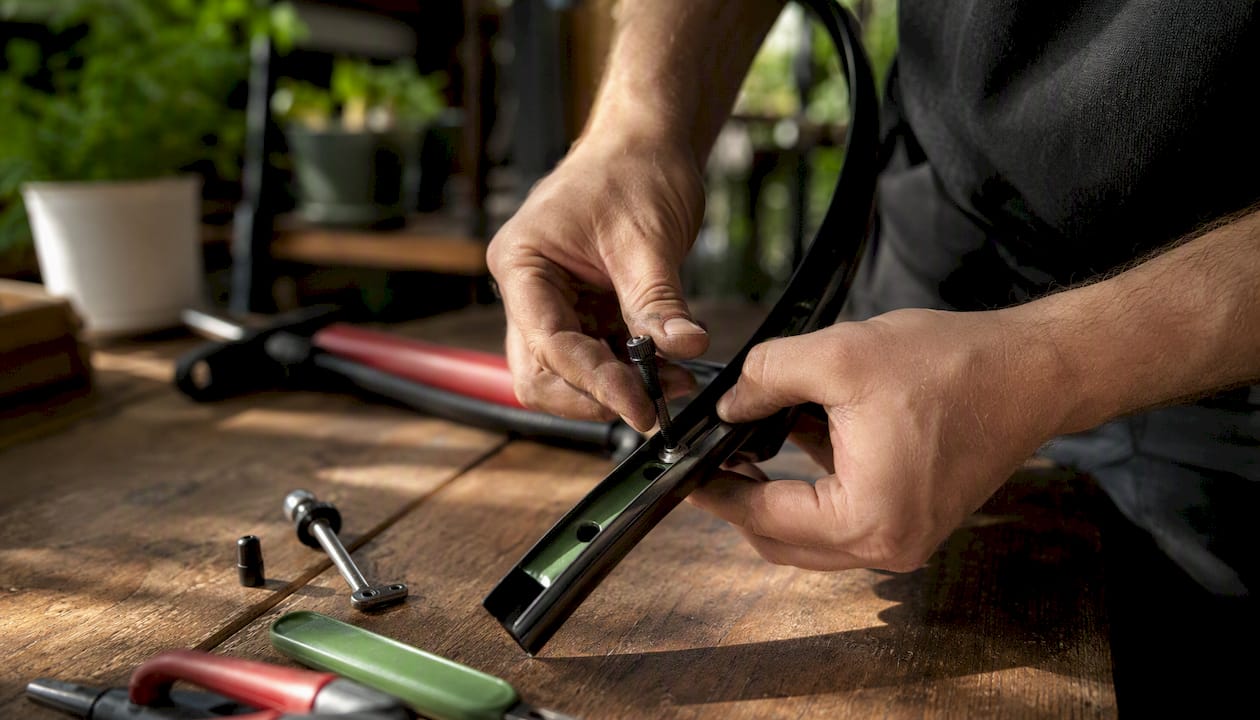
For most riders, the correct tubeless valve length is your measured rim bed depth plus 10–15 mm for rim tape and pump clearance, rounded up to the nearest standard size. That single rule covers the majority of setups. Here is how it plays out in practice:
- Measure your rim bed depth (not overall rim height) with a ruler or calipers.
- Add 10–15 mm for rim tape thickness, any recessed valve bed, and pump-head engagement.
- Round up to the nearest common valve length: 40, 44, 50, 60, 70/80, or 100 mm.
Example: Rim bed depth measures 38 mm. Add 12 mm clearance. Target is 50 mm. Choose a 50 mm valve.
One important caveat: the labeled length on a valve SKU may not equal usable stem exposure above the rim. Always verify actual clearance before sealing with sealant.
Key Takeaways
The correct tubeless valve length is your rim bed depth plus 10–15 mm for tape and pump clearance, rounded up to the nearest standard size.
| Point | Details |
|---|---|
| Measure rim bed depth first | Use a ruler or calipers at the valve hole, not the overall rim height. |
| Add 10–15 mm for clearance | Account for rim tape layers, recessed valve beds, and pump-head engagement. |
| Target 15–20 mm exposed stem | That range covers most floor pumps and CO2 heads reliably. |
| Prefer removable-core valves | Removable cores let you add sealant without dismounting the tire. |
| Sportfactoryproshop stocks 40–80 mm options | Match valve length to your rim depth and confirm removable-core compatibility before buying. |
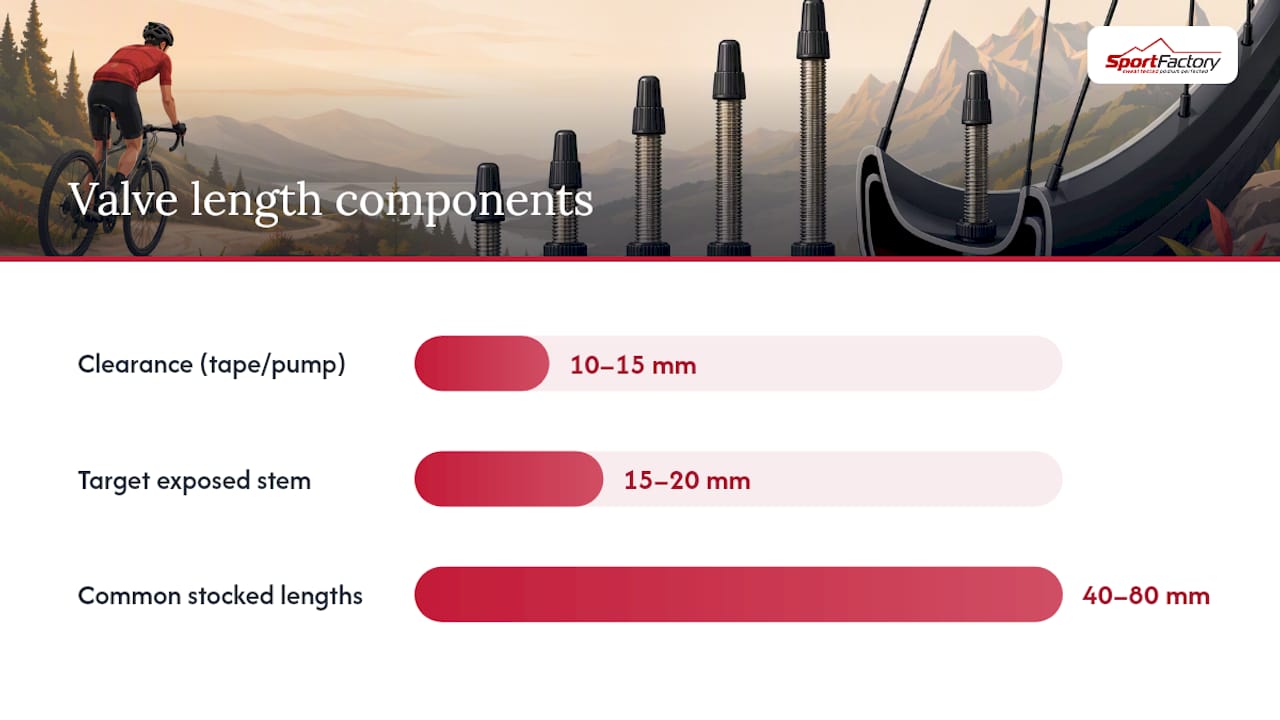
Table of Contents
- How do you measure rim depth and valve clearance correctly?
- Quick-reference chart: which valve length fits your rim depth?
- Common tubeless valve types and the standard lengths you will find
- Other factors that affect the valve length you actually need
- How to install tubeless valves cleanly and fix common problems
- When should you use a valve extender instead of a longer stem?
- Sportfactoryproshop valve recommendations for your rim depth
- The case for choosing serviceability over a flush look
- Sportfactoryproshop has the right valve for your rim
- Sources
How do you measure rim depth and valve clearance correctly?
Three methods work reliably, and each takes under two minutes.
Method A: Measure off the bike. Remove the wheel and lay a ruler across the rim’s outer edge. Drop a thin rod or pencil into the valve hole and mark where it meets the rim bed. That distance is your rim bed depth. Use the bed, not the overall rim wall height, because the valve seats at the bed, not the outer lip.
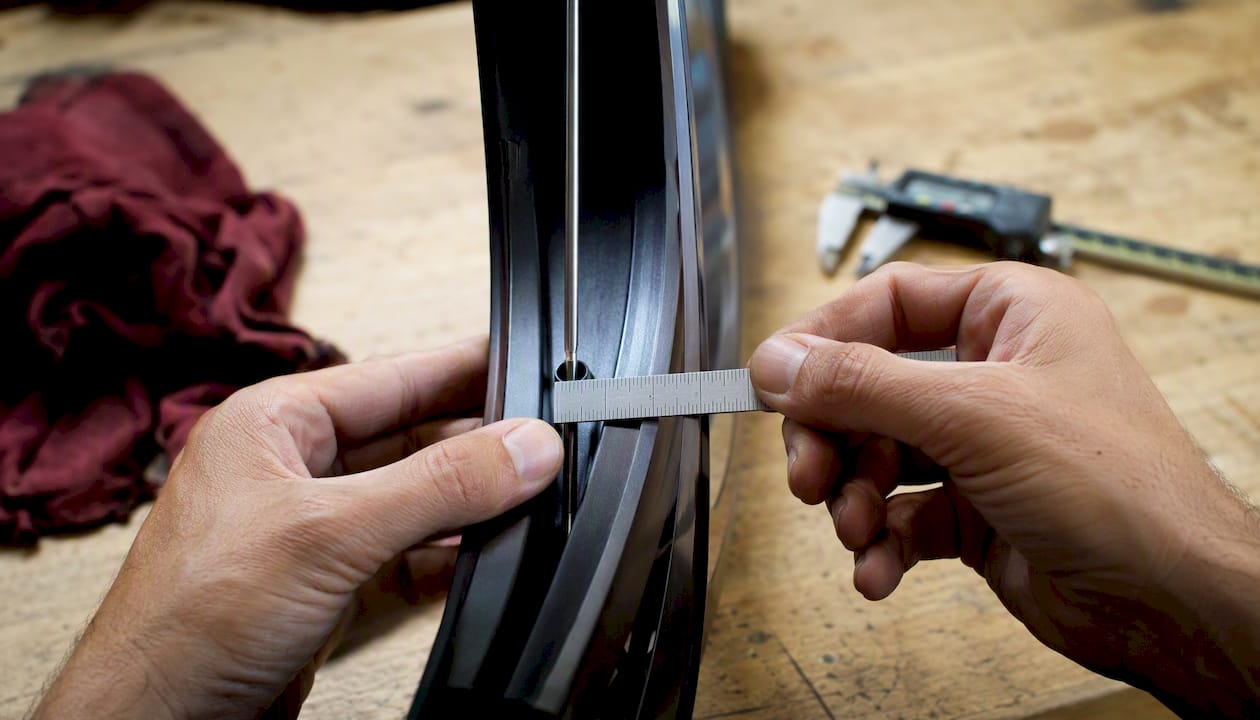
Method B: Measure the installed valve. Thread a valve in without sealant. Zero a ruler at the valve tip and measure down to the rim edge. Subtract the exposed stem you want (15–20 mm is the practical target for reliable pump engagement, per Aeron TPU’s valve length guide) and you have your effective rim depth. Do not count the valve core pin in this measurement; it sits above the functional seating surface.
Method C: Check the manufacturer spec. Many rim brands publish valve hole depth or recommend a minimum valve length in their tech documents. Use that figure as a starting point, then confirm with a physical measurement. Rim tolerances vary, and a spec sheet does not account for your specific tape layup.
Record rim bed depth as your working number. If you run foam tire inserts, add another 2–4 mm because the insert can compress around the valve base and reduce effective clearance. For deep-section carbon wheels, Toccay’s carbon wheel valve guide recommends test-fitting the valve and your pump head before adding any sealant. Deep rims change effective exposure in ways that a ruler alone does not always predict.
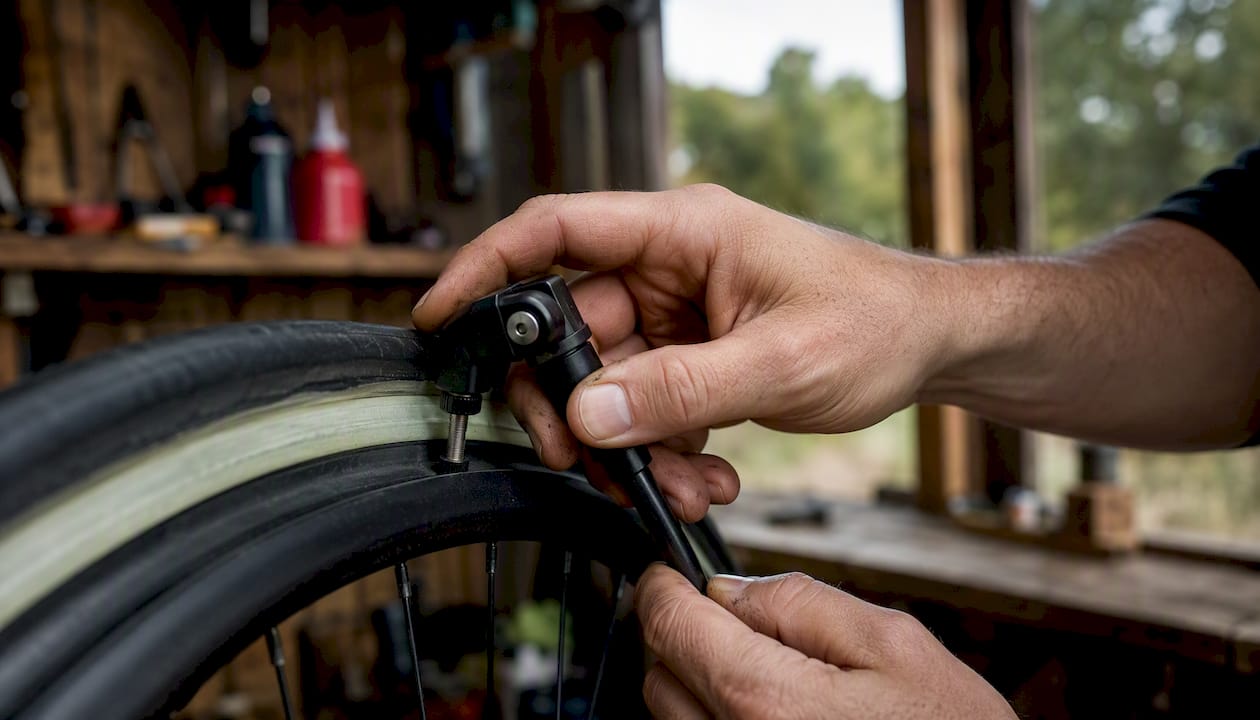
Pro Tip: Before you pour sealant, thread the valve in, attach your floor pump or CO2 head, and do a dry run. If the pump head seats cleanly and you can spin the valve core tool, your length is correct. If it feels awkward or the pump slips, size up.
Quick-reference chart: which valve length fits your rim depth?
The table below maps common rim bed depth ranges to practical valve length choices. Allowances assume two layers of tubeless rim tape (~1 mm each) and a target of 15–20 mm of exposed stem for pump access.
TwoWheelTales’ tubeless valve guide confirms the practical ranges: 30–45 mm rims typically need 44–50 mm valves, and 50–60 mm rims usually call for 60–70 mm. Rims deeper than 60 mm often require 70 mm or longer, or a quality extender.
The 15–20 mm exposed-stem target is not arbitrary. Most floor pump chucks and CO2 heads need at least that much stem to seat and seal without slipping under pressure. Going shorter than 15 mm of exposure is where pump-attachment problems start.
Common tubeless valve types and the standard lengths you will find
Tubeless road and gravel valves are almost universally Presta-style, with a threaded stem, a rubber or silicone base grommet, and a locknut. The grommet seals against the rim bed; the locknut holds the valve in position. Standard SKU lengths on the market run 40, 44, 50, 60, 70/80, and 100 mm, with some brands offering 55 or 65 mm intermediates.
The critical detail most riders miss: the labeled length on the packaging is measured from the base of the valve body, not from the rim surface after installation. Once the grommet seats in the valve hole and the locknut tightens, the usable stem above the rim is shorter than the label suggests. A 44 mm valve on a rim with a 3 mm recessed bed and 2 mm of tape may expose only 17–18 mm of stem. That is workable. The same valve on a rim with a 5 mm recess and three tape layers may leave you with 13 mm of exposure, which is borderline for many pump heads.
Valve length labels tell you the total stem dimension, not how much stem clears your rim. Measure your actual exposed stem after installation and before sealing. That number, not the SKU, is what determines whether your pump will attach reliably.
Common valve configurations to know:
- Removable core: Lets you inject sealant through the stem without dismounting the tire. Worth prioritizing for tubeless setups.
- Aluminum vs. brass core: Aluminum cores are lighter; brass cores tend to be more durable for riders who frequently remove and reinstall cores.
- Rubber vs. silicone grommet: Silicone grommets compress more uniformly and tend to seal better on rims with slightly irregular valve holes.
- Straight vs. angled base: Angled-base valves suit rims with offset valve holes, common on some carbon aero designs.
Other factors that affect the valve length you actually need
Rim depth is the primary variable, but several others shift the practical choice enough to matter.
Rim tape thickness and layers. A single layer of quality tubeless tape adds roughly 0.5–1 mm. Two layers, which some riders run for extra sealing on alloy rims, add 1–2 mm total. That is not much individually, but combined with a recessed valve bed it can push you to the next size up.
Recessed valve beds. Some rims, particularly aero carbon designs, recess the valve hole 3–6 mm below the rim surface. The valve grommet seats at the bottom of that recess, so the effective stem exposure is reduced by the recess depth. Always measure from the rim’s outer edge, not the recess floor, when calculating exposed stem.
Tire inserts. Foam or rubber inserts (used for pinch-flat protection or noise dampening) sit inside the tire casing and can press against the valve base. This does not usually change stem length requirements, but it can complicate valve removal. A removable-core valve is especially useful here because you can service the core without fully dismounting the insert.
Pump head and CO2 inflator type. Threaded pump chucks grip the valve core threads and need less exposed stem than push-on heads. Push-on or lever-lock heads typically need 15–20 mm of clear stem to seat without slipping. CO2 inflators vary widely: some threadless designs need 20 mm or more. Test your specific inflator on the valve before the ride.
Pro Tip: Run through this checklist before buying: (1) rim bed depth measured, (2) tape layers counted, (3) recess depth noted, (4) pump head type confirmed, (5) CO2 inflator tested. Five minutes of prep prevents a wrong-size valve.
Ride Gear Lab’s guide to UST vs. TLR valves notes that TLR alloy rims specifically benefit from removable-core Presta valves with rubber grommets, because the rim tape does the sealing work and the grommet needs to compress evenly against the tape surface. UST rims, which have a machined bead seat, sometimes omit tape entirely and use a different sealing approach.
How to install tubeless valves cleanly and fix common problems
A clean install takes about five minutes and prevents most of the leaks and rattles riders blame on the valve itself.
- Verify the valve hole diameter. Most tubeless valves use a 6.4 mm hole. Confirm your rim matches before threading anything in.
- Apply rim tape first. Run tape across the valve hole, then pierce it cleanly with an awl. A ragged hole causes grommet sealing problems.
- Seat the grommet. Push the valve through from the inside of the rim. The grommet should sit flat against the tape with no gaps or folds.
- Thread the locknut by hand. Finger-tight first, then snug with a valve core tool or thin wrench. Per Ride Gear Lab, target 0.5–0.8 Nm of torque. That is firm but not aggressive.
- Remove the core if adding sealant through the stem. Use a valve core tool, pour or inject sealant, then reinstall the core snugly.
- Inflate and check. Inflate to riding pressure, then apply soapy water around the grommet and locknut. Bubbles indicate a leak at the base seal.
Common problems and fixes:
| Problem | Likely cause | Fix |
|---|---|---|
| Pump won’t attach | Stem too short, under 15 mm exposed | Size up or add extender |
| Valve rattles at speed | Stem too long, contacting spokes | Size down or trim with extender |
| Slow leak at base | Grommet not seated or locknut loose | Re-seat grommet, re-torque to 0.5–0.8 Nm |
| Clogged core | Dried sealant in core threads | Remove core, clear with solvent, reinstall |
| Extender leaks | Thread mismatch or loose core | Verify thread type, tighten core before fitting extender |
Do not overtighten the locknut. Excess torque compresses the grommet unevenly and can tear the rim tape beneath it, creating a leak path that is difficult to diagnose. Firm and even is the target.
When should you use a valve extender instead of a longer stem?
Extenders make sense in three situations: you already own valves that are slightly too short for a new wheelset, you are running a very deep rim (over 70 mm) where long stems are harder to source, or you need a temporary fix before a replacement valve arrives.
Two extender types exist. Threaded extenders screw onto the valve stem and accept a standard pump head at the top. The better ones include a pass-through for the valve core tool, so you can still remove and reinstall the core for sealant service. Push-on extenders are simpler but do not always seal as reliably under high pressure, and most block core access entirely.
When choosing an extender, confirm the thread pitch matches your valve. Most Presta valves use a standard thread, but some brands vary. A mismatched extender will cross-thread or leak. Before any ride, inflate to full pressure with the extender fitted and apply soapy water at both the valve-to-extender junction and the extender-to-pump interface. Both need to hold.
For riders who regularly swap between shallow and deep wheels, a longer valve on the deep set is almost always cleaner than carrying extenders. Extenders add a failure point. On a long ride or a race, that extra junction is one more thing to go wrong.
Pro Tip: Carry a spare valve core sized to your deepest wheelset. If sealant clogs the core mid-ride, a fresh core gets you rolling faster than any other fix. A spare tube with a valve long enough for your deepest rim is equally worth packing, as Fieldscout that a standard spare tube valve is often too short for aero or deep-section wheels.
Sportfactoryproshop valve recommendations for your rim depth
Sportfactoryproshop carries tubeless valve stems and kits suited to the full range of rim depths competitive cyclists and triathletes actually ride. When browsing, match the valve length to your measured rim bed depth using the chart above, then confirm these details on the product page:
- Removable core: Listed as “removable core” or “valve core tool compatible.” Non-negotiable for tubeless setups where you add sealant through the stem.
- Material: Aluminum-bodied valves save a few grams; brass cores last longer under repeated removal. For race wheels, aluminum. For training wheels, brass cores hold up better.
- Included hardware: Look for kits that include a spare grommet and locknut. Grommets wear out, and having a spare on hand avoids a trip to the shop.
- Length options stocked: Sportfactoryproshop’s selection covers the common sizes from 40 mm through 80 mm, covering shallow alloy training rims up to deep-section carbon aero wheels.
Pro Tip: If you ride multiple wheelsets with different rim depths, buy valves in two lengths and label each set. Swapping wheels mid-season is much faster when the right valve is already on the right rim.
Browse tubeless valve stems and compatible kits at Sportfactoryproshop and filter by length to find the exact match for your rim depth.
The case for choosing serviceability over a flush look
There is a real tension in tubeless valve selection that most guides skip: the aesthetic pull of a flush-looking stem versus the practical case for a little extra length. Aero-focused riders often want the valve to sit as close to the rim surface as possible. It looks clean. It feels intentional.
But the flush look costs you at the worst moments. A valve with only 12–13 mm of exposed stem is genuinely difficult to attach a pump head to at the roadside, especially with cold hands or a CO2 inflator that needs a firm grip. Choosing a valve 5–10 mm longer than the minimum gives you that margin without meaningfully affecting aerodynamics or weight.
The fieldscout.cc tubeless setup guide makes the point plainly: prioritize exposed stem and removable valve-core access over a perfectly flush look. Serviceability wins on long rides and races. A slightly longer stem also makes sealant top-ups faster, because the core tool has room to grip without the rim edge getting in the way.
The one place where a longer stem genuinely causes problems is on very deep rims where the stem extends past the spoke bed and vibrates at speed. That is a rattle problem, not an aerodynamic one, and it is solved by sizing correctly rather than going as short as possible.
Sportfactoryproshop has the right valve for your rim
Picking the right tubeless valve length is straightforward once you have your rim depth measurement. The harder part is finding quality valves in the exact length you need, with removable cores and proper grommets included.
Sportfactoryproshop stocks tubeless valve stems from 40 mm through 80 mm, covering everything from shallow alloy training wheels to deep-section carbon race rims. Every option in the lineup is selected for engineering quality and rider-focused features: aluminum bodies, removable cores, and included hardware so you are not hunting for a spare grommet at the last minute. Whether you are setting up a new wheelset or replacing a valve that is the wrong size, the right stem is in stock. Visit Sportfactoryproshop to find your match by rim depth and get your tubeless setup dialed before the next ride.
Sources
The sources below were used to build this guide. Each adds something specific.
- Fieldscout
- What Valve Length Do I Need? | Aeron TPU
- Selecting Compatible UST vs. TLR Valves for Alloy Rims – Ride Gear Lab
- Tubeless valves for road bikes | TwoWheelTales