

Rim Width and Tire Width: How to Match Them Correctly
Rim Width and Tire Width: How to Match Them Correctly
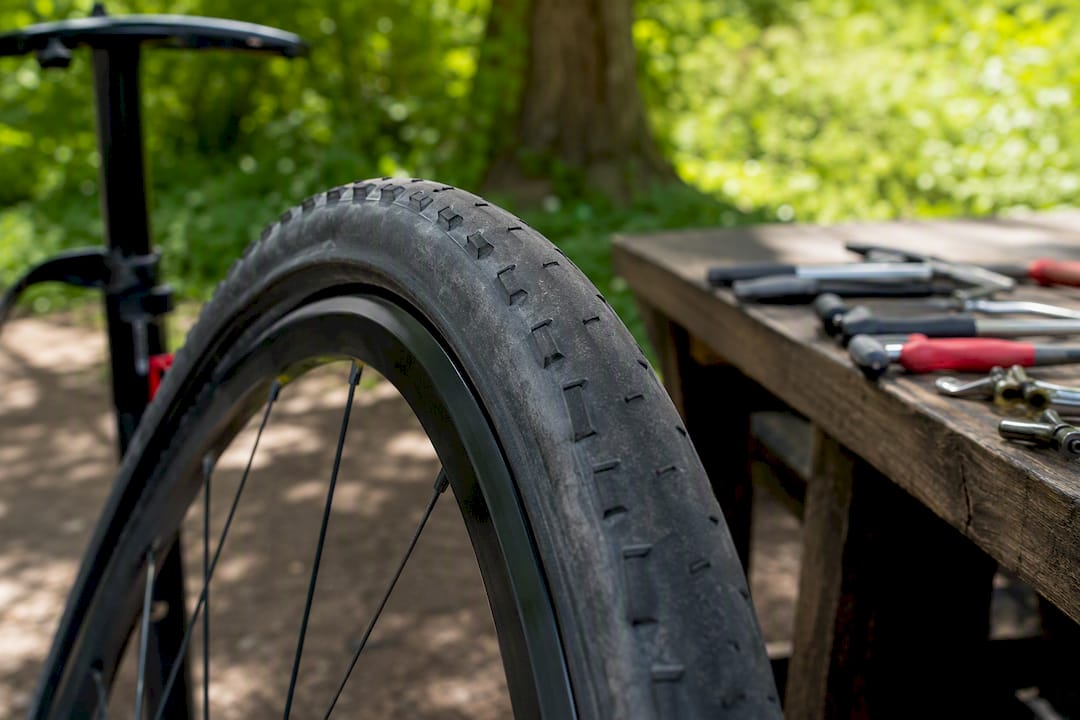
The short version: your rim’s internal width should land at roughly 55% to 65% of your tire’s nominal section width. That single ratio, drawn from ISO 5775, is the backbone of every manufacturer compatibility chart you’ll ever check.
A few quick examples make it concrete:
- A 19mm internal rim pairs well with tires in the 23–32mm range.
- A 21mm internal rim works with roughly 25–40mm tires.
- A 25mm internal rim suits wider rubber, generally tires designed for wider rims.
Those numbers come from combined ETRTO standards and real-world manufacturer testing, not guesswork. If your setup falls outside these bands, it’s worth a second look before you ride. At Sportfactoryproshop, this is one of the most common questions our team fields from riders building new wheels or upgrading tires, and it’s rarely as complicated as it first sounds.
Key Takeaways
Rim internal width should sit at 55% to 65% of a tire’s nominal section width, and manufacturer charts always override generic ISO ranges when the two disagree.
| Point | Details |
|---|---|
| Follow the 55–65% rule | Match internal rim width to roughly 55% to 65% of your tire’s nominal section width per ISO 5775. |
| Check manufacturer charts | ETRTO ranges are a baseline; Schwalbe, Continental, and WTB charts can be more conservative. |
| Wider rims square tires | Wider rims lower and square the tire profile; narrower rims increase height and volume. |
| Respect the lower limit | When rim and tire makers disagree on pressure or width, always follow the smaller number. |
| Measure at riding pressure | Confirm actual installed tire width and clearance only after inflating to your normal PSI. |
| Get a second check | Sportfactoryproshop can confirm your rim-to-tire pairing and handle tubeless mounting if needed. |
Table of Contents
- Rim Width Tire Width Compatibility Chart by Inner Rim Size
- How to Read ETRTO and ISO 5775 Tire Sizing Codes
- Why Rim Width Changes Your Tire’s Actual Shape and Handling
- Recommended Rim and Tire Width Ranges by Riding Discipline
- How to Measure Your Rim and Verify Tire Fit
- What Happens When Rim and Tire Widths Don’t Match
- A 5-Point Checklist for Choosing the Right Tire
- Get Expert Help Matching Tires to Your Rims
- Frequently Asked Questions
- Sources
Rim Width Tire Width Compatibility Chart by Inner Rim Size
Once you know your rim’s internal width (not the outer width, which is a different measurement and easy to confuse), you can narrow down tire options fast. These bands reflect the ranges most wheel and tire brands publish, including Schwalbe’s own sizing tables.
| Internal Rim Width | Recommended Tire Width Range | Common Notation |
|---|---|---|
| 13–15mm | 18–25mm | 700x20C to 700x25C |
| 17–19mm | 23–32mm | 700x23C to 700x32C |
| 19–21mm | 25–40mm | 700x28C, 650bx40 |
| 21–25mm | 32–50mm | Gravel 35C to 45C |
| 25–35mm | suitable wider MTB tires | MTB trail/XC |
| 35–85mm | suited fat bike tires | Fat bike |
A few things worth flagging before you shop:
- These ranges are guidance, not gospel. Always cross-check against your specific rim and tire manufacturer’s chart, since Continental, Schwalbe, and WTB each test their own products and occasionally publish tighter limits than ISO allows.
- Hookless rims are stricter. If your wheels use a hookless bead design, tire width and maximum pressure are often more restricted than on a traditional hooked rim, so treat the rim maker’s number as the ceiling, not the ISO range.
- When in doubt, size down. A slightly narrower tire within range beats a wide one pushing the outer edge of what your rim was tested for.
How to Read ETRTO and ISO 5775 Tire Sizing Codes
Every tire and rim carries a code that looks like a phone number but actually tells you everything you need. Take 28-622: the first number (28) is the nominal tire width in millimeters, and 622 is the bead seat diameter (BSD), the internal edge of the rim that the tire bead clamps onto. The same tire is often labeled 700x28C, an older French sizing convention that roughly translates to the same 28mm width.
A rim marked 622x19C tells you its bead seat diameter matches 700c wheels and its internal width is around 19mm.
Here’s the part riders miss: that “28mm” on the sidewall is measured on a specific “design rim,” a standardized test rim ISO and ETRTO define for consistency. Mount that same tire on a wider or narrower rim, and the actual width you measure with calipers will shift. That’s why checking the ETRTO combinations chart matters more than trusting the printed number alone.
Why Rim Width Changes Your Tire’s Actual Shape and Handling
Swap a tire between a narrow and wide rim, and you’re not just changing a number. You’re changing the tire’s cross-sectional shape. On a narrow rim, the casing pulls inward at the base, creating a rounder, more “lightbulb” profile that increases height relative to width. On a wider rim, the same tire stretches out and squares off, lowering the profile and reducing that classic balloon shape.
Continental’s own measurements show clincher tire width shifting by roughly 0.4mm for every 1mm change in rim internal width. Mount a 28mm tire on a rim 4mm wider than its design rim, and you could measure closer to 30mm on the tape.
That shift affects handling directly. Wider, squared tires corner more predictably and roll with less distortion, but they also expose more sidewall to rocks and curbs. Narrower rims under wide tires increase pinch flat and burping risk, especially tubeless, because the tire bead has less lateral support at low pressure.
Pro Tip: After any rim or tire swap, drop your tire to your normal riding pressure, then take a short ride on familiar pavement or trail before committing to a long ride. Casing stiffness and tread pattern also influence how a tire actually measures, so two “28mm” tires from different brands can still feel different on the same rim.
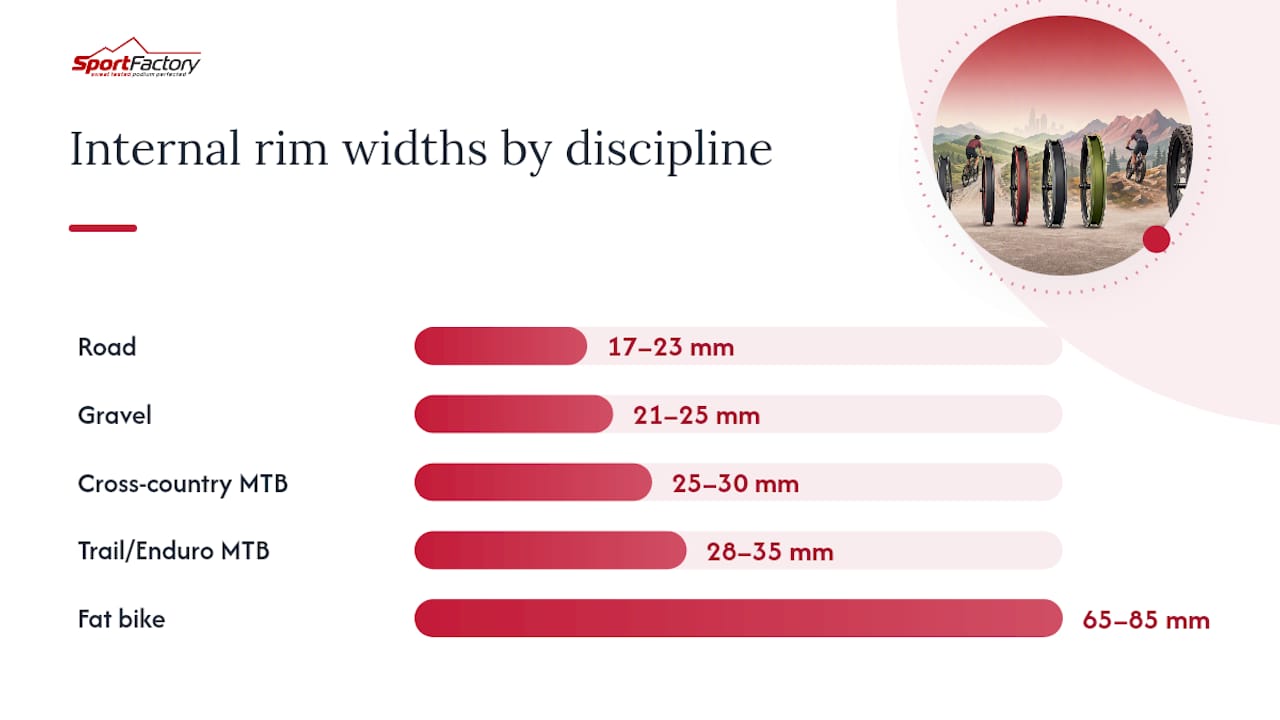
Recommended Rim and Tire Width Ranges by Riding Discipline
Your discipline drives the target ratio more than any universal chart can. Road, gravel, and mountain bikes each optimize for a different balance of rolling resistance, comfort, and traction.
| Discipline | Typical Internal Rim Width | Common Tire Range |
|---|---|---|
| Road | 17–23mm | 25–30mm (700x25C–700x30C) |
| Gravel | 21–25mm | 35–50mm |
| Cross-country MTB | 25–30mm | 2.1"–2.4" |
| Trail/Enduro MTB | 28–35mm | 2.3"–2.7" |
| Fat bike | 65–85mm | 3.8"–5.0" |
Road setups have widened considerably over the past several years. Rims that used to sit at 13–15mm internal are now commonly 17–19mm or wider, which is part of why 28mm and 30mm road tires have become standard rather than exotic.
Gravel is where the ratio really earns its keep. A 24mm internal rim under a 45mm tire gives you a rounder profile and more air volume for comfort on rough terrain, while the same tire on a narrower 19mm rim rides taller and less stable at speed.
Fat bike sizing looks intimidating in inches, but the same math applies. A 3.8" tire (about 96mm) needs real rim support, which is why fat rims start around 65mm internal rather than the 20mm range road riders are used to.
How to Measure Your Rim and Verify Tire Fit
Skip the guesswork and check your own setup directly:
- Measure internal rim width with calipers, seated at the inner bead hooks, not the outer rim wall.
- Confirm bead seat diameter matches your tire’s ISO code (622mm for 700c/29er, 584mm for 650b/27.5).
- Mount the tire at your intended riding pressure, not a random test pressure.
- Measure the tire’s actual width at its widest point with calipers.
- Check frame and fork clearance, aiming for at least 3–5mm of gap on each side.
Pro Tip: Always measure at the pressure you actually plan to ride, since a soft tire measures narrower than a fully inflated one. Tubeless setups can also settle over the first few rides, so a recheck after a week isn’t overkill. Hookless rims add one more variable: they typically require tubeless-ready tires and carry stricter maximum pressure limits than hooked designs.
What Happens When Rim and Tire Widths Don’t Match
Mismatches don’t always fail immediately, but they show up at the worst moments. A tire that’s too wide for a narrow rim tends to balloon, raising rollover risk in hard cornering and increasing the odds of tubeless burping when the bead loses its seal under lateral load. A tire that’s too narrow for a wide rim stretches thin and flat, which raises pinch flat risk on square-edge hits since there’s less air volume cushioning the rim.
That single rule, echoed across Continental’s own technical guidance, resolves most of the confusion riders run into when charts from two different brands don’t quite agree. Clearance matters just as much as width compatibility: leave room for mud, trail debris, and the slight wheel flex that happens under hard braking or cornering, not just a bare minimum gap measured with a clean, static wheel.
A 5-Point Checklist for Choosing the Right Tire
- Measure your rim’s internal width and confirm bead seat diameter against the label.
- Cross-check that width against the ETRTO/ISO range and your specific rim manufacturer’s chart.
- Confirm your target tire width fits within range and clears the frame or fork by 3–5mm.
- Mount at recommended pressure, then test-ride and remeasure actual installed width.
- When unsure, size down or ask a shop like Sportfactoryproshop to confirm the pairing.
A few things I’ve learned fitting tires the hard way
I always measure a rim before trusting the spec sheet. Calipers catch mismatches printed specs miss entirely. Give any new tire and rim pairing a few rides before judging the fit. Tires stretch and settle more than most riders expect.
Get Expert Help Matching Tires to Your Rims
Charts and calipers get you most of the way there, but some setups, especially hookless gravel wheels or oddball MTB rim widths, deserve a second opinion before you commit to a tire purchase.
Sportfactoryproshop stocks tires and rims from brands that publish real compatibility data, not vague marketing ranges, and our team can walk through your exact rim internal width to recommend tires that fit safely and perform the way you want. Whether you’re setting up a new gravel wheelset or replacing worn road rubber, we can also handle tubeless mounting so you’re not troubleshooting a stubborn bead seat on your kitchen floor. If you’re unsure what width to buy next, browse the current tire and wheel lineup and reach out with your rim specs before checkout. It’s a quick way to avoid buying a tire that never should have gone on that rim in the first place.
Frequently Asked Questions
What internal rim width do I need for a 32mm tire? A 21mm rim tends to give a rounder, more supported profile for gravel and all-road use.
Can I put a wide tire on a narrow rim? You can within the manufacturer’s tested range, but pushing too far narrow increases pinch flat risk and creates a taller, less stable tire shape. Check the rim maker’s chart before assuming a wide tire will fit safely.
Does rim width affect tire pressure? Yes. Wider rims support a given tire at slightly lower pressure without excessive flex, while narrower rims often need a bit more pressure to avoid pinch flats or tubeless burping. Always check both the tire and rim’s maximum pressure and use the lower figure.
Is a wider rim always better for gravel or MTB? Not necessarily. Wider rims square off the tire and improve cornering support, but going beyond what your tire is rated for can overstretch the casing and expose more sidewall to cuts on rocky terrain.