

Shop Tested Fix for Bicycle Tubeless Tape Residue
Posted by Matt Russ on 12th Sep 2026
Shop Tested Fix for Bicycle Tubeless Tape Residue
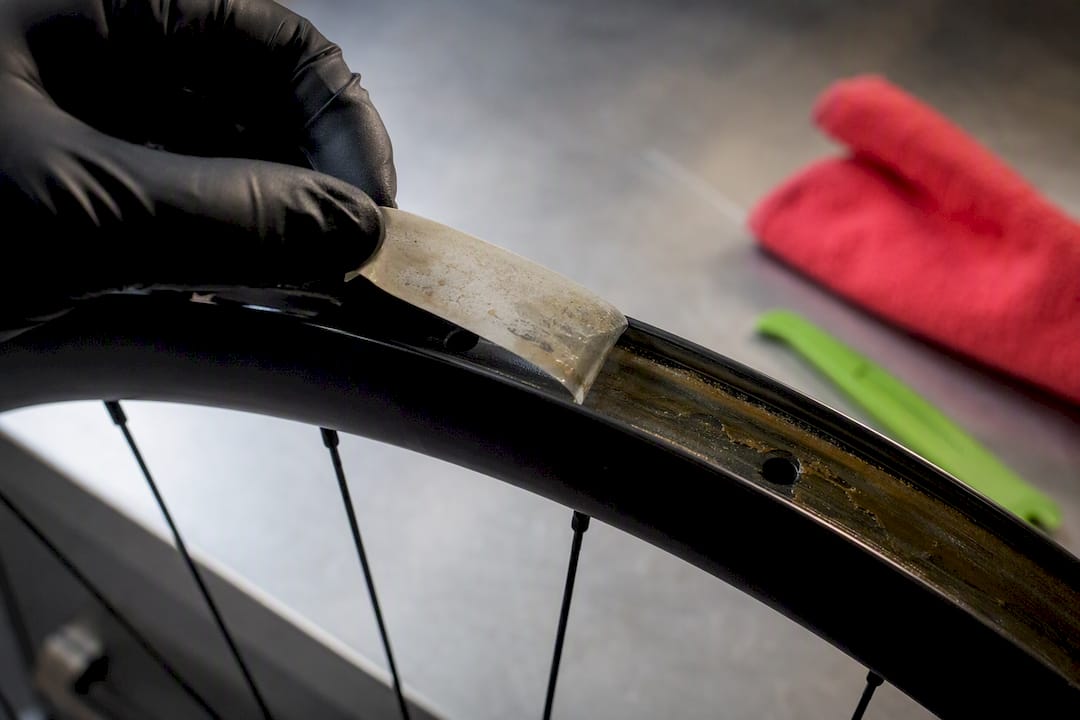
The fastest safe way to remove tubeless tape residue is to warm the old tape with a hair dryer, peel it back in strips, then wipe the rim bed with 91% or higher isopropyl alcohol. Save Goo Gone or an automotive adhesive remover for glue that’s baked on and won’t budge, and always follow up with a degrease pass. Test any stronger solvent on a small hidden spot first, especially on carbon or painted rims.
TL;DR:
- Most rims only require heating and alcohol wiping; forceful solvent use risks damaging carbon or painted surfaces.
- Use a plastic scraper and ensure complete dryness after alcohol cleaning before applying new tubeless tape to maximize adhesion.
- Avoid acetone and brake cleaner unless testing confirms they won’t harm rim finishes, especially on carbon rims.
- Repeated heat and alcohol treatments may be necessary for baked-on residue, with automotive removers as a last resort.
- Properly matching and seating new tape reduces residue buildup and simplifies future maintenance.
Table of Contents
- Quick Checklist: Least to Most Aggressive Options
- How Do You Remove Tubeless Tape Residue Step by Step?
- Which Solvents Actually Work, and What Do They Cost You?
- What Tools Do You Need Before You Start?
- Is It Safe for Carbon and Painted Rims?
- What if the Residue Won’t Come Off?
- How Do You Prevent Residue Buildup Next Time?
- Shop-Tested Notes From Sport Factory Pro Shop
- Get Everything You Need for the Job in One Order
- Sources
- FAQ
Quick Checklist: Least to Most Aggressive Options
Not every rim needs the nuclear option. Start gentle, and only escalate when the residue actually fights back.
- Heat and peel first. A hair dryer on low, moved constantly, softens most tape adhesive enough to pull it off in long strips instead of shredded bits.
- Isopropyl alcohol for light residue. Wipe with 91% to 99% isopropyl on a microfiber cloth for anything that wipes off without much resistance.
- Goo Gone or automotive adhesive remover for stubborn patches. Apply, let it sit a few minutes, then wipe and degrease immediately after.
- Skip acetone and brake cleaner unless tested. These strip clear coats and can dull or damage carbon finishes and painted rims if you’re not careful.
Most wheels only need the first two steps. Reaching for solvent number three or four before trying alcohol is where people end up damaging a rim they didn’t need to touch that hard.
How Do You Remove Tubeless Tape Residue Step by Step?
This is the sequence to follow from start to finish, whether you’re swapping tape brands or just cleaning up before a fresh application.
- Remove the tire and valve core. Pull the tire off completely and take the valve core out so you’re working on a bare rim bed.
- Inspect the rim bed. Note whether you’re dealing with anodized aluminum, raw carbon, or a painted finish. This decision matters for step 5.
- Apply heat while rotating the wheel. A hair dryer or heat gun on low, kept moving, softens adhesive that has hardened over time, which usually means less scraping later.
- Peel the tape in one motion. Work slowly and pull at a low angle. A plastic scraper, spudge tool, or even a fingernail helps lift the leading edge without gouging the rim.
- Wipe with isopropyl alcohol. Soak a microfiber cloth in 91% or higher isopropyl and work the remaining film off. Let it evaporate fully before moving on.
- Treat stubborn spots. For glue that won’t lift with alcohol alone, apply Goo Gone or an automotive remover, wait three to five minutes, wipe clean, then go back over the area with isopropyl to strip the oily film left behind.
- Confirm the rim bed is dry and residue-free. Run a clean cloth over the whole surface. If it comes back clean and dry, you’re ready for new tape.
Pro Tip: Rotate the wheel in a stand while heating tape so you’re not chasing a moving target with a hair dryer in one hand and a scraper in the other.
Which Solvents Actually Work, and What Do They Cost You?
Every solvent that removes glue leaves you something else to deal with, whether that’s an oily film, a stripped clear coat, or just wasted time. Here’s how the common options stack up.
| Solvent | Best for | Trade-off |
|---|---|---|
| Isopropyl alcohol (91 to 99%) | Light to moderate residue, final prep | Evaporates fast, minimal risk, but weak on baked-on glue |
| Acetone | Heavy, dried-on adhesive | Can strip paint and damage some carbon clear coats |
| Goo Gone / citrus removers | Sticky patches, older tape | Leaves an oily film that must be degreased before new tape goes on |
| WD-40 | Loosening stuck adhesive | Leaves oil residue; never skip the degrease step |
| Brake cleaner / automotive solvents | Baked-on residue on aluminum rims | Effective but risky on carbon and painted finishes |
Isopropyl alcohol is the one solvent on this list that’s genuinely low risk across rim materials, which is why BikeRadar recommends it for dissolving stubborn deposits during routine tubeless service. Everything else on the list buys you speed at the cost of an extra cleanup step. Goo Gone, in particular, is often left to sit for around five minutes before wiping, and skipping the isopropyl chase afterward is a common reason new tape lifts within a few rides.
What Tools Do You Need Before You Start?
Half the frustration with this job comes from stopping mid-task to hunt for supplies. Lay these out first:
- A hair dryer or heat gun set to low
- A plastic scraper, spudger, or crepe eraser
- A stack of microfiber cloths (paper towels shed lint into the adhesive)
- 91% or higher isopropyl alcohol, plus Goo Gone or an automotive adhesive remover for backup
- Nitrile gloves and a valve core removal tool
- A clean, well-lit workspace where you can spin the wheel freely
None of this needs to be expensive. A bottle of isopropyl and a pack of microfiber cloths cover most jobs on their own.
Is It Safe for Carbon and Painted Rims?
Carbon rims and painted finishes don’t forgive the same shortcuts aluminum does. Test any solvent stronger than isopropyl on a small, hidden section of the rim bed before going all in. Keep heat moving at all times. Sustained direct heat on one spot of a carbon rim can affect the resin layer even at temperatures that feel mild to the touch.
Work with gloves on and in a ventilated space, since Goo Gone, WD-40, and automotive removers all carry fumes worth avoiding in an enclosed garage. Dispose of solvent-soaked rags properly rather than balling them into a trash bin. If you’re not sure what finish you’re working with, stop and check with a wheel builder or shop before reaching for anything past isopropyl.
What if the Residue Won’t Come Off?
Old, baked-on glue sometimes needs more than one pass. Repeat the heat-and-alcohol cycle, and if that stalls, move up to an automotive adhesive remover instead of pushing harder with a scraper.
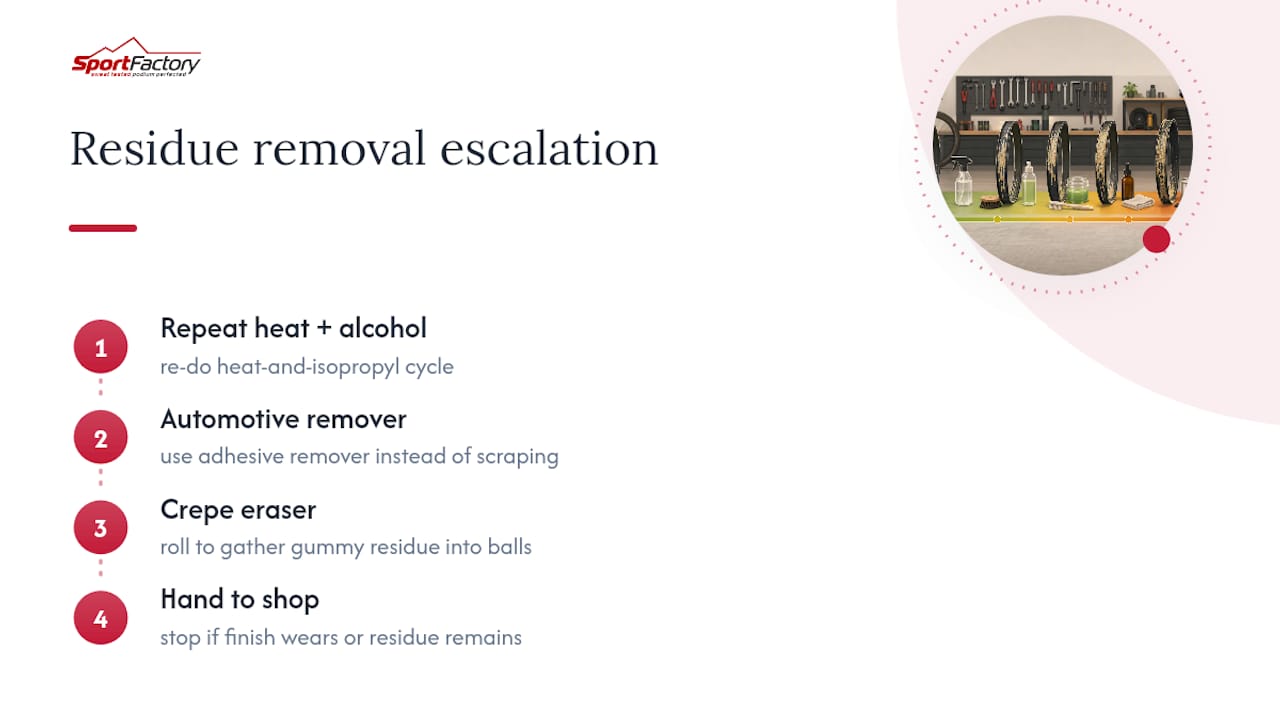
A crepe eraser is worth keeping around for the last stubborn film. Rolling it across gummy residue gathers the adhesive into small balls you can brush away, and it won’t scratch the rim bed the way a metal scraper can. If the finish starts showing wear, or residue is still there after a full safe pass, that’s the point to hand the wheel to a shop rather than risk the surface further.
How Do You Prevent Residue Buildup Next Time?
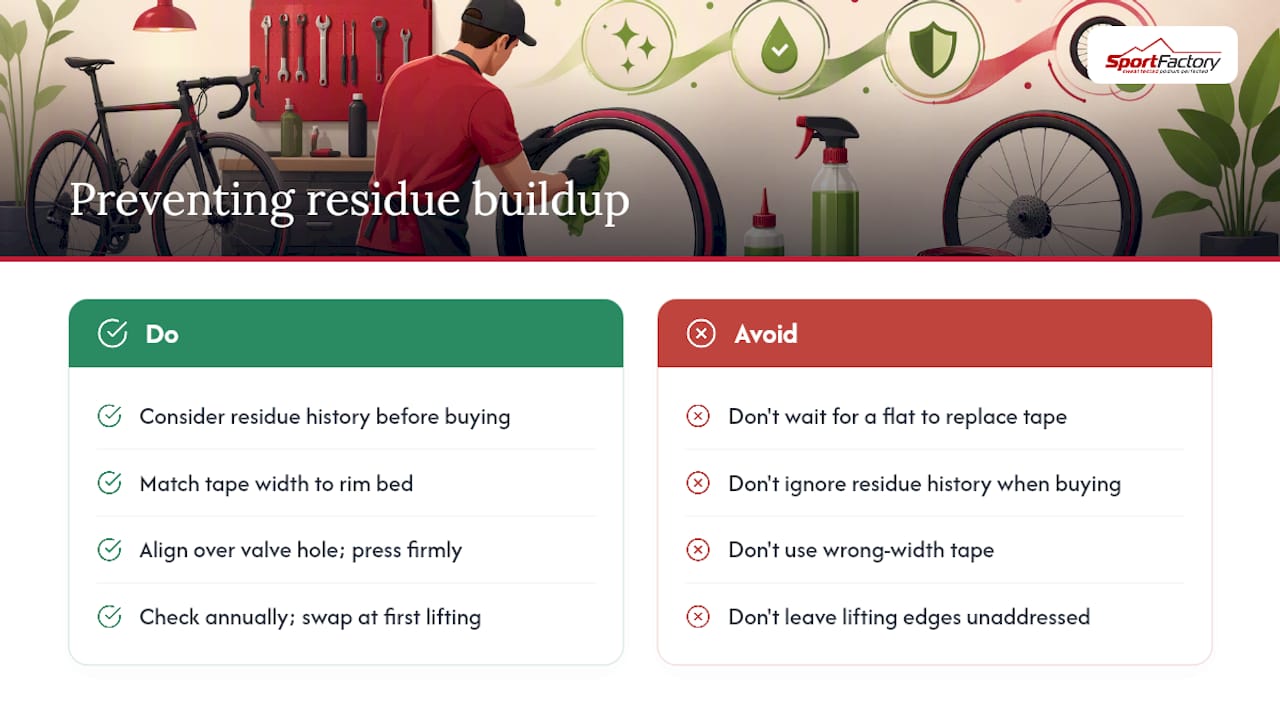
Some tubeless tapes leave far less mess than others. Riders consistently report that certain tape types, including strapping-style options, peel cleaner than some standard branded tapes, so factor residue history into your next purchase, not just price or weight.
When you retape, match the tape width to your rim bed, align it over the valve hole precisely, and press it down firmly to work out air bubbles. Seating it with a tube at high pressure for a day helps it conform fully before you commit to sealant. Check your rim tape at least once a year, and swap it at the first sign of lifting edges rather than waiting for a flat to force the issue. If you’re due for new rubber too, our guide to tire sidewall protection covers inspection habits worth pairing with your tape checks.
Shop-Tested Notes From Sport Factory Pro Shop
Isopropyl alcohol should be the last thing that touches your rim before new tape goes on, no exceptions. Even after Goo Gone or an automotive remover does the heavy lifting, an oily film hides underneath that will fight adhesion later. Confirm the rim bed is bone dry before you commit to a fresh strip.
— Matt
Get Everything You Need for the Job in One Order
You can gather all needed supplies for a tape swap in one convenient order. A proper cleanup kit is simple: low-residue tubeless tape sized to your rim bed, high-concentration isopropyl alcohol, a stack of microfiber cloths, and a valve core tool that fits your stem without stripping it.
Buying these together means you’re not guessing whether a bargain tape will leave a mess next time or whether your valve tool matches your setup. Check the current selection of tape, cleaners, and valve tools on the Sport Factory Pro Shop storefront and get your wheels back together before your next ride.
Sources
- Removing tape residue on carbon — MTBR
- Can you put on new rim tape without removing all old adhesive residue? — MTBR
- How often should you change your sealant? And more tips on maintaining tubeless tyres | BikeRadar
FAQ
Does WD-40 Remove Tape Residue?
Yes, WD-40 loosens tubeless tape glue effectively, but it leaves an oily film that must be wiped away with isopropyl alcohol before new tape will stick properly.
Will Goo Gone Remove 3M Adhesive?
Goo Gone works well on 3M and similar adhesives when left on for a few minutes before wiping, though it also requires a follow-up degrease with isopropyl to remove its own residue.
Will Dawn Dish Soap Remove Tape Residue?
Dish soap can help lift light, fresh adhesive during a rinse, but it does little against cured or baked-on tubeless tape glue compared to isopropyl alcohol or a dedicated adhesive remover.
How Do Professionals Remove Tape Residue?
Shops typically follow the same sequence outlined here: soften with heat, peel by hand, wipe with high-concentration isopropyl alcohol, and reserve stronger removers like Goo Gone or automotive solvents for residue that won’t come off any other way.
Is It Safe to Use Acetone on Carbon Rims?
Acetone can strip clear coats and damage some carbon finishes, so test it on a small hidden area first and default to isopropyl alcohol whenever it gets the job done.