

E-Bike on a Hitch Rack: How to Haul It Safely
E-Bike on a Hitch Rack: How to Haul It Safely
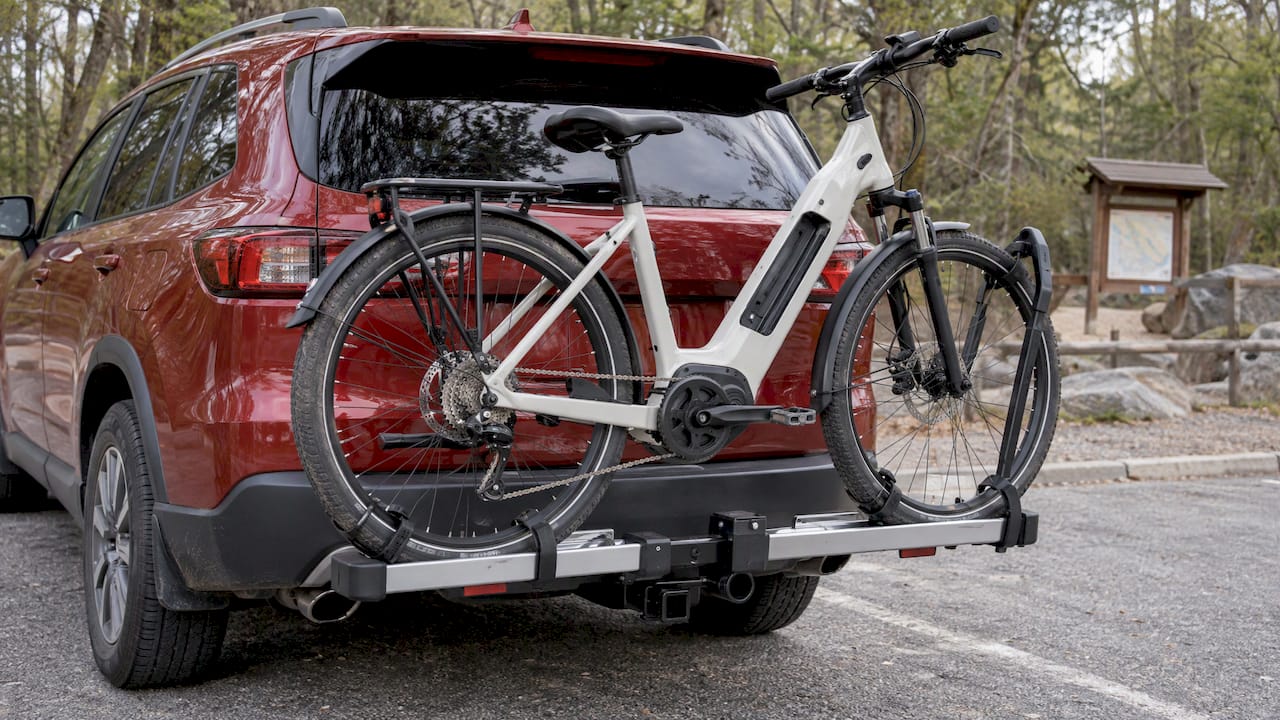
An e-bike belongs on a hitch rack only when three numbers agree: the rack’s per-bike limit, your hitch’s tongue weight rating and the weight of the bike as you actually load it. If the rack is built for e-bikes, the battery comes off and the bike goes on slowly and straight, the hitch is the easiest way to move a heavy bike. This guide walks through each check, a worked weight example and the road-trip routine. When you are ready to choose a rack, start with our bike racks for cars and trucks.
TL;DR
- Choose a platform (tray) style hitch rack that is rated for e-bikes and for your tire width. The lowest limit in the chain (rack per bike, rack total, hitch, vehicle) is the one that counts.
- Add up the load on the receiver: rack weight plus every bike, minus any batteries you remove. Compare it with the tongue weight in your vehicle’s manual.
- Take the battery and display off and carry them inside the vehicle, ideally at around 30% charge.
- Load on level ground, walk the bike up slowly and strap it only at the points the rack maker approves.
- Recheck the straps and hitch connection after the first stretch of driving, at every stop and after rough roads.
Table of Contents
- Why a hitch rack suits e-bikes
- Do e-bikes need a special rack?
- The weight check: three numbers that must agree
- Take the battery off first
- Loading step by step
- Before you drive, and while you drive
- Protect the bike and the gear that stays on it
- What we recommend
- Get the rack, and the kit around it
- FAQ
- Sources
Why a hitch rack suits e-bikes
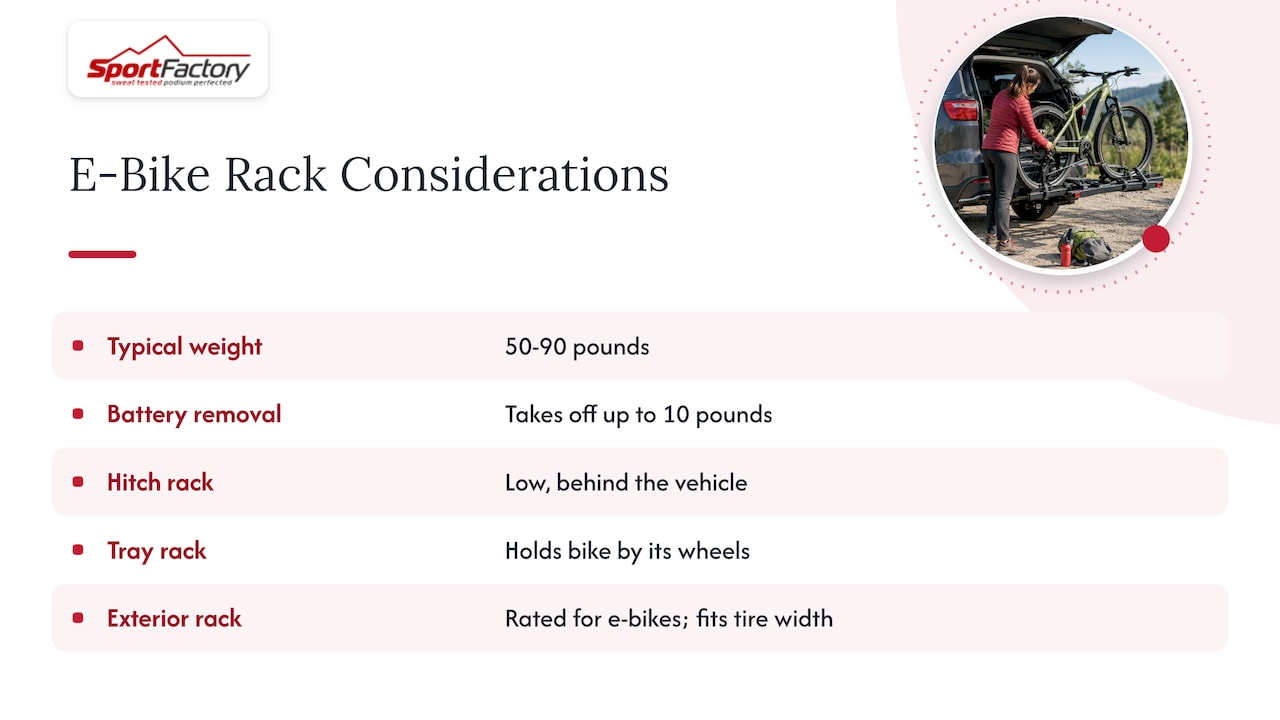
Most e-bikes are heavy. Reviewers who test racks put typical e-bike weights between 50 and 90 pounds, and pulling the battery can take off as much as 10 pounds. Lifting that onto a roof is out of the question for most people, and a trunk rack hangs the load from straps and body panels that were never designed for it.
A hitch rack puts the weight low, behind the vehicle, and lets you lift the bike only a short way or roll it up a ramp. A tray rack also holds the bike by its wheels instead of hanging it from the frame, which matters for fat tires, step-through frames and carbon frames. If your frame is carbon, read our guide to transporting a carbon frame on a car rack without damage first.
The PeopleForBikes owner’s manual says carrying an e-bike inside the vehicle is preferable to an exterior rack. When an exterior rack is the practical option, it advises making sure the rack is rated for e-bikes and can accommodate the tire width. That rating is the first thing to read on any rack.
Do e-bikes need a special rack?
Yes, in the sense that the rack must say it is rated for e-bikes. A regular rack may have trays, wheel straps or an arm that was never tested for a bike twice as heavy as a road bike. Look for these on the spec sheet:
- Per-bike weight limit. Many e-bike racks list a limit between 60 and 100 pounds per bike. A rack rated for 120 pounds in total but 60 pounds per bike cannot carry a 70-pound bike, even with the second tray empty.
- Total capacity. This is the combined bike load the rack allows.
- Tire width and wheel diameter. Fat-tire bikes need wider trays, and 5-inch tires are a common upper limit on rack specs.
- Receiver size. Most e-bike racks need a 2-inch receiver. Some racks lose capacity on a 1.25-inch receiver, so a rack’s per-bike figure on a small receiver can be lower than the headline number.
- Ramp or loading aid. A ramp makes a 65-pound bike manageable. Use only the ramp the rack maker approves for that rack, not a board from the garage.
If you also ride with kids or cargo, a bike trailer is a different way to move gear on the road, but it does not change the hitch math below.
The weight check: three numbers that must agree
The rack’s rating is only one limit in a chain. Check them all and trust the lowest.
- Bike weight as you load it. Weigh the bike with the parts that stay on: fenders, lights, bags, child seat. Remove what comes off.
- Rack ratings. Per-bike limit and total limit, on the road type you will drive.
- Hitch and vehicle ratings. The receiver and the vehicle’s manual set a maximum tongue weight. Rack manufacturers say the vehicle’s figure takes priority when it is lower than the rack’s.
Tongue weight means the downward load the hitch carries. On a hitch rack it equals the rack’s own weight plus every bike and accessory on it.
A worked example
Suppose a rack weighs 50 pounds, and you carry two e-bikes at 65 pounds each. Each has a removable battery of 7 pounds, which you take inside.
- Each bike on the rack: 65 − 7 = 58 pounds
- Two bikes: 116 pounds
- Rack plus bikes: 50 + 116 = 166 pounds on the receiver
Now compare. Is each tray rated for at least 58 pounds? Is 116 pounds within the rack’s total limit? Is 166 pounds within the tongue weight in your vehicle’s manual? If your hitch is rated lower than that, the answer is one bike, a lighter rack or another vehicle, not hoping it will hold. Leave the batteries on and the same trip becomes 50 + 130 = 180 pounds.
The typical hitch class (the rating stamped on the hitch, from light Class I to heavy Class IV) tells you the likely range, but the sticker on your hitch and the vehicle’s manual are the final word. If a specification is missing, contact the vehicle, rack or e-bike manufacturer instead of guessing from how things look. We cover a simple way to check the real weight of what you are loading in testing a hitch rack weight limit with a bathroom scale.
Adapters, extensions and swing-away arms can lower a rack’s rated capacity. Read the rack manual before adding any of them, and check the manual again if you tow with the same hitch.
Take the battery off first
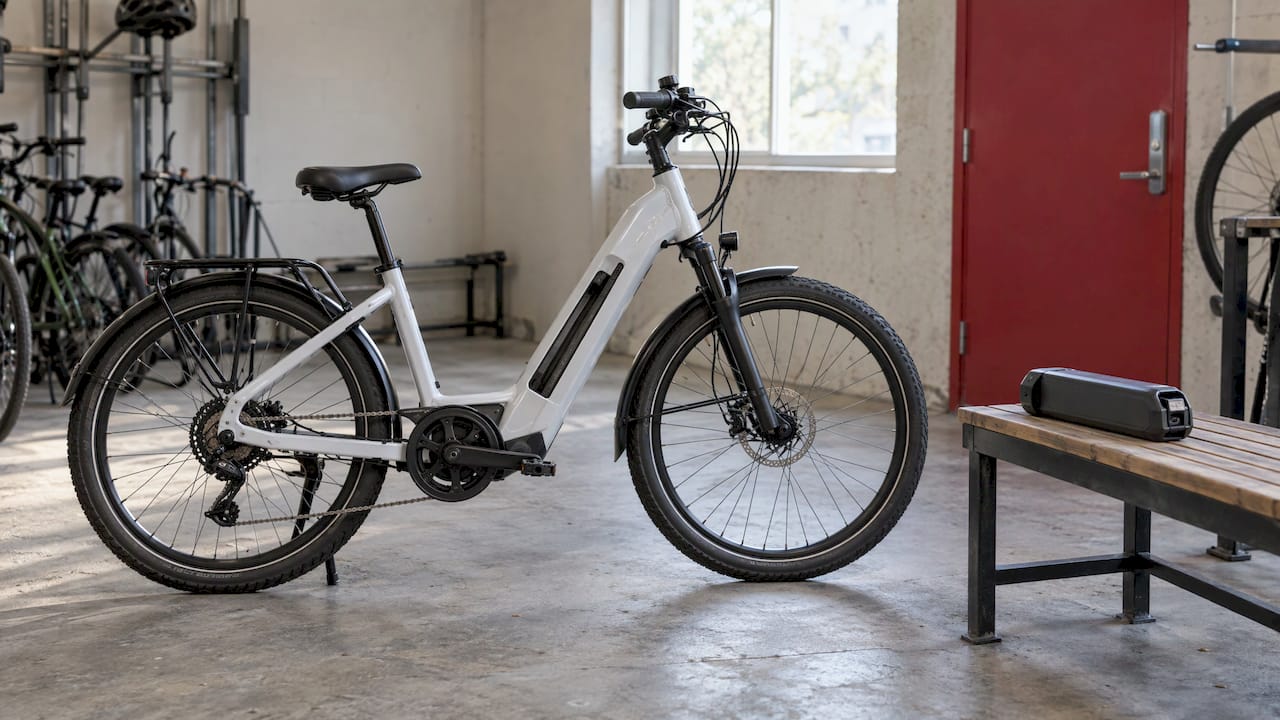
This is the one step every major source agrees on. Bosch’s US battery guide says that when you carry an e-bike on an outside rack you should remove the computer and battery if possible and store both safely in the car. It also says to use an approved, compatible rack and warns that overloading a rack can result in death or serious injury.
There are four reasons to pull the battery:
- Less weight on the rack. Fewer pounds to lift and fewer on the receiver.
- Weather and road debris. Ride1UP’s support article says the battery should always come off for exterior transport so it stays out of rain, snow and road debris. It adds that a proper battery compartment cover should be used on every trip, not a towel or a trash bag.
- Safety. The PeopleForBikes manual warns that a drive system with the battery installed can switch on unexpectedly, so remove the battery or switch the system off before transporting an e-bike.
- Theft. A battery and display are the easiest parts to take, and the most costly to replace.
Bosch recommends carrying the battery at around 30% charge and charging it fully only at your destination. For one of its battery lines, the manual also says to protect the pack from heat above 140°F and never to use a rack-mounted battery as a handle for lifting the bike. Inside the car, keep the battery switched off, away from keys, nails and other small metal objects that could short the contacts, and out of a car that is baking in the sun. Bosch also warns not to carry a battery on a rear rack in the rain.
Some bikes have built-in batteries that do not come off. In that case, switch the system off, and follow the bike maker’s instructions for rack use.
Loading step by step
Here is the routine, with the spot where each step usually goes wrong.
- Park on level, stable ground and set the parking brake. Loading on a slope puts side load on the rack and on you.
- Install the rack fully. Seat it in the receiver, tighten the hitch pin or locking system and remove any wobble per the rack manual. A loose rack multiplies the movement of every bike on it.
- Fold down the trays and extend the ramp if you use one. Make sure it is the rack maker’s ramp and that it is fully extended before the bike touches it.
- Remove the battery and display, and any loose items. Bags, pumps and bottles should ride inside the car.
- Clear the wheel path. Move straps and arms out of the way so they do not catch a pedal or a brake lever.
- Line the bike up straight. Stand beside it and keep both hands on it. A bike that starts crooked tends to finish crooked.
- Walk the bike up slowly. Do not ride it up unless the rack manual tells you to. Power-assist can surge if a pedal moves.
- Set the wheels in the trays, then fit the wheel straps, arm or clamp in the order the manufacturer specifies.
- Secure only at approved contact points. Keep straps away from brake hoses, cables, the display mount and the battery housing, which are easy to crush.
- Add a lock if you wish. A lock deters theft but does not replace the restraints that hold the bike on. Before you trust the lock, inspect the anchors first so the rack itself stays put.
- Store the ramp, then walk around the vehicle. Pull each bike by hand: nothing should shift.
Step-through frames and kids’ e-bikes may need a frame adapter or a different clamp. If a standard arm does not fit the frame shape, use an adapter from the rack maker rather than clamping across a tube that was not made for it.
Before you drive, and while you drive
A loaded hitch rack changes how the vehicle handles. It adds weight behind the rear axle, it can hide the plate and lights, and it is exposed to wind and vibration.
- Lights and plate. Make sure the brake lights, turn signals and license plate remain visible. State rules on plate visibility differ, so confirm them for the states you will drive through, and use a light board or relocated plate if the rack blocks the view.
- Early recheck. If your rack manual recommends it, stop after a short initial drive and check the straps, clamps, rack tightness and hitch pin. Even without that advice, it is a good habit.
- Regular stops. Look again at fuel, meal and rest stops, and after rough roads, strong crosswinds or hard braking.
- Clearance. Check ground clearance before steep driveways, parking ramps and dips. A loaded rack hangs low and far back.
- No car washes. Take the rack off, or the bikes off, before an automatic wash.
- Reversing. Allow extra room. The bikes extend your vehicle’s length by a few feet.
- Heat. Do not leave a removed battery in a closed vehicle that has become extremely hot. Carry it with you when you leave the car for a long stop.
If a battery ever shows heat, smoke, swelling, a leak, a strange smell, discoloration or noise, move away and call 911, as the PeopleForBikes manual instructs for the United States. Lithium-ion batteries are also treated as dangerous goods by transport authorities, which is another reason to ride with them inside the cabin and protected, not loose in a bag in the cargo area.
Protect the bike and the gear that stays on it
A bike that spends hours on the back of a vehicle gets a hammering from wind, grit and vibration. A few habits help:
- Tires and pressure. Check pressure before loading and again at your destination. If you carry a compact inflator for roadside fixes, keep it in the vehicle with you, not on the bike. Our pumps and inflation systems include options for topping up a tire on the go.
- Lights. Remove a removable headlight or taillight so it does not rattle loose or get lost. See our bicycle lights for replacements.
- Pedals and bars. If the pedals catch on a strap or the bike next to it, rotate them or remove them. Aerobar clip-ons can stick out: check that they clear the neighboring bike and the rack arm.
- Cover the drive. Use the manufacturer’s cover or a proper cap over open battery contacts, so dust and water stay out.
- Space between bikes. Use the rack’s spacing or a soft separator, so pedals and bars do not scrape paint or carbon.
For air travel or a long move, a case is a better answer than a hitch. Our bike travel cases and transport bags cover that, and bicycle storage solutions help once you are home.
What we recommend
Coach Matt here. Almost every hitch rack problem I hear about starts in the same place: someone bought for the look of the rack, not for the number on it. For an e-bike I begin with the weight, work back to the receiver, and only then pick a tray style and a ramp.
My own rule is simple. Write the numbers on a card: rack weight, bike weight without battery, hitch tongue rating. Add them up in the driveway, not at the trailhead. If the sum is close to a limit, I go with the lighter setup or take one bike at a time.
We built our store around riders who care about the details, from tires and pedals to pumps and lights, and our racks page is where I send people who want a rack that matches their bike and their vehicle. Pair a rack with a good pump, fresh tires and working lights, and the trip is easier at both ends.
Coach Matt
Get the rack, and the kit around it
If you are ready to carry your e-bike by hitch, browse our bike racks for cars and trucks and match the per-bike limit and tire width to your bike using the checks above.

When the rack is sorted, the rest of the trip kit is in the same store: tires for the trail you are driving to, pumps and inflation systems for fixes on the road, and pedals if you want to swap a set before the ride.
FAQ
How do I transport a heavy e-bike on a hitch rack?
Use a tray-style rack rated for e-bikes and for your tire width, and confirm the vehicle’s tongue weight allows rack plus bikes. Remove the battery and display, load on level ground by walking the bike up a ramp approved for that rack, and strap it at the approved points. Recheck everything after the first stretch of driving.
Do e-bikes need special bike racks?
They need racks that state an e-bike rating. The per-bike weight limit, total capacity, tire width and receiver size all have to match your bike. A rack that suits a 30-pound road bike may not be rated for a 65-pound e-bike.
Should I remove the battery before putting an e-bike on a hitch rack?
Yes, wherever the battery is removable. Bosch advises removing it and the computer for outside-rack transport, and PeopleForBikes says it also reduces rack load. Carry the battery inside the vehicle, switched off, with its contacts away from metal objects.
Can I ride an e-bike up the ramp onto the rack?
Walk it instead, with both hands on the bike, unless the rack maker’s instructions say otherwise. Walking gives you control and avoids a sudden surge from the motor if a pedal turns.
What is the difference between a hitch rack and a tow bar rack?
A hitch rack slides into the receiver on your vehicle, which for most e-bike racks is a 2-inch receiver. Tow bar racks attach to a different style of towing fitting, and their capacity is set by that fitting. Either way, the lowest rating in the chain governs.
Sources
- Bosch eBike Systems: US battery guide
- Bosch PowerTube US manual, MY2026
- Ride1UP: Safely transporting e-bikes
- PeopleForBikes E-Bike Owner’s Manual
- Best hitch bike racks for e-bikes by weight limit