

Choosing an Eflator: 108g Pocket Backup or 426g Workshop Unit
Posted by Matt Russ on 11th Sep 2026
Choosing an Eflator: 108g Pocket Backup or 426g Workshop Unit
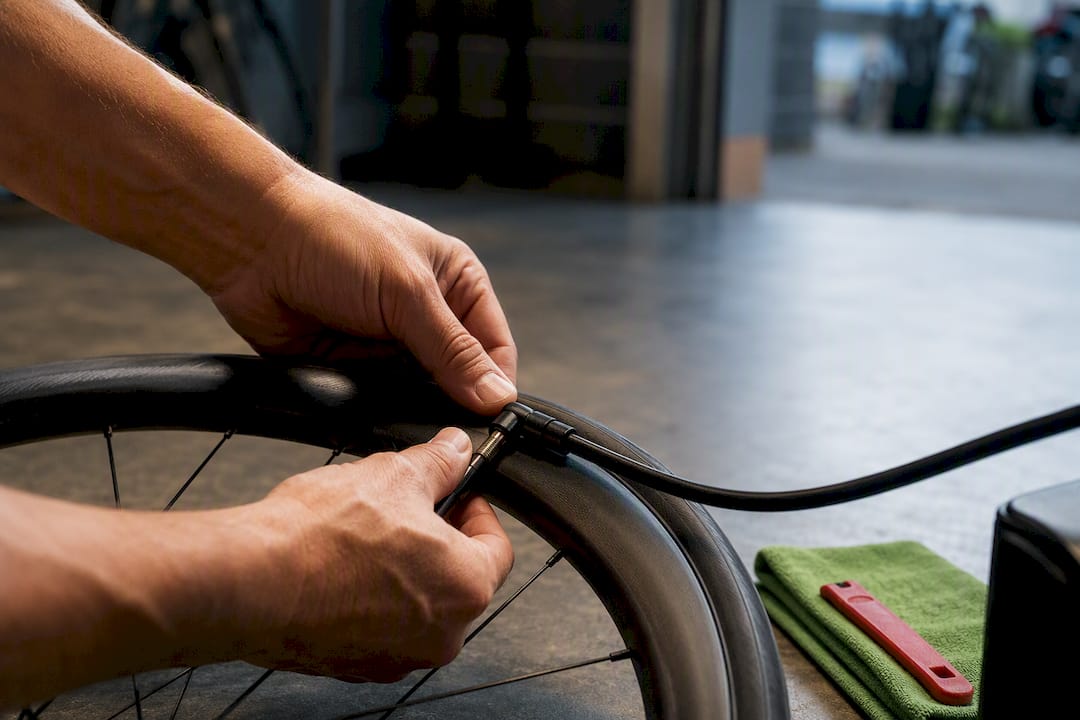
The Fix Manufacturing Eflator is a battery-powered digital inflator best suited to workshop or roadside prep, not to ultralight racing kits. Choose the standard Eflator if you want a reliable set-and-forget pump for home or team-car use, and pick the Eflator Mini if pocket portability is the priority. Both rely on a digital gauge, auto-stop shutoff, and USB-C charging, and both are available through leading cycling accessories retailers.
TL;DR:
- The standard Eflator offers higher battery capacity, larger size, and is better suited for repeated use in workshops or team support.
- The Eflator Mini provides a compact, lightweight option ideal for emergency roadside repairs and riders prioritizing portability.
- Both models rely on a digital gauge with auto-stop functionality, but attaching the hose correctly may require a specific technique to prevent air leaks.
- Upgrading with the Universal Valve Chuck greatly improves ease of use, especially for locking onto valves without holding the adapter manually.
- Battery management tips include storing the inflator at roughly 50% charge and keeping it dry to prolong battery life during periods of inactivity.
Table of Contents
- What Is the Eflator, and How Does It Differ From the Mini?
- How Do the Specs Compare?
- How Accurate and Easy to Use Is It in Real Riding?
- Which Accessories Actually Matter?
- How Do You Inflate a Tire and Maintain the Battery?
- What Do Real Users Say About the Eflator?
- Where the Eflator Fits in a Rider’s Toolkit
- Ready to Add an Eflator to Your Setup?
- Sources
- FAQ
What Is the Eflator, and How Does It Differ From the Mini?
Fix Manufacturing built the Eflator to replace a shop floor pump, not to replace a jersey-pocket CO2 kit. Set your target pressure, attach the hose, and the pump stops itself once it hits that number. That auto-stop function is the whole point: no more guessing when to release the trigger or overshooting a tubeless setup by 10 PSI.
The Eflator Mini shrinks that same concept into something you could actually carry on a ride. According to Fix Manufacturing’s product page, the Mini measures just 72 x 45 x 32 millimeters and weighs 108 grams, which is light enough to disappear into a saddle bag or jersey pocket.
Rider fit tends to break down like this:
- Commuters and workshop users: the standard Eflator, for topping off multiple bikes before a ride or a race
- Gravel and road racers who travel light: the Eflator Mini, for emergency inflation without adding real weight
- Tourers and bikepackers: either model, depending on whether pack weight or charge capacity matters more
- Team support and shop mechanics: the standard Eflator, for repeated use across a fleet of bikes
Neither model is designed to be your only inflation method on a century ride. Think of it as a smarter, more precise alternative to a hand pump, not a full replacement for carrying a spare tube or CO2 backup.
How Do the Specs Compare?
The numbers below separate what Fix Manufacturing states officially from what independent testing measured directly, which matters if you’re comparing an e-flator against a hand pump or a basic electric inflator on spec sheets alone.
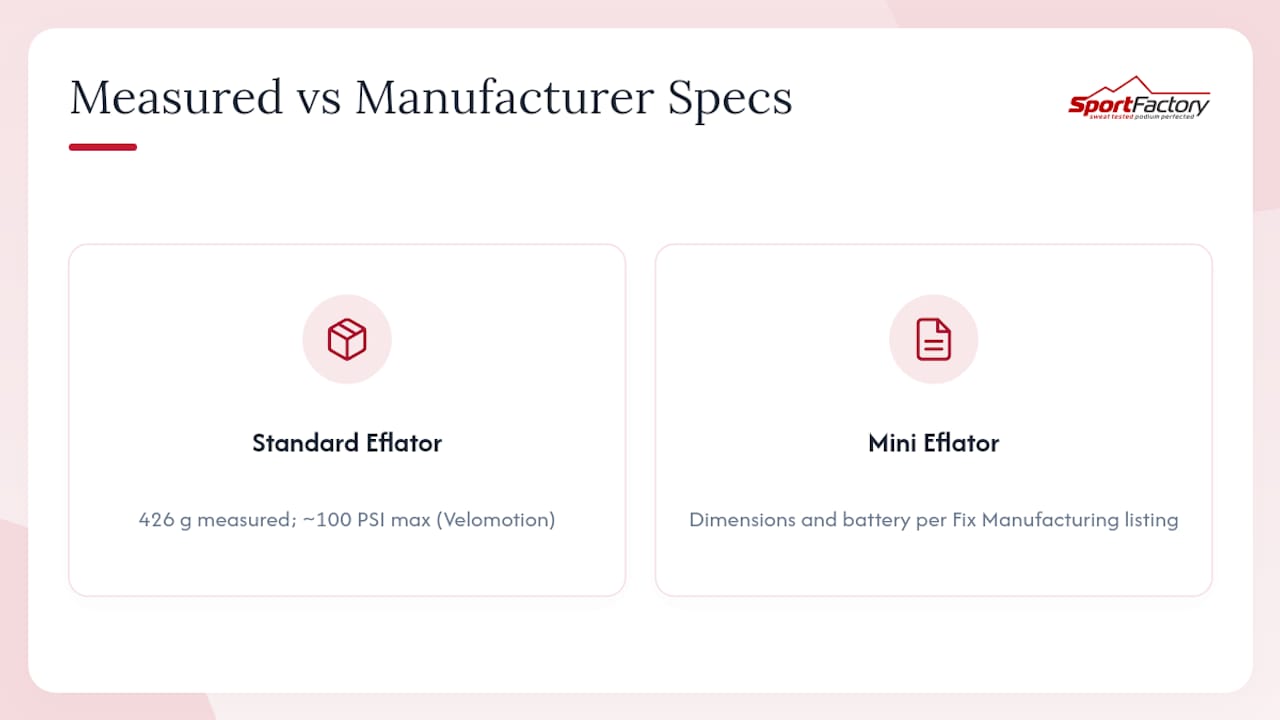
The battery capacity, pressure ceiling, and physical measurements for the standard Eflator come from Velomotion’s independent test, which physically weighed and measured the unit rather than relying on the spec sheet. The Mini’s dimensions and battery figures come straight from Fix Manufacturing’s own listing.
Statistic Callout: Velomotion’s test measured the standard Eflator at 426 grams including the hose and confirmed roughly 100 PSI maximum output, numbers that hold up whether you’re seating a road tire or airing up a fat gravel casing.
How Accurate and Easy to Use Is It in Real Riding?
Velomotion’s hands-on test found the auto-stop shutoff worked reliably and the digital display stayed easy to read even in direct sunlight, two details that matter more than raw PSI numbers once you’re actually using the thing daily. Battery strength held up across multiple tire fills in that same test, though the reviewers noted the Eflator isn’t the smallest or fastest inflator on the market. That’s a trade, not a flaw: a bigger battery and housing buy you more reliable auto-stop behavior and longer runtime between charges.
Where the standard model gets slightly fussy is at the valve. Without a locking chuck, attaching the hose takes a specific technique: screw the adapter onto the valve stem first, confirm the Presta pin is properly seated, then connect the hose and hold the pump steady while it runs. Skip a step and you’ll hear air hissing out around the connection.
A few things to expect once you’re using it regularly:
- Inflation speed is comparable to a mid-range floor pump, not instant like a CO2 cartridge
- The pump does produce audible motor noise, similar to a small handheld compressor
- The built-in LED light is genuinely useful for spotting the valve stem on a dark roadside repair
- You’ll want a free hand to steady the unit unless you’re using a locking chuck
Pro Tip: Order the Universal Valve Chuck at the same time you buy the pump. Retrofitting it later means an extra order and a wasted trip when you actually need it roadside.
Which Accessories Actually Matter?
The Universal Valve Chuck is the single upgrade most likely to change how you feel about this pump day to day. Without it, you’re threading a bare adapter onto the valve and bracing it by hand for the entire fill. With it, the connection locks in place and you can let go. Retailer listings show it’s sometimes bundled and sometimes sold separately, so confirm before you check out.
Beyond the chuck, run through this before buying:
- Confirm whether Presta and Schrader adapters and a ball needle are included in the box
- Check for a carry bag or case, especially if you’ll be tossing the pump in a gear bag
- Verify the stated max PSI actually covers your tire type (road tubeless setups can demand higher seating pressure than gravel or MTB)
- Read the warranty terms and return window before you commit to a model
Battery capacity is the real differentiator between electric inflators generally, so compare mAh ratings and stated tires-per-charge side by side rather than trusting marketing copy alone.
How Do You Inflate a Tire and Maintain the Battery?
Using the Eflator correctly comes down to sequence. Rush the valve attachment and you’ll lose pressure through a poor seal before the auto-stop even gets a chance to work.
- Remove the valve cap and, for Presta valves, unscrew and depress the pin to release any stuck air
- Thread the adapter or Universal Valve Chuck onto the valve stem until snug
- Attach the hose, powering the pump on and entering your target PSI on the digital display
- Start inflation and hold the pump steady if you’re not using a locking chuck
- Let the auto-stop cut power once it reaches your target, then detach and cap the valve
Tubeless setups sometimes need a quick burst above your final target to seat the bead before you bleed pressure back down. Schrader valves skip the pin-depress step entirely, just thread and go.
Pro Tip: Store the pump at roughly 50% charge if it’ll sit unused for weeks, and keep it somewhere dry. Lithium batteries degrade faster in full-charge storage and humid garages are hard on the internal electronics.
What Do Real Users Say About the Eflator?
Riders who’ve actually put miles on this pump tend to circle back to the same handful of points, good and bad.
- Praise: the digital gauge reads accurately, the auto-stop is dependable, and the battery holds up across several fills before needing a charge
- Praise: the LED light gets called out repeatedly as more useful than expected for night repairs
- Complaint: the standard model’s size and weight make it a poor fit for anyone trying to pack light
- Complaint: without the Universal Valve Chuck, some riders report frustration holding the adapter steady mid-fill
The takeaway is straightforward: buy the standard Eflator for accuracy and reliability at home or in a support vehicle, and budget for the valve chuck upgrade if you plan to use it often.
Where the Eflator Fits in a Rider’s Toolkit
An electric inflator like the Eflator earns its spot for home prep and pre-race pressure checks, where precision beats speed. CO2 still wins for weight-conscious emergency use mid-ride, and if you’re flying to a race, TSA rules on cartridges matter more than pump choice. A floor pump remains the cheapest workshop option. The Eflator is stocked alongside CO2 systems and floor pumps at various specialty cycling retailers because no single tool covers every scenario a competitive cyclist runs into.
— Matt
Ready to Add an Eflator to Your Setup?
Some cycling specialty retailers carry the Fix Manufacturing Eflator lineup alongside the valve chucks and adapters that make it easier to use, so customers are not left hunting down accessories separately after checkout.
Ordering is straightforward: pick the standard Eflator for workshop and pre-ride prep or the Mini for pocket carry, add the Universal Valve Chuck to your cart if it isn’t already bundled, and check out through Sport Factory Pro Shop with customer support available if you have questions about compatibility before you buy. Riders stocking up on cold-weather layers can also find warm cycling base layers worth pairing with a winter workshop setup.
Sources
- Battery-powered compressor pump with digital display and auto-stop function: Fix Manufacturing Eflator tested - Velomotion
- Fix Manufacturing Eflator Digital Pump with Valve Chuck – Gio’s Outdoors
FAQ
What does “inflator” mean?
An inflator is any device, manual, battery-powered, or CO2-based, that pumps air into a tire or similar object to reach a target pressure. An e-flator specifically refers to a battery-powered digital version like the Eflator.
What is the best portable tire inflator for home use?
For home and workshop use, the standard Fix Manufacturing Eflator is a strong pick because of its larger 2,000 mAh battery and consistent auto-stop accuracy, as confirmed by Velomotion’s testing.
Which inflator is best, the standard Eflator or the Mini?
It depends on your use case: the standard Eflator suits stationary workshop and pre-ride prep, while the Eflator Mini suits riders who need a pocketable emergency backup at just 108 grams.
What are inflators used for?
Inflators fill tires to a specific pressure, and digital models like the Eflator add precision by letting you set an exact PSI target and auto-stop once it’s reached, which prevents overinflation on tubeless or high-pressure road setups.
How long does the Eflator take to charge?
The Eflator Mini charges via USB-C in about one hour, according to Fix Manufacturing’s product listing; the standard Eflator’s charge time follows a similar USB-C process, though exact minutes aren’t listed publicly.