

You Train With Discipline, But Do You Have Training Discipline?
By Coach Matt Russ
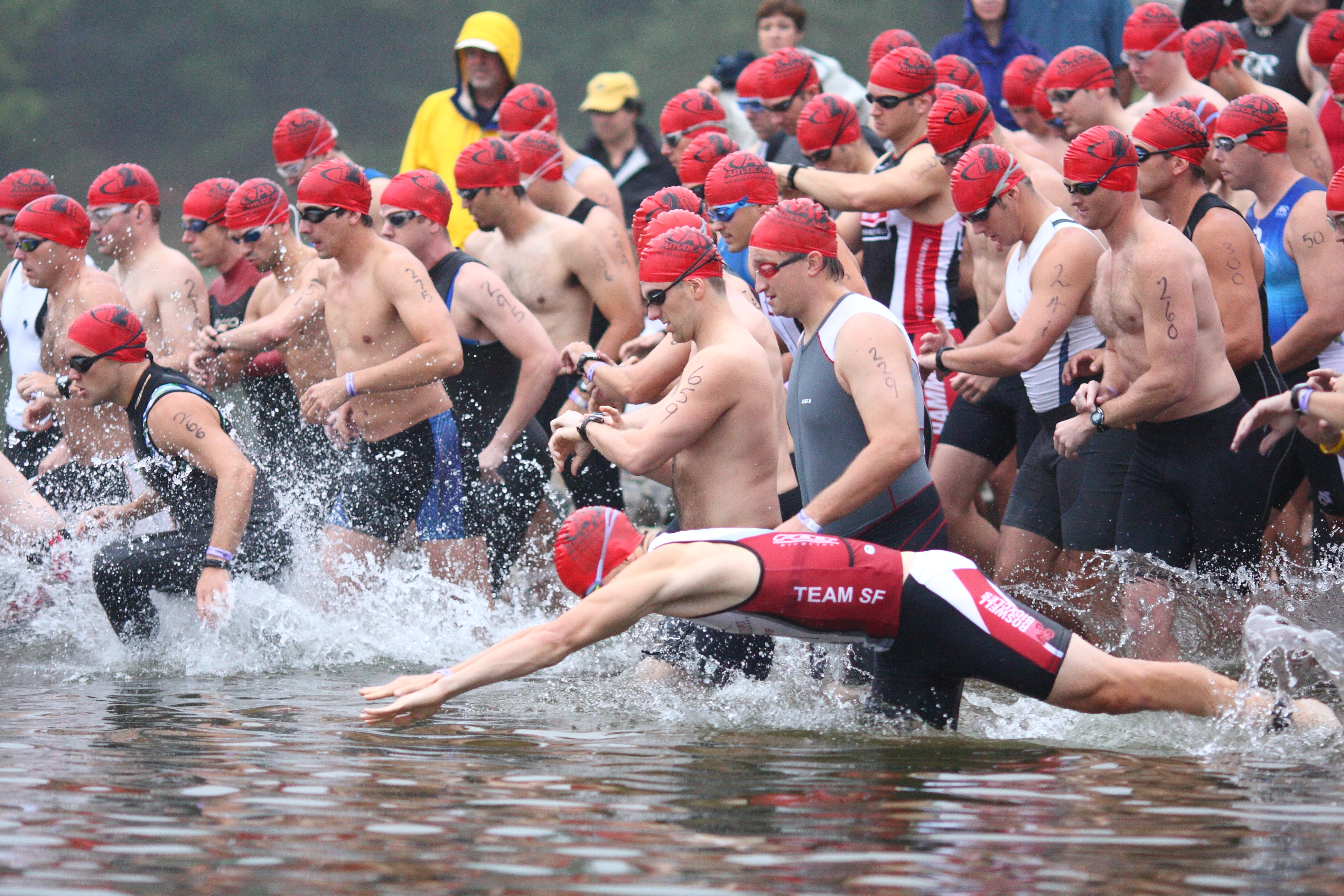
I have the privilege of working with motivated triathletes of all levels, and most of them exhibit a very high degree of self-discipline. Contrary to popular perception, it usually isn't difficult to get these athletes to train. The bigger challenge is convincing them to rest and recover.
That distinction is important because true training discipline isn't simply about showing up for every workout or pushing yourself as hard as possible. It is about understanding the relationship between training stress and recovery and knowing when to push—and when not to.
Training is a constant process of balancing stress against recovery. Even the most disciplined athlete can make the mistake of "pushing through" another substandard workout and ultimately digging a deeper hole. Sometimes the most disciplined decision you can make is to take a day off.
Training too often, too hard, or too much can be far more detrimental to your performance than training too little.
More Training Doesn't Always Mean Better Training
One of the most common mistakes I see among triathletes is confusing high training volume with high-quality training.
Simply increasing the amount you swim, bike, or run does not automatically make you faster. Effective triathlon training requires choosing the right workout, at the right time, and completing it when your body has the energy to benefit from it.
Your training plan should have a purpose. You may need to address your weakest discipline, develop endurance, improve speed, or build race-specific fitness. The key is applying the appropriate training stimulus and then allowing your body enough time to adapt.
Fitness is not created during the workout itself. The workout provides the stress; recovery allows your body to adapt to that stress.
Training should therefore be a slow, steady, and patient progression. Your body operates on its own timeline, and the fitness benefit from a particular workout may not be immediately apparent. In some cases, the benefits of a training session may not fully emerge for days or even weeks.
This is why discipline sometimes means doing less than you feel capable of doing.
If you feel exceptionally good during a workout and decide to do considerably more than your plan calls for, you may be creating a problem rather than gaining additional fitness. That extra work could interfere with your recovery, compromise subsequent workouts, or even cause you to peak too early.
A well-designed training plan should progress gradually rather than dramatically increasing your workload from week to week. As a general guideline, many athletes can use an increase of roughly 8% per week, with 10% serving as an upper limit rather than a target.
Ultimately, regardless of what your mind wants to do, your training should be guided by what your body needs.
The Importance of Recovery in Triathlon Training
Recovery is not the opposite of training. Recovery is part of training.
This can be especially difficult for highly motivated, Type A athletes to accept. They often measure their commitment by how much work they can accomplish. But completing another hard workout isn't always a sign of discipline.
Consider the quality of your workout first.
If you are simply going through the motions because you don't have the energy to complete the workout as prescribed, additional training stress may provide little benefit. In many cases, taking a rest day will do more for your long-term performance than forcing yourself through a poor-quality workout.
The same principle applies when you're sick or under significant stress.
If you are sick, excessively fatigued, or generally feel that you need a day off, taking that day is often the smarter training decision. Training places additional stress on the body, and training while sick can make recovery more difficult and potentially prolong your illness.
Learning to recognize these signals is a critical part of becoming a better endurance athlete.
Don't Ignore Your Training Plan
Another important component of training discipline is having a written triathlon training plan.
A plan is not simply a goal, a general recommendation, a training group, or an idea. It is a deliberate course of action designed to move you from where you are today to where you want to be on race day.
You should be able to look at your training from one block to the next and see—and quantify—your progression.
There is another side to this equation, too. While some athletes are guilty of doing too much, others are too casual about their training.
The "close enough" athlete may be under-disciplined.
There is real value in completing a workout exactly as prescribed when the workout itself is reasonable and attainable. Every properly completed workout contributes to your progression. Conversely, consistently skipping workouts or failing to complete the prescribed work can eventually affect your race preparation.
You cannot fast-forward fitness.
When workouts are missed or repeatedly shortened, your timeline may have to change. Eventually, the consequences of those missed sessions can show up when you need your fitness most—often on race day.
That doesn't mean you should panic when you miss a workout. Life happens. Illness, work, family, travel, and fatigue can all interfere with training. The important thing is to recognize the change and adjust the overall plan intelligently rather than trying to make up everything at once.
Triathlon Tapering Requires Discipline
Another common mistake is training too hard in the weeks leading up to a race.
Depending on the distance and the athlete, a triathlon taper may last one to two weeks or longer. During a taper, overall training volume decreases while some intensity is maintained.
The objective is simple: arrive at the starting line rested while maintaining as much fitness as possible.
For many athletes, tapering is one of the most difficult parts of the entire training process.
After months of working hard, reducing your training can make you feel as though you are losing fitness. You may begin to question whether you have done enough. You may feel like you should squeeze in one more long ride, another hard run, or an extra swim.
This is where training discipline matters most.
You have to trust the work you have already completed.
It is easy to interpret the reduced training volume of a taper as being undertrained when, in reality, you may be exactly where you need to be. The goal isn't to gain significant new fitness during race week. The goal is to allow the fitness you've developed to be expressed on race day.
As Chris Carmichael once told me, there is nothing you can do the week of a race to increase your fitness, but there is everything you can do to mess it up.
Train Smart, Not Just Hard
The most disciplined triathlete isn't necessarily the one who trains the most.
It is the athlete who understands when to train, how hard to train, when to recover, and when to follow the plan rather than their emotions.
Training discipline means resisting the temptation to turn every good workout into a personal record. It means taking recovery seriously. It means respecting your training plan and making adjustments when circumstances require them.
Most importantly, it means understanding that the purpose of training isn't simply to accumulate miles, hours, or workouts.
The purpose is to create the right training stimulus, recover from it, adapt, and gradually become a stronger and faster athlete.
Training discipline means having a good plan and sticking to it. It means training smart, not just hard.
If you're confused about your training or unsure whether your plan is moving you in the right direction, consult a qualified triathlon coach. Sometimes a one-hour consultation is all it takes to identify the problem, make the necessary adjustments, and get your training back on the right track.
Matt Russ enjoyed a professional coaching career spanning over two decades of working with professional endurance athletes. His athletes have achieved numerous regional, national, international and championship titles under his direction. Matt achieved the highest level of licensing by both USA Triathlon and USA Cycling, and was a licensed USA Track and Field Coach. His accomplishments include being named "Team USA" Coach for the 2011 Beijing World Championship. Head Coach and founder of The Sport Factory, a USA Triathlon Certified Performance Center, he has authored many articles on a wide variety of endurance related topics.