

Indoor Trainer Tire Flat Spot Can Be Hazardous to Outdoor Riding
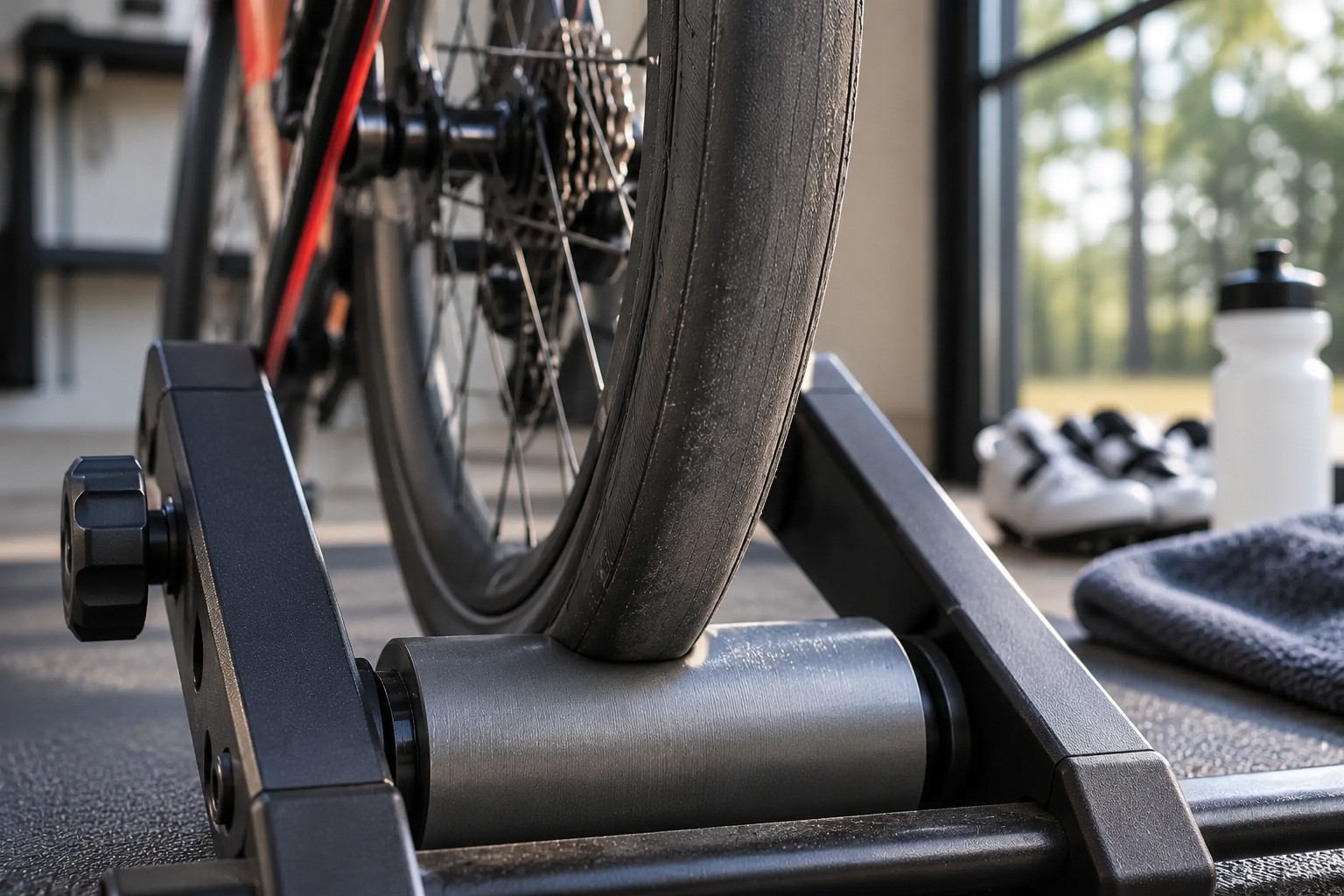
Interactive smart trainers and virtual cycling platforms have made indoor cycling considerably more attractive. In fact, many cyclists now prefer to ride their indoor trainers year-round for convenience, safety, and training efficiency. However, if you're using a wheel-on indoor trainer, there is a potentially hazardous consequence of spending considerable time riding indoors: the development of a flat spot across the center of your rear tire.
This type of tire wear can be particularly pronounced if the roller tension is set too tightly, tire pressure is inadequate, or the tire slips against the roller. Unlike outdoor riding, where the bicycle leans and utilizes different portions of the tire's rounded profile, a stationary trainer concentrates wear along the center of the tread. Over time, this can produce a noticeably squared-off tire profile that may compromise handling when you return to the road.
Why a Squared-Off Bicycle Tire Can Be Dangerous
An automobile tire is relatively flat across its tread because the vehicle normally corners without significantly leaning. The suspension is designed to help maintain tire contact with the road throughout the corner. A bicycle or motorcycle tire, however, has a rounded profile because a two-wheeled vehicle must lean to negotiate a turn. Generally, the faster you negotiate a corner of a given radius, the greater the required lean angle and the farther the contact patch moves toward the shoulder of the tire.
When a bicycle tire develops a pronounced flat spot, it can create an abrupt transition between the worn center tread and the relatively unworn sides. As the bicycle leans into a corner, the tire may transition less smoothly across this uneven profile, resulting in less predictable handling. Excessive tread wear and deterioration of the rubber may further compromise traction, particularly on wet pavement.
You may not notice anything unusual when riding in a straight line. Unfortunately, the problem may become apparent when you need predictable tire performance the most: while cornering or descending at speed.
How to Prevent Indoor Trainer Tire Wear
It is important to note that this type of tire wear applies specifically to wheel-on bicycle trainers. Direct-drive smart trainers eliminate roller-induced tire wear altogether because the rear wheel is removed and the bicycle's drivetrain interfaces directly with the trainer.
For cyclists using a wheel-on trainer, one of the best solutions is purchasing a dedicated indoor trainer tire. These tires typically utilize rubber compounds engineered to withstand the heat, friction, and repetitive contact generated by a trainer roller. They may also reduce noise and rubber debris compared to conventional road tires.
A particularly convenient solution is to set up an inexpensive, compatible rear wheel and cassette with a dedicated trainer tire. This allows you to swap wheels when transitioning between indoor and outdoor riding without repeatedly removing and installing tires. Although changing a rear wheel may seem inconvenient, it can extend the life of an expensive road tire and help preserve its intended handling characteristics.
If you continue to use your regular road tire on an indoor trainer, maintain the recommended tire pressure and follow the trainer manufacturer's instructions for roller tension. Excessive tension can accelerate tire wear, while insufficient tension may cause slippage and additional heat buildup.
Remember that dedicated indoor trainer tires are generally not designed for outdoor riding. Always reinstall a roadworthy tire or wheel before heading outside.
How to Check Your Bicycle Tire for Trainer Wear
One of the simplest ways to inspect your rear tire is to run your thumb across the tread from one side to the other while the bicycle is stationary. A road tire in good condition should generally have a relatively smooth, rounded profile. If you feel a distinct ridge or edge where the center tread transitions to the sides, your tire may have developed a significant flat spot.
Rotate the wheel and inspect the entire circumference of the tire. Look for excessive flattening, cracking, cuts, exposed casing threads, bulges, or missing wear indicators, where applicable. A substantially squared-off tire should be replaced before returning to outdoor riding, particularly if you anticipate fast descents, aggressive cornering, or wet conditions.
There is no universal measurement of flat-spot width that determines whether a bicycle tire is safe. The extent of wear, condition of the rubber, tire construction, and intended riding conditions must all be considered. When in doubt, have the tire inspected by a qualified bicycle mechanic or replace it.
Before You Take Your Bike Back Outside
If you've spent a considerable amount of time riding a wheel-on trainer over the winter, make inspecting your rear tire part of your spring bicycle maintenance routine. While you're at it, check your front tire, brakes, tire pressure, and drivetrain condition.
Cyclists often spend considerable amounts of money on equipment designed to improve performance, yet one of the most important pieces of safety equipment on a bicycle is the relatively small amount of rubber connecting it to the road.
A few minutes spent inspecting your tires before your first outdoor ride may save you some road rash, or considerably worse.
Related
Coach Matt Russ enjoyed a professional coaching career spanning over two decades of working with professional endurance athletes. His athletes have achieved numerous regional, national, international and championship titles under his direction. Matt achieved the highest level of licensing by both USA Triathlon and USA Cycling, and was a licensed USA Track and Field Coach as well as a SICI Certified Bike Fitter. His accomplishments include being named "Team USA" Coach for the Beijing World Championship. Head Coach and founder of The Sport Factory, a USA Triathlon Certified Performance Center, he has authored many articles on a wide variety of endurance related topics.