

Your Triathlon Flat Kit: What to Pack and Practice
Your Triathlon Flat Kit: What to Pack and Practice
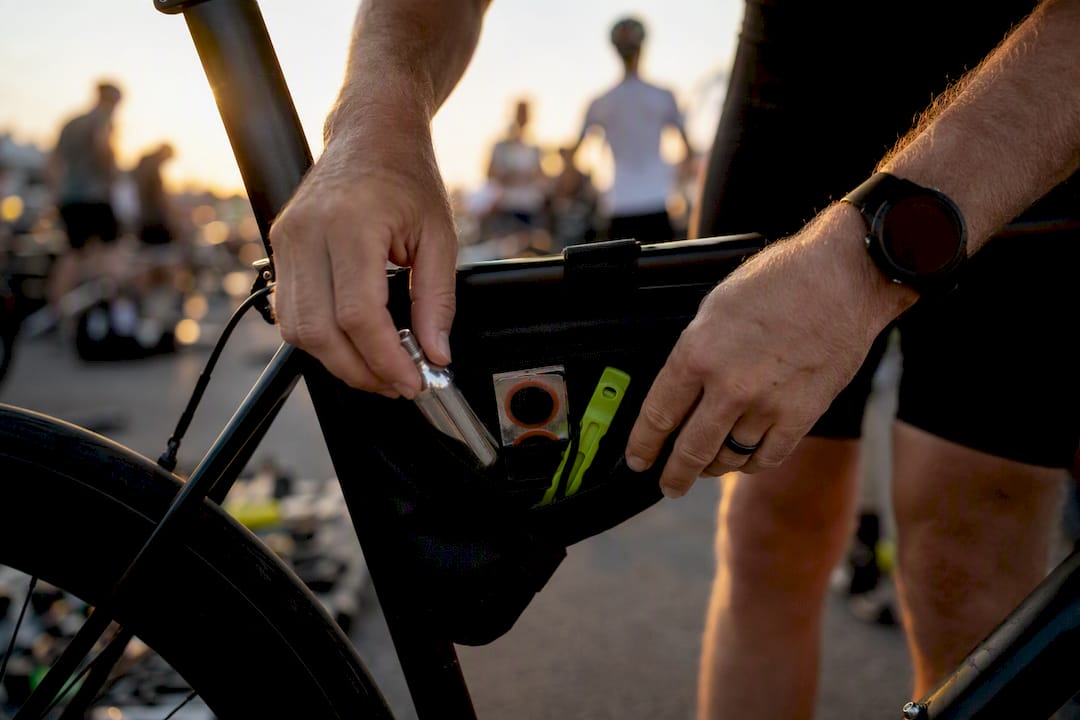
Pack a minimalist kit: 1 to 2 pre-checked tubes with correct valve length, 2 tire levers, a CO2 inflator with two threaded cartridges (or a mini pump), and a compact multi-tool including commonly needed Allen keys and a T25 bit, and an emergency tire boot. Skip the tube if you run tubeless, and swap in a plug kit instead. Before race week, confirm three things: your valve length matches your rim depth, your wheel is tubed or tubeless, and if tubeless, your sealant is still wet.
Once you’ve confirmed those, the rest is execution:
- Pack the kit in a compact bag mounted behind the saddle or in frame storage.
- Test-fit the bag on your actual race bike, not a trainer bike.
- Rehearse one full tube swap or plug repair, timed, before race day.
Key Takeaways
A reliable triathlon flat kit pairs the correct tube-or-tubeless setup with two rehearsed skills: a fast tube swap and confident CO2 inflation.
| Point | Details |
|---|---|
| Pack the minimal six | Tubes, levers, CO2 or pump, multi-tool, boot, and a wipe cover nearly every course scenario. |
| Match tubes to distance | Carry one tube for sprint/Olympic and two for half or full-distance races. |
| Choose based on wheel type | Tubeless riders need a plug capsule; tube riders need levers and a spare. |
| Practice before race day | Time a full repair at home so the sequence is automatic under stress. |
| Shop compatibility first | Sportfactoryproshop stocks valve-matched tubes and threaded CO2 tools for competitive racers. |
Table of Contents
- Building Your Triathlon Flat Kit: The Essentials
- Tubeless or Tubes: Which Repair Kit Do You Need?
- Where Should You Mount Your Flat Kit?
- How Do You Practice a Fast Flat Repair Before Race Day?
- Triathlon Flat Kit Packing Template by Race Distance
- Where Sport Factory Pro Shop Fits Into Your Kit
- What Actually Matters When You’re Racing the Clock
- Get Race-Ready Gear From Sportfactoryproshop
- Sources
Building Your Triathlon Flat Kit: The Essentials
A race-ready flat kit comes down to six items, and each one earns its spot by solving a specific failure mode on course.
- Spare tube. Carry one for sprint or Olympic distance, two for half or full-distance races where support vehicles are farther apart. Check valve length against your rim depth before you ever leave the house. A 60mm valve on an 80mm aero rim means you can’t even thread the pump head.
- Tire levers. Go with slim, stiff plastic levers rather than the flexible freebies that ship with a new tire. Tuck them into the tube’s box or wrap them with a rubber band so they don’t rattle against your multi-tool for 40 miles.
- CO2 or a mini pump. CO2 wins on speed, which matters when transition-zone seconds are the whole point of racing. Carry at least two threaded cartridges on longer courses. Threaded heads are more reliable under stress than push-fit ones, and a botched first cartridge is common enough that redundancy is worth the extra 20 grams.
- Multi-tool. Minimal spec is Allen keys from 2mm to 8mm plus a T25 Torx bit for disc rotors and some aerobar bolts. A tool at roughly 99 grams covers nearly every fastener on a modern tri bike without adding real drag.
- Emergency tire boot. A folded dollar bill or an empty gel wrapper works as a temporary sidewall boot when a cut is too long for the tube alone. A dedicated rubber boot holds better on a long descent, but the dollar bill gets you moving in seconds.
- A wipe or thin glove. Chain grease and gravel road rash on your hands makes gel packets and aid station cups slippery for the next 10 miles. One packaged wipe solves it.
Pro Tip: Thread your CO2 head onto a cartridge at home, once, before race week. Cross-threading under adrenaline at mile 30 costs far more time than any gear choice.
Tubeless or Tubes: Which Repair Kit Do You Need?
Your wheel setup decides your entire kit, not your preference. If you race tubeless, a dedicated tubeless repair kit with an insertion tool, a reamer, and rubberized plugs replaces the tube and levers entirely.
- Ream the puncture first, then insert a plug. Many kits combine both tools into a single 2-in-1 handle to save capsule space.
- A plug handles most tread and small sidewall punctures, and you can leave it in and trim it later rather than repair it mid-race.
- A cut too large for a plug, or a slashed sidewall, still means pulling the tire and installing a spare tube, so tubeless riders should carry one anyway on longer races.
- Tubeless setups puncture less often, but a catastrophic cut is harder to fix roadside than swapping a tube. That tradeoff is the whole argument.
- After plugging, reinflate with CO2 or a mini pump, then check that the bead has fully seated before rolling. Rushing this step on a shallow-taper rim can pop the tire back off under pressure.
Where Should You Mount Your Flat Kit?
Storage location changes your drag and your access speed, so pick based on your race distance and your comfort reaching for it mid-effort.
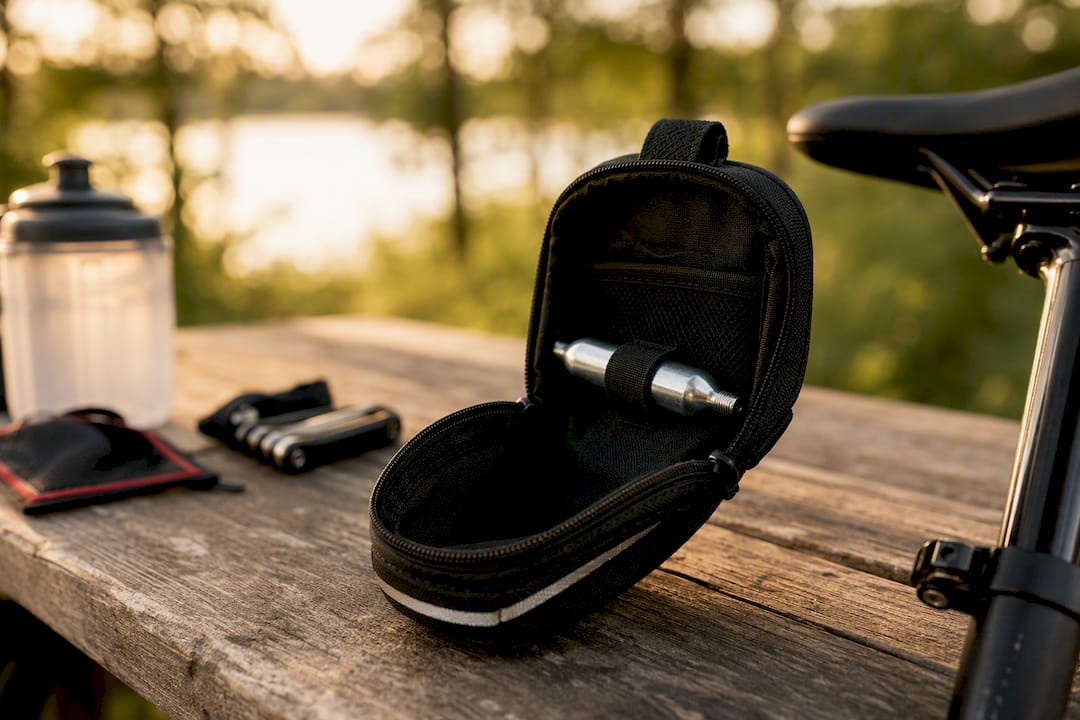
- Saddle bag. Sits behind the saddle, stays out of your airflow, and locks down securely. It’s slightly slower to grab in transition since it’s tucked under you rather than in reach.
- Frame or integrated aero storage. Many current tri frames build in a low-drag compartment that’s both aerodynamic and quick to access without dismounting. This is generally the preferred spot for competitive racers.
- Jersey pocket. Fine for a wipe or a folded dollar bill, but a full tube and lever set bounces and can pop the flap open on rough pavement. Reserve pockets for small items only.
Whatever you choose, size the bag tight enough that contents don’t rattle, and wrap the tube in a small plastic sleeve so road spray doesn’t corrode the valve threads.
Pro Tip: Zip-tie your CO2 canister loosely to the bag’s inner wall. A loose cartridge rolling around inside a saddle bag on washboard pavement is a surprisingly common way to lose one mid-race.
How Do You Practice a Fast Flat Repair Before Race Day?
Gear alone doesn’t fix a flat. Knowing how to use it under stress does, and that only comes from rehearsal.
- Run a pre-race checklist: tire pressure at your target PSI, valve length confirmed, sealant topped off if tubeless, cartridge count verified, and kit location memorized.
- Time yourself removing the wheel, swapping the tube, and reinflating with CO2. Aim for 90 to 120 seconds once you’ve done it five or six times in your driveway.
- Set a decision rule in advance: if you’ve used both cartridges and the tire still won’t hold air, stop and flag a race marshal rather than burning 20 more minutes.
- Watch for the three mistakes that eat the most time: forgetting to remove the valve core before inflating a plugged tubeless tire, pinching the new tube against the rim wall during installation, and rolling away before the bead is fully seated.
Pro Tip: Practice with cold hands. Race mornings are rarely warm, and fumbling a CO2 cartridge with stiff fingers is a different skill than doing it on a sunny garage afternoon.
Triathlon Flat Kit Packing Template by Race Distance
Copy this into your race-week checklist and adjust counts based on distance and course support.
- Spare tubes: 1 for sprint/Olympic, 2 for half/full distance, valve length confirmed against rim depth.
- Tire levers: 2, slim profile, secured to avoid rattle.
- Inflation: CO2 head plus 2 threaded cartridges for sprint/Olympic; 2 to 3 cartridges or a hybrid mini pump backup for longer races.
- Multi-tool: Allen 2 to 8mm, T25 Torx, roughly 99 grams.
- Tire boot: folded bill or dedicated rubber boot.
- Tubeless-specific: reamer/insertion tool plus 3 to 4 plugs in a compact capsule, in place of tubes and levers if running tubeless full-time.
- Small extras: a small wipe or thin glove, valve core tool if your pump doesn’t include one.
Confirm valve length and rim depth compatibility during bike check-in week, not the morning of the race. Every gram you add trades against drag, so skip redundant tools your multi-tool already covers, but never skip the second CO2 cartridge on a long-course event.
Where Sport Factory Pro Shop Fits Into Your Kit
Sportfactoryproshop builds its catalog around exactly this kind of race-day reliability question. The shop specializes in high-performance cycling gear for competitive cyclists and triathletes, curating parts from brands chosen for engineering quality rather than shelf filler.
- Aerobar systems and tire lines are selected with the same aero-versus-access tradeoffs this guide walks through.
- CO2 inflators and compact repair tools are stocked specifically for racers who need reliability under time pressure, not just at the trailhead.
- Product pages highlight rider-focused features so you can match valve length, rim depth, and tool weight before checkout, not after a DNF.
If your current kit is missing a threaded CO2 head or a properly sized tube, that’s the fastest gap to close before your next race.
What Actually Matters When You’re Racing the Clock
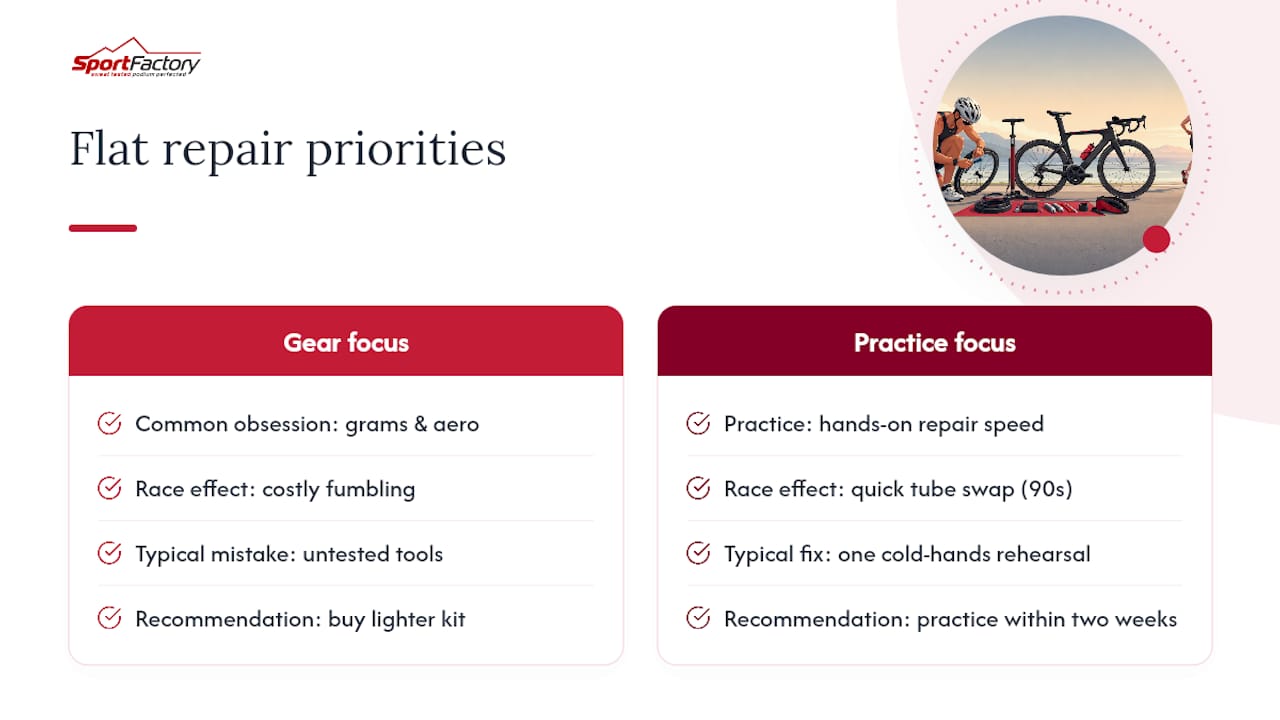
Most flat-kit advice online obsesses over gram counts and bag aerodynamics, and both matter less than most racers assume. The bigger variable is whether you’ve actually practiced the repair with your hands, not just packed the parts.
A rider with a heavier saddle bag who can swap a tube in 90 seconds beats a rider with a feather-light aero setup fumbling a CO2 cartridge for the first time on course. The research consistently backs this: guides that rank gear also stress rehearsal, and rehearsal is the piece almost everyone skips.
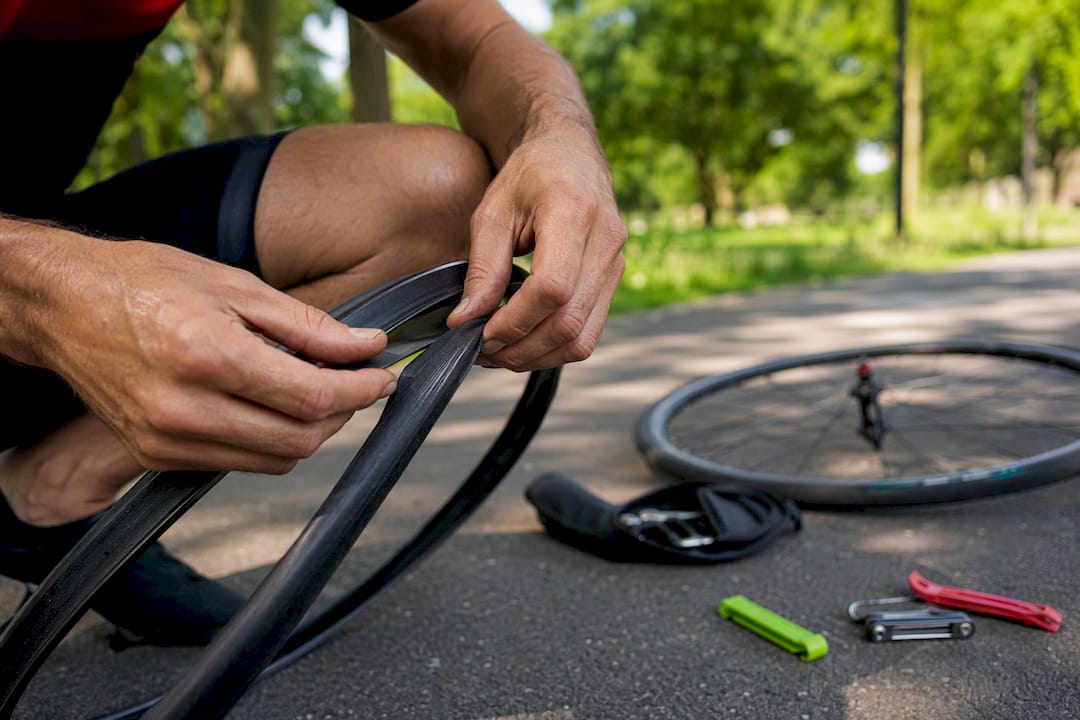
If I had to prioritize one change for most triathletes reading this, it wouldn’t be buying a lighter multi-tool. It would be doing one cold-hands practice repair in the two weeks before race day. Tubeless riders especially underestimate this. Plugging a tire feels simple in a video and feels very different when you’re kneeling on gravel with a stranger’s race clock ticking in the back of your mind.
Buy the right kit, yes. But the kit is only insurance if you’ve already filed a claim on it at home.
— Matt
Get Race-Ready Gear From Sportfactoryproshop
Building the kit described above is only useful if every part actually fits your bike, and that’s where a curated shop beats guessing at a big-box aisle. Sportfactoryproshop stocks threaded CO2 inflators, compact multi-tools, tubeless plug capsules, and tire levers selected specifically for competitive riders who can’t afford a mismatched valve on race morning.
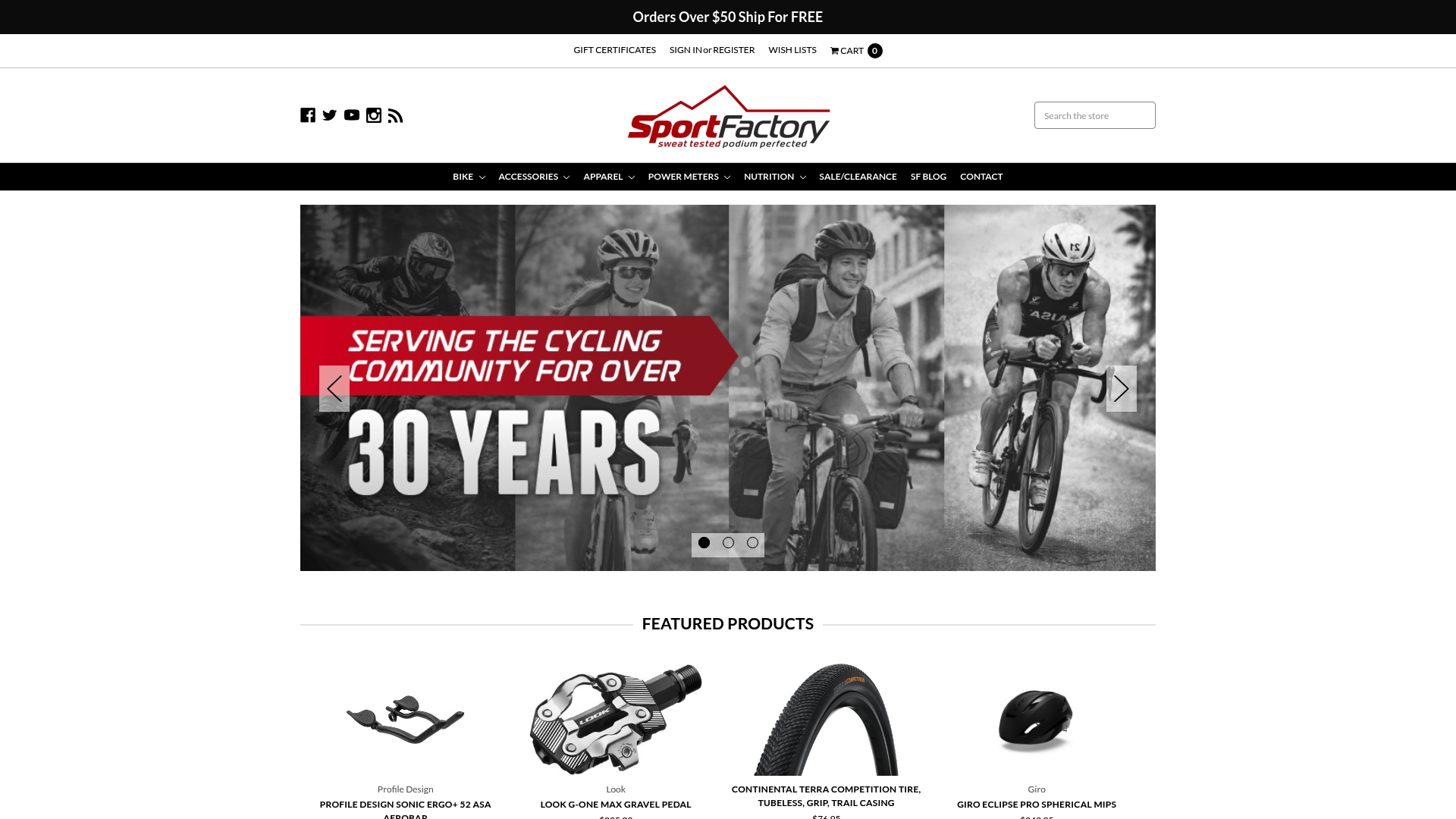
Every product on the site is chosen for engineering quality and rider-focused design rather than generic mass-market sourcing, so you’re not left comparing twelve near-identical multi-tools with no way to tell which one actually holds up. If your current setup is missing a proper tubeless capsule or your CO2 head doesn’t thread on the first try anymore, browse the race-ready gear selection at Sportfactoryproshop and check compatibility with your wheel and valve specs before your next event.
Sources
- Essential Bike Flat Kit | California Triathlon
- Top 13 bike puncture repair kits for 2025: tested and reviewed | 220Triathlon
- 15 must-haves: essential beginner tri gear | Triathlete