


CO2 Cartridge Sizes: The Complete Cyclist's Guide
Posted by Matt Russ on 7th Aug 2026
CO2 Cartridge Sizes: The Complete Cyclist’s Guide
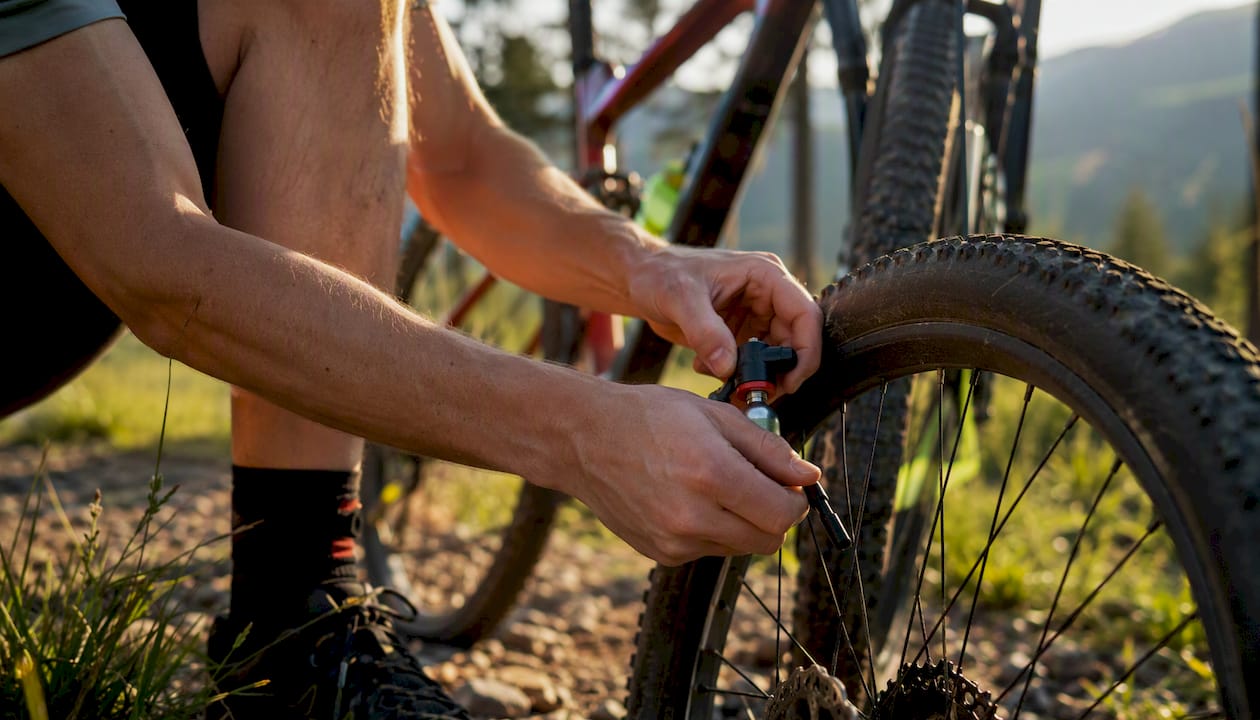
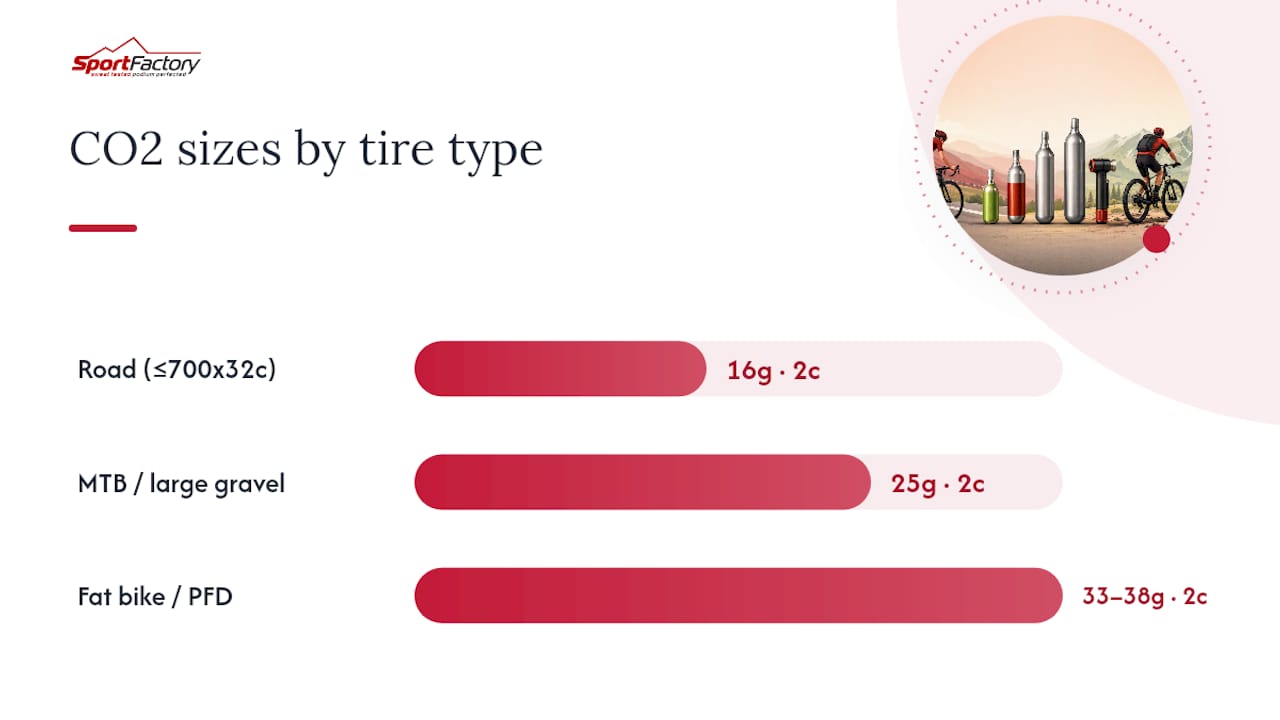
CO2 cartridges come in five main sizes: 12g, 16g, 20g, 25g, and 33g/38g. For most road cyclists, a 16g cartridge handles 700x23–32c tires comfortably. Gravel and MTB riders on larger-volume tires should reach for a 25g. Life-vest and marine PFD users typically need 33g or 38g canisters with a different thread spec than bicycle inflators use. Sportfactoryproshop stocks compatible inflators and cartridges across these categories, so you can match the right size before your next ride or outing.
Match your application to the right starting size:
- Road rider (700x23–28c): 16g, carry two for redundancy
- Road/gravel (700x32–40c or 650b): 16g or 20g, two recommended
- Gravel/MTB (29er, 27.5, large-volume tubeless): 25g minimum, two for remote rides
- Tourer, expedition, or fat bike: 33g or two 25g canisters
- Life vest / marine PFD: 33g or 38g with manufacturer-specified thread (often 1/2-20 UNF); always check U.S. Coast Guard–approved PFD documentation before swapping cartridges
Key Takeaways
Choosing the right CO2 cartridge size comes down to three things: your tire volume, your inflator’s thread spec, and how many cartridges you carry.
| Point | Details |
|---|---|
| Match grams to tire volume | 16g for road tires up to 700x32c; 25g for MTB and large-volume gravel; 33g/38g for fat bikes and PFDs. |
| Confirm thread compatibility | Most bicycle inflators use 3/8-24 UNF; marine PFDs often use 1/2-20 UNF — check both parts before buying. |
| Always carry redundancy | Two cartridges minimum for any ride; tubeless setups and remote trails warrant two 25g canisters. |
| Use an on/off inflator head | Flow control prevents total gas loss during a botched attempt, effectively doubling your cartridge efficiency. |
| Sportfactoryproshop for gear | Sportfactoryproshop carries compatible inflators and cartridges — check product spec lines to confirm thread and gram match. |
Why redundancy and inflator choice matter more than most riders think
The conventional wisdom is to grab a 16g cartridge and call it a day. For a road rider on 700x25c tires, that is fine. But the moment tire volume increases or the setup goes tubeless, that single 16g becomes a liability rather than a solution.
The inflator head is just as important as the cartridge itself. A head without flow control turns every inflation attempt into a one-shot gamble. One poor valve connection and the entire canister is gone. An on/off head, by contrast, lets you pause, reseat, and try again. That single feature changes the math on how many cartridges you actually need to carry.
For riders who push into gravel or MTB territory, the 25g cartridge paired with a quality on/off inflator head is the combination worth building around. Two of them in a saddle bag covers almost every scenario short of a sidewall tear. The 16g still has its place for weight-conscious road riders, but treating it as a universal solution is where most riders run into trouble mid-ride.
Table of Contents
- Common CO2 cartridge sizes at a glance
- How to read cartridge specs: grams, dimensions, and thread standards
- Which cartridge size fits your application?
- Compatibility checks, safe handling, and disposal
- Pro tips from experienced cyclists and technicians
- Gear up with the right cartridges and inflators
- Sources
Common CO2 cartridge sizes at a glance
CO2 cartridges commonly come in 12g, 16g, and 25g for cycling, with smaller sizes suited to lower-volume road tires and larger sizes handling high-volume MTB or tubular setups. The table below maps each size to its typical use, thread type, and physical dimensions.
Quick-decision bullets:
- Carry two 16g cartridges for road rides; one may not be enough if you have a second flat or a slow bead seat on a tubeless tire.
- Use a 25g for most MTB and large-volume gravel tires. A single 16g often delivers only a “limp-home” pressure on high-volume tires, so size up when in doubt.
- For marine PFDs, never substitute a bicycle cartridge without confirming the thread spec and gram rating in your vest’s manual.
- Manufacturer spec tables list grams, thread type, diameter, and length — always cross-check both the cartridge label and the inflator head spec before buying.
How to read cartridge specs: grams, dimensions, and thread standards
The number printed on a CO2 cartridge, such as “16g” or “25g,” refers to the mass of liquid CO2 stored inside, not the canister’s weight. More grams mean more gas, which translates to greater inflation volume and achievable pressure. The relationship is not perfectly linear, though: a 25g cartridge filling a high-volume 29×2.4 tubeless tire will reach a lower PSI than the same cartridge filling a narrow 700x25c road tire, because the larger air volume absorbs more gas before pressure builds.
Thread types
Most bicycle CO2 cartridges use a 3/8-24 UNF threaded neck, which is the standard that fits the majority of cycling inflator heads from brands like Lezyne and Genuine Innovations. Some cartridges are non-threaded (plug-style), relying on a rubber seal in the inflator head rather than a screw connection. Marine and life-vest cartridges often use 1/2-20 UNF or proprietary threads. You can identify the thread type visually: a threaded cartridge has visible spiral grooves at the neck; a non-threaded one has a smooth, tapered tip.
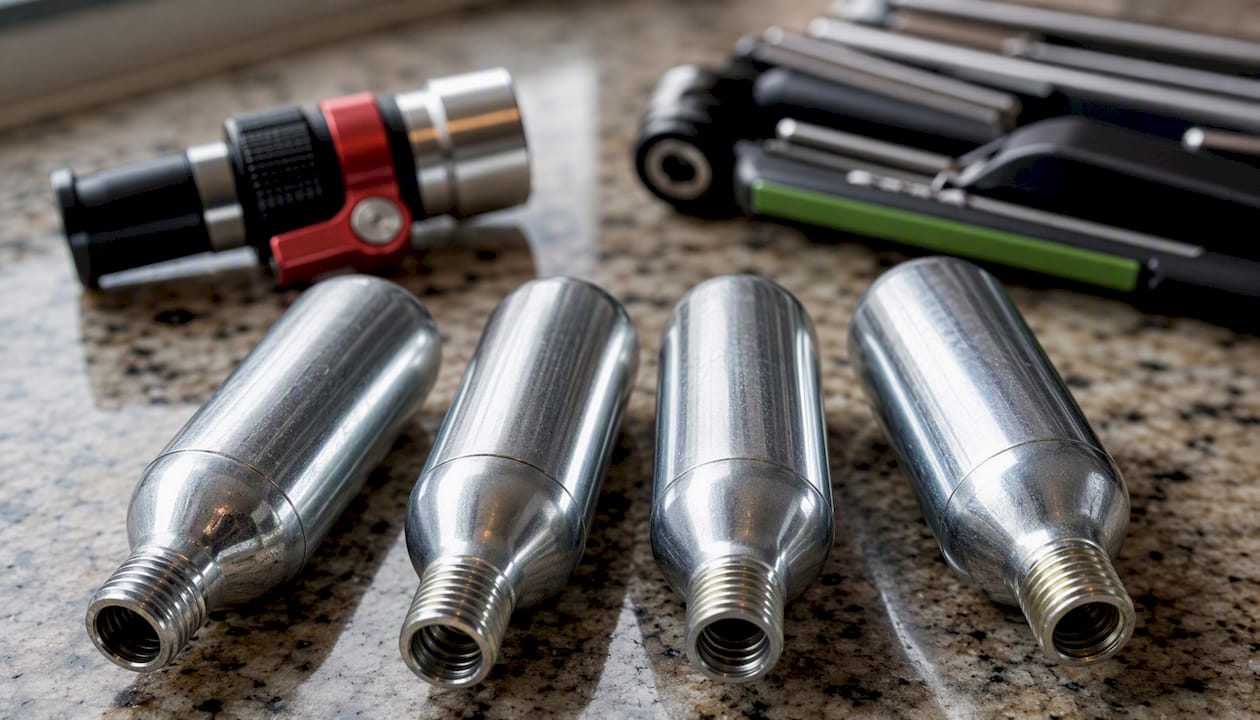
Retail product pages for threaded cartridges typically list the thread spec in the product title or spec panel. For example, a standard 16g/25g threaded listing will note “3/8-24” directly. When that detail is missing, check the inflator manual or the OEM spec sheet for exact diameter, length, and thread data.
Key specs to check on any cartridge label or product page:
- Grams (g): CO2 mass; determines inflation capacity
- Thread spec: 3/8-24 UNF (most bicycle), 1/2-20 UNF (many marine), or non-threaded
- Diameter and length: affects fit in inflator heads and storage pouches
- Material/finish: steel or aluminum; some have anti-rust coatings for humid storage
- Cartridge label markings: grams are always printed on the canister; thread type may appear on the neck or packaging
Which cartridge size fits your application?
Road cycling
16g is the standard choice for road tires in the 700x23–32c range. A single 16g can bring a flat tire to a rideable pressure quickly, but carrying two is smart practice. If your second flat happens on a long ride, you want a backup without flagging down a car.
Gravel and MTB
For gravel tires in the 700x35–45c range, a 20g or 25g cartridge is more reliable than a 16g. On a 27.5×2.4 MTB tire, a 25g cartridge reaches roughly 32 psi, which is enough to ride out safely. A 29×2.4 or larger tubeless setup may need two 25g canisters to seat the bead and reach target pressure. Experienced riders recommend sizing up for large-volume tires rather than relying on a single small cartridge and hoping for the best.
Pro Tip: For tubeless setups, plug the puncture with a plug tool before reaching for the CO2. Sealing the hole first means you waste far less gas trying to seat a bead that keeps leaking.
Touring, expedition, and fat bike
A 33g or 38g cartridge handles fat-bike tires (26×4.0 and similar), though even a 38g only reaches about 7.5 psi in a 26×4.0 tire. Tourers carrying heavy loads on wide tires should pack multiple cartridges or combine a large cartridge with a compact hand pump as a backup.
Life vests and marine PFDs
Life-vest inflators typically use 33g or 38g cartridges, and the thread spec is often 1/2-20 UNF rather than the 3/8-24 UNF common on bicycle inflators. Never swap a bicycle cartridge into a PFD without confirming the gram rating and thread type in the vest manufacturer’s documentation. The U.S.
Cartridge selection checklist:
- Identify your tire size (width and volume) or PFD bladder capacity first
- Match grams to application using the table above
- Confirm thread type on both cartridge and inflator head
- Decide how many to carry: at minimum two for any ride longer than 30 miles
- For mountain biking on remote trails, carry one 25g plus one 16g as a backup
Compatibility checks, safe handling, and disposal
Confirming compatibility
Before buying a batch of cartridges, run through this checklist:
- Check the thread spec on your inflator head (listed in the manual or on the product page)
- Match it to the cartridge neck — threaded to threaded, non-threaded to non-threaded
- Test-fit an empty canister if you have one before a ride; mismatched threads will cross-thread under pressure
- For PFDs: open the vest manual and find the exact gram rating and thread spec; do not substitute based on visual similarity alone
Storage and transport
CO2 cartridges are pressurized. Store them away from heat sources and direct sunlight; temperatures above 120°F can cause pressure buildup. Keep them out of reach of children. For air travel, the TSA and FAA restrict compressed gas cartridges in checked and carry-on baggage — check current regulations before packing them in luggage. Shipping regulations for CO2 cartridges vary by carrier; many carriers classify them as hazardous materials for ground shipping in quantity.
Disposal and recycling
CO2 cartridges are single-use. Once spent, the canister should be fully empty before recycling. Many manufacturers recommend puncturing the neck to confirm it is empty, then placing it in your local metal recycling stream. For unused or partially used cartridges, contact your local household hazardous waste facility for guidance, since pressurized canisters are not accepted in standard curbside recycling in most U.S. municipalities.
Statistic callout: Bicycle CO2 cartridges most commonly use the 3/8-24 UNF thread standard, while marine and life-vest cartridges frequently use 1/2-20 UNF variants — a distinction that causes the most common compatibility errors when riders try to cross-use cartridges between applications.
Pro tips from experienced cyclists and technicians
Pro Tip: Use an inflator head with an on/off flow control valve. Without it, piercing the cartridge releases all the gas at once — a botched attempt (wrong valve position, poor seal) wastes the entire canister. On/off control heads let you stop the flow mid-fill, reseat the valve, and try again without losing everything.
Redundancy is the single most underrated part of a CO2 kit. Carrying two cartridges is not pessimism; it is basic math. A tubeless tire that does not seat on the first fill, a valve that leaks slightly, or a second flat on the same ride can all drain your supply faster than expected.
Do / don’t list from long-distance riders:
- Do plug tubeless punctures before inflating — sealant alone rarely holds under rapid CO2 inflation
- Do pre-check your valve core is tight before a ride; a loose core loses pressure immediately after inflation
- Don’t over-tighten a threaded cartridge into the inflator head; hand-tight is sufficient
- Don’t store cartridges loose in a jersey pocket where they can rattle against tools and get damaged
- Do check sealant condition every 3–6 months; dried sealant means CO2 goes straight through the puncture
- Don’t assume one 25g is enough for a tubeless 29er on a remote trail; carry two
For cyclists who train across multiple disciplines, pairing the right cartridge with a solid training plan means fewer mechanical interruptions and more time riding.
Gear up with the right cartridges and inflators
Picking the right CO2 cartridge size is straightforward once you know your tire volume and thread spec. The harder part is finding a single source that carries compatible inflators and cartridges across road, gravel, MTB, and marine applications without making you guess at compatibility.
Sportfactoryproshop carries a curated selection of high-performance cycling gear, including CO2 inflators and accessories chosen for their engineering quality and rider-focused specs. Every product listing includes the thread type and gram compatibility you need to make a confident purchase. Browse the full range at Sportfactoryproshop and confirm your cartridge and inflator match before your next ride.
Sources
When exact dimensions matter, go to the primary source rather than relying on a general guide:
- How to use CO2 for cycling: beginners - DC Rainmaker
- 7 of the best CO2 inflators - Cycling Weekly
- CO2 Cartridge Specs & Shipping Guide – OEM | Alizeemetal
Prefer manufacturer spec pages for exact diameter, length, and thread data. Cross-check with your inflator head documentation before purchasing in bulk.