


Using a Power Meter for Triathlon Pacing: Power, Heart Rate and Race Strategy
Posted by Matt Russ on 21st Oct 2026
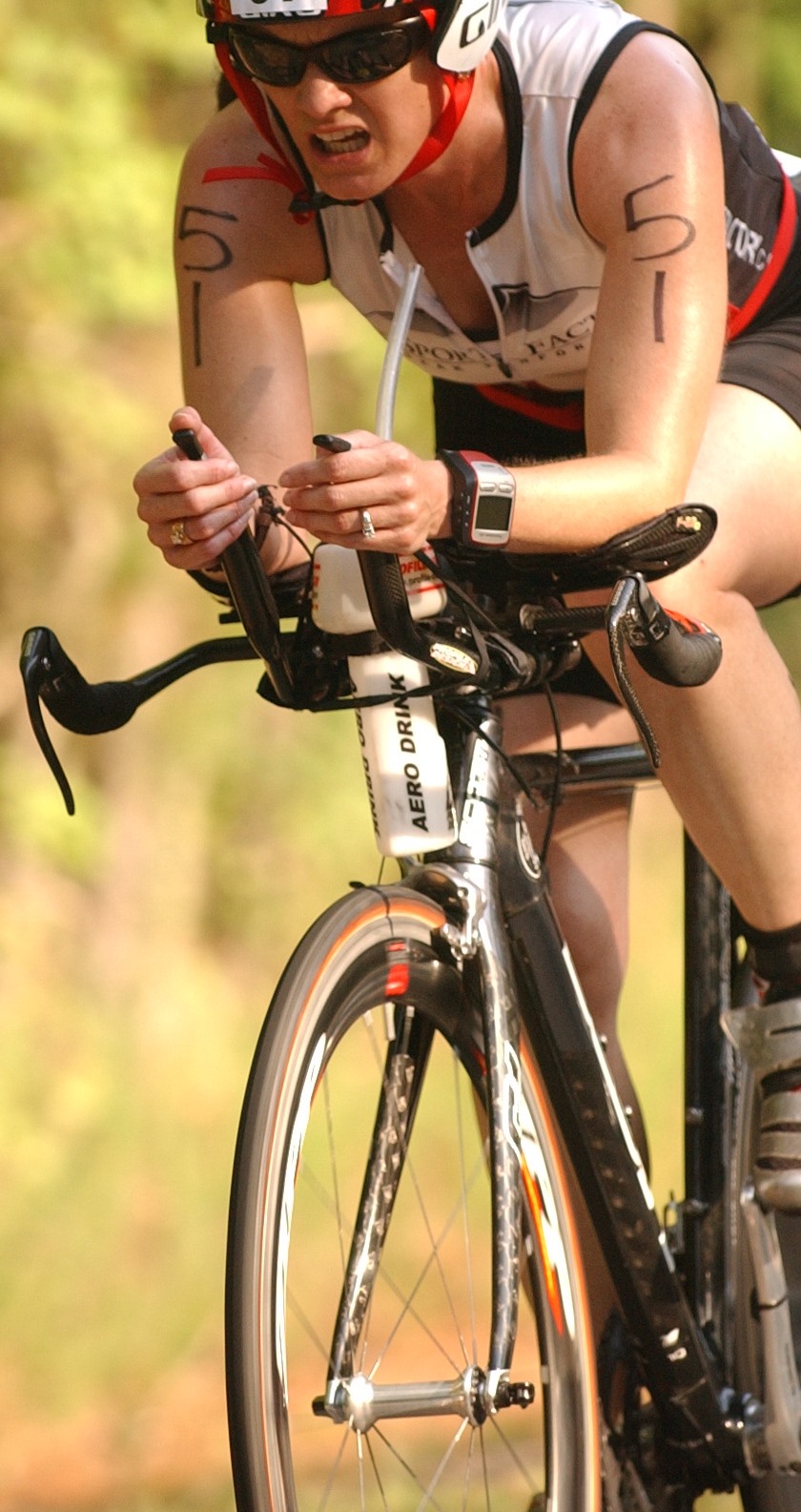
Power meters are by no means perfect devices, and they can be expensive. They also require a certain level of technical and analytical aptitude that not every athlete possesses. However, when used correctly, a power meter can be an extremely valuable training and racing tool.
Power-based training can improve training accuracy, provide extensive post-workout data, and help an athlete develop a more precise pacing strategy. For multisport athletes, power can also provide a tactical advantage during a race.
If you are the type of athlete who likes to work every available angle, adding a power meter to your training and racing arsenal may be appropriate.
What Is Power-Based Training?
Road cyclists were among the first athletes to fully recognize the value of training and racing with power. Road cycling encompasses multiple disciplines, including time trials, criteriums, and road races, making pacing and energy management particularly important.
Non-draft triathlon is somewhat different. The bike portion is essentially a time trial positioned between the swim and run. The athlete has to produce enough power to maximize the bike split without compromising the ability to run afterward.
That creates an important question for triathletes:
Can racing with power help an athlete better control their effort and sustain power throughout the bike portion of a race?
I believe it can—if the data is used correctly.
Power Meters and Triathlon Pacing
At its most basic level, pacing is about managing energy and using it as effectively as possible.
An athlete who rides the first hour of an Ironman at threshold power is unlikely to have a successful run—and may not even make it through the entire bike course at that effort level.
Power is an attractive metric because it provides a direct measurement of external work. Unlike heart rate, power isn't directly affected by factors such as heat, humidity, hydration status, altitude, or cardiac drift.
But does that make power better than heart rate?
I don't think it is an either-or proposition.
I don't throw out one data stream simply because another is available. Instead, I use multiple metrics to develop a more complete picture of what is happening with the athlete.
Power Meter vs. Heart Rate
Power tells you what the athlete is producing externally. Heart rate provides information about how the body is responding internally.
Using both can reveal important information.
For example, a significant increase in heart rate accompanied by a decrease in power output could indicate that the athlete is under increasing physiological stress. Heat, dehydration, fatigue, or other factors may be contributing to the change.
That type of discrepancy is worth investigating rather than simply looking at one number in isolation.
For multisport pacing, the primary metrics I use are:
- Power
- Heart rate
- Cadence
- Time
Time is particularly useful for keeping the athlete on track with fluid and calorie intake throughout a long event.
The objective isn't to stare at four numbers throughout the entire race. The objective is to understand what those numbers mean and use them to establish an appropriate pacing strategy.
Why Consistent Power Matters
A variable effort is generally more fatiguing than a steady effort at an appropriate intensity.
The body responds differently when power constantly fluctuates compared with maintaining a relatively consistent effort. Anyone who has ridden a bike in strong, gusting winds has experienced this. A ride in variable wind can feel substantially harder than riding at the same average speed on a calm day.
Repeated accelerations, surges, and hard efforts can accumulate fatigue even when the overall average power doesn't look particularly extreme.
I've found that my best athletes are very good at maintaining a consistent cadence and power output, even when the terrain changes. They find their groove and stay in it.
That ability can be especially valuable in triathlon, where the goal isn't simply to produce the fastest possible bike split. The goal is to produce an effective bike split and still have the ability to run well afterward.
What Is Variability Index (VI)?
Variability Index, commonly abbreviated as VI, is a cycling power metric used to describe how variable an athlete's power output was during a ride or race.
A relatively low VI generally indicates a more consistent power output, while a higher VI indicates greater variation in power.
This can be particularly useful when analyzing a triathlon bike leg.
Two athletes could produce similar average power but have very different power profiles. One might ride with a relatively smooth effort while the other repeatedly accelerates, attacks hills, surges around other athletes, and backs off on descents.
Those two rides may not create the same level of fatigue.
Power variability can also provide insight into race focus. Athletes who are easily distracted by competitors or external circumstances may repeatedly surge when they should be maintaining their planned effort.
A smooth and consistent power delivery at the appropriate intensity can help reduce unnecessary fatigue and preserve energy for the run.
Using Power for Short-Course Triathlon
Power can be particularly useful as a "redline" during short-course triathlon.
Short-course racing requires a significantly higher level of intensity than long-course racing, and athletes can quickly accumulate fatigue by repeatedly going above their sustainable effort.
A power meter can help identify when an athlete is producing too much power and prevent excessive anaerobic surges.
The problem with these efforts is that the cost eventually has to be paid.
An athlete may feel strong enough to attack a hill, chase another competitor, or accelerate out of a corner. The immediate benefit may seem worthwhile, but the accumulated physiological cost can show up later in the race.
An athlete who understands their sustainable power ranges can use the power meter as a guardrail—allowing them to push when appropriate while avoiding efforts that could compromise the run.
Using Power for 70.3 and Ironman
Long-course triathlon requires a different approach.
For a 70.3 or Ironman, the objective is generally to maintain an aerobic effort while minimizing unnecessary variations in power.
I may use heart rate as the primary metric for keeping an athlete within an appropriate aerobic range while using power to control variability.
The athlete may have the freedom to produce slightly more power on a climb or less power on a descent without allowing the overall effort to become excessive.
Again, the best athletes are often able to maintain a relatively consistent power profile throughout the bike portion of the race.
The goal isn't necessarily to produce the highest possible average power.
The goal is to produce the appropriate power and arrive at the run with enough energy to use it.
How Do You Develop a Power-Based Pacing Strategy?
This is where I differ from some formula-based approaches.
Rather than simply taking an athlete's Functional Threshold Power (FTP) and prescribing a percentage of it for race day, I prefer to observe what the athlete can actually do in training.
Key workouts—particularly bike-run brick sessions—can provide valuable information.
I want to see the athlete's power output at different heart-rate levels and, perhaps more importantly, what happens when they run off the bike.
A cycling pacing strategy that produces a great bike split but destroys the run is not a successful triathlon pacing strategy.
I would rather have multiple data points from race-specific training than rely exclusively on a single test and a formula.
The athlete's current fitness, training conditions, fatigue, terrain, weather, and ability to run after the bike all need to be considered.
And no pacing strategy is absolute.
Race day, after the taper and under actual competition conditions, is when the athlete's true performance will be revealed. I prefer to think of a pacing strategy as a "close field-goal range" rather than an exact number that must be maintained at all costs.
The athlete needs enough structure to control their effort, but enough flexibility to adapt to the conditions.
Adjusting Power for the Course
The course must also be considered when developing a power-based pacing strategy.
A hilly course requires a different approach than a flat course where the athlete can maintain a relatively sustained effort.
For example, an athlete can waste considerable energy trying to maintain a specific wattage while descending when there is little additional speed available from producing more power.
Climbing presents the opposite situation. A lower cadence and higher power output may occur naturally on a climb, even while the athlete's overall physiological effort remains appropriate.
The objective isn't to force the power number to remain perfectly flat.
Instead, the athlete needs to understand how power, cadence, heart rate, speed, and terrain interact.
That is why learning to race with power is more valuable than simply owning a power meter.
A Power Meter Can Be a Carrot or a Stick
A power meter can serve as either a carrot or a stick.
It can tell an athlete that there is a little more energy available when the time is right. It can also tell an athlete to back off and save that energy for the run.
Some athletes are naturally excellent pacers. They can find an appropriate effort and maintain it almost instinctively.
Others are easily distracted. They see another athlete pass them, respond with a surge, and then repeat the process over and over throughout the race.
Before long, they have accumulated unnecessary fatigue.
I've found that once athletes become comfortable training with power, they often become better at finding their pacing groove—even when they aren't looking at the device.
That is an important distinction.
The goal isn't to become dependent on the power meter.
The goal is to use the power meter to learn how the correct effort feels.
Learn to Race Without the Data
No device is perfect.
Sensors can fail. Batteries die. Head units malfunction. Power meters can produce questionable data. And an overly complicated pacing strategy creates more opportunities for mistakes.
An athlete needs to be able to function when the technology fails.
One useful training drill is to periodically "fly blind." Turn off the data for a portion of a workout and pace the effort by feel. Then compare that section with the portions of the workout when the devices were being monitored.
How close were you?
The objective is to develop an internal sense of pace and effort while still taking advantage of the information provided by technology.
The best athletes don't simply watch the numbers.
They understand the numbers, interpret the situation, and know what the appropriate effort feels like.
Using a Power Meter as Part of the Bigger Strategy
A power meter is a tool—not a pacing strategy by itself.
Power becomes considerably more useful when it is combined with heart rate, cadence, terrain, nutrition, hydration, time, and the athlete's ability to run after the bike.
The purpose of all this information is ultimately very simple: manage energy so that you can perform at your best when it matters.
Break the race into a process. Establish a strategy. Understand your metrics. Practice executing the strategy under race-like conditions.
Then learn to put the devices away occasionally and trust what you've learned.
A power meter can tell you what you are doing.
Experience teaches you what you should be doing.
And learning the difference can make power-based training one of the most useful tools in an endurance athlete's arsenal.
Coach Matt Russ enjoyed a professional coaching career spanning over two decades of working with professional endurance athletes. His athletes have achieved numerous regional, national, international and championship titles under his direction. Matt achieved the highest level of licensing by both USA Triathlon and USA Cycling, and was a licensed USA Track and Field Coach. His accomplishments include being named "Team USA" Coach for the 2011 Beijing World Championship. Head Coach and founder of The Sport Factory, a USA Triathlon Certified Performance Center, he has authored many articles on a wide variety of endurance related topics.